Play store

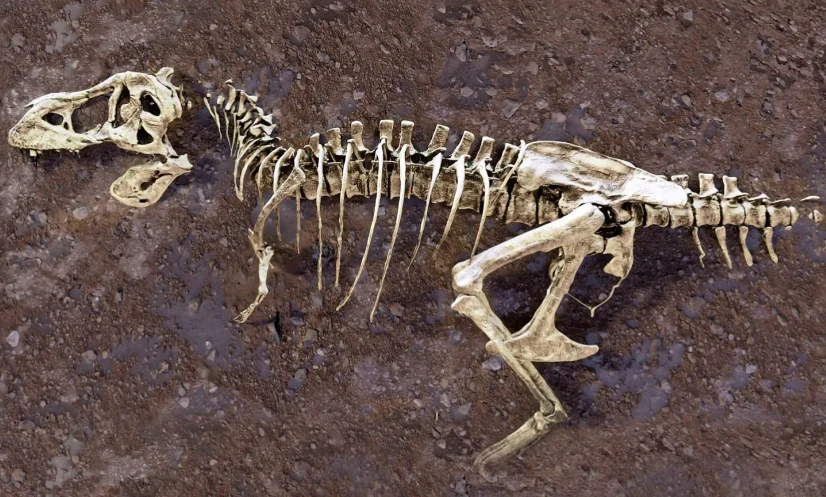
A fractured rib from Scotty, the largest known Tyrannosaurus rex skeleton, has provided scientists with a rare glimpse into how dinosaurs healed injuries about 66 million years ago.
Researchers used neutron imaging at the US Department of Energy’s Oak Ridge National Laboratory (ORNL) to examine the fossil without damaging it. The scans revealed a network of mineralised blood vessels inside the rib, apparently formed as the dinosaur’s body attempted to heal the fracture.
The discovery is unusual because soft tissues such as blood vessels normally decay long before fossilisation. In Scotty’s case, however, the structures were preserved inside the injured bone, offering evidence of biological activity shortly before the dinosaur died.
“It’s like winning the lottery,” said Mauricio Barbi, a physics professor at the University of Regina in Saskatchewan, Canada. He said the rib contained a vast network of mineralised blood vessels that had not previously been observed in a fossil.
Researchers believe that after the rib fractured, iron-rich blood entered the damaged area and new blood vessels developed as part of the healing process. Scotty apparently died before the injury had fully healed.
The dinosaur’s remains were later deposited in a salty marsh, where conditions may have slowed decomposition and helped preserve the fragile structures.
“Every fossil is a tiny snapshot of the past,” said Jerit Mitchell, a University of Regina doctoral candidate in physics who leads the project under Barbi’s direction.
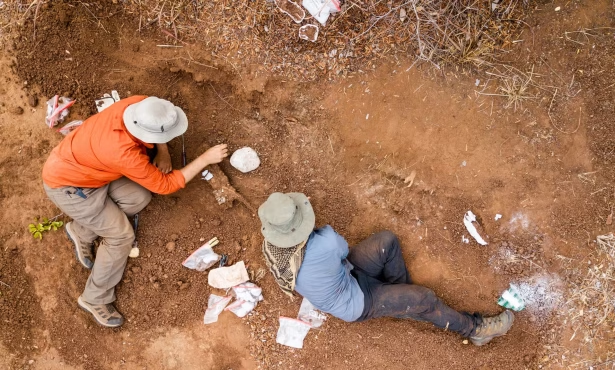
Scotty’s fossils were discovered by teams from the Royal Saskatchewan Museum in Saskatchewan’s Frenchman River Valley, one of North America’s important dinosaur fossil sites. Rocks in the region preserve evidence of life shortly before the mass extinction that ended the age of non-avian dinosaurs.
Scientists are also studying other fossils from the area, including dinosaur bones, scales and fossilised amber, to better understand ancient ecosystems.
The researchers combined neutron and X-ray imaging to study the rib. The two techniques provide complementary information: neutrons are particularly sensitive to lighter elements such as hydrogen, while X-rays are more effective at revealing heavier elements and dense structures such as bone.
The findings could provide new information about dinosaur biology, including how large predators responded to injuries and how their bodies repaired damaged tissue.