


 Play store

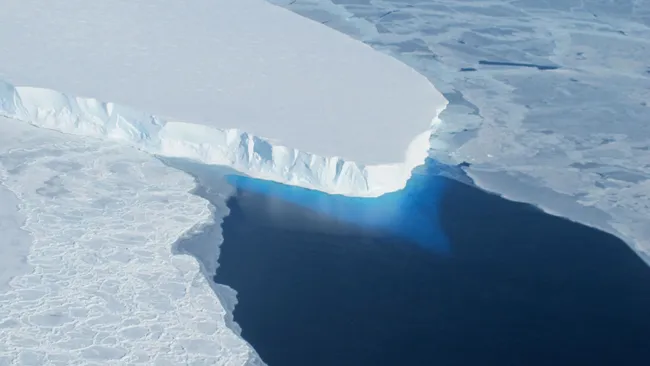
Greenland and Antarctica have lost an estimated 12.5 trillion tons of ice since the 1970s, contributing more than 3 centimetres to global sea-level rise, according to the longest satellite-based assessment of polar ice loss to date.
An international team of scientists compiled data from 42 satellite surveys and 27 satellite missions covering Greenland from 1972 and Antarctica from 1979 through 2023.
The assessment, known as the Ice Sheet Mass Balance Inter-comparison Exercise (IMBIE), found that Greenland accounted for most of the ice lost during the period.
“By reaching back to the 1970s, we can now see how the ice sheets have changed across half a century,” said study lead Inès Otosaka of Northumbria University.
The researchers found that about 84% of the ice loss resulted from glaciers flowing faster and discharging more ice into the ocean, while the remaining 16% was attributed to surface melting.
“More than four-fifths of the ice lost was discharged into the ocean by faster-flowing glaciers, rather than melted at the surface,” Otosaka said. She added that the trend indicates that the long-term loss is being driven by the response of ice sheets to a warming ocean.
The rate of ice loss has accelerated sharply since the 1990s. Greenland lost about 66 billion tons of ice a year during the 1980s, but the rate increased to around 291 billion tons annually in the 2010s.
Antarctica experienced a similar acceleration. Its annual ice loss rose from about 53 billion tons in the 1980s to around 222 billion tons in the 2010s.
The combined loss of polar ice contributed more than 1.18 inches, or 3 centimetres, to sea-level rise over the period studied, according to the researchers.
“Three centimetres of sea level rise may sound small, but that puts another six to nine million people at risk of coastal flooding and erosion,” said Andrew Shephard, head of the School of Geography and Natural Science at Northumbria University and founder of IMBIE.
He said continued ice loss in the coming decades makes long-term assessments such as IMBIE important for understanding and protecting communities vulnerable to climate change.
The researchers attributed the long-term decline in polar ice to a warming climate and oceans, warning that further ice loss could contribute to additional sea-level rise in the decades ahead.