


 Play store

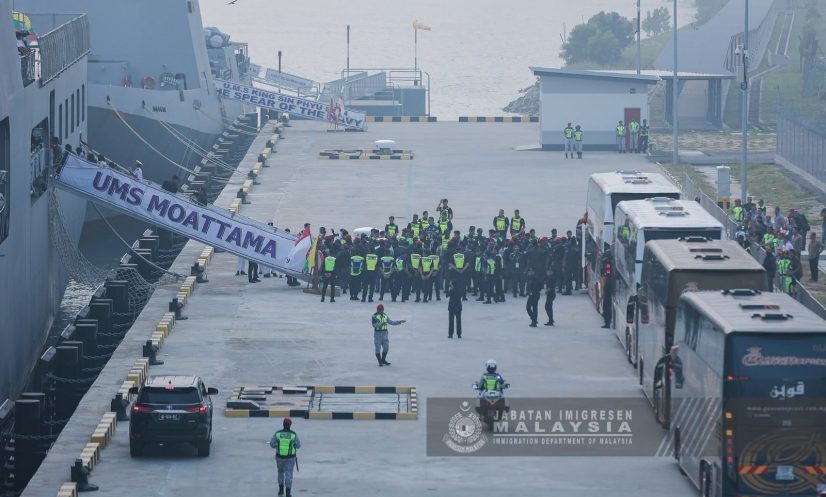
Ahmadul Kobir, Malaysia: Malaysia has begun the process of repatriating nearly 1,500 Myanmar nationals to their home country. Under the first phase of Ops Pier 1.0, which began on Tuesday (September 29), a total of 1,476 people are being repatriated. Under a broader agreement between Malaysia and Myanmar, up to 5,000 Myanmar nationals are planned to be sent back in stages.
The Malaysian government says the repatriation process is being carried out voluntarily, safely and responsibly. However, the United Nations refugee agency (UNHCR) and various civil society organisations have raised concerns over the safety of those being returned amid the ongoing conflict in Myanmar.
Datuk Makhzan Mahyuddin, Deputy Secretary-General (Policy and Control) of Malaysia’s Ministry of Home Affairs (KDN), said the first group was brought from 14 immigration detention depots across the country.
The group comprises 1,370 men, 79 women, 20 boys and seven girls, aged between eight and 60.
Forty-six buses carrying the detainees arrived in stages at the Manjung Municipal Council Stadium from as early as 4am, where identity and documentation checks were conducted before they were taken to the Royal Malaysian Navy (TLDM) base in Lumut.
Speaking at a press conference at KD Sri Indera Sakti at the Lumut naval base, Makhzan said the Myanmar government had identified the individuals and submitted the list to Malaysia through a diplomatic note dated August 13.
He said the consent of the country of origin was essential for the repatriation of its nationals, particularly for citizenship verification, documentation, acceptance by the receiving country and arrangements for the repatriation process.
Makhzan said Malaysia and Myanmar had reached an agreement, following government-level discussions involving the prime ministers, to repatriate up to 5,000 Myanmar nationals in stages.
“This programme is being implemented voluntarily, safely and responsibly, based on procedures mutually agreed upon with the Myanmar government,” he said.
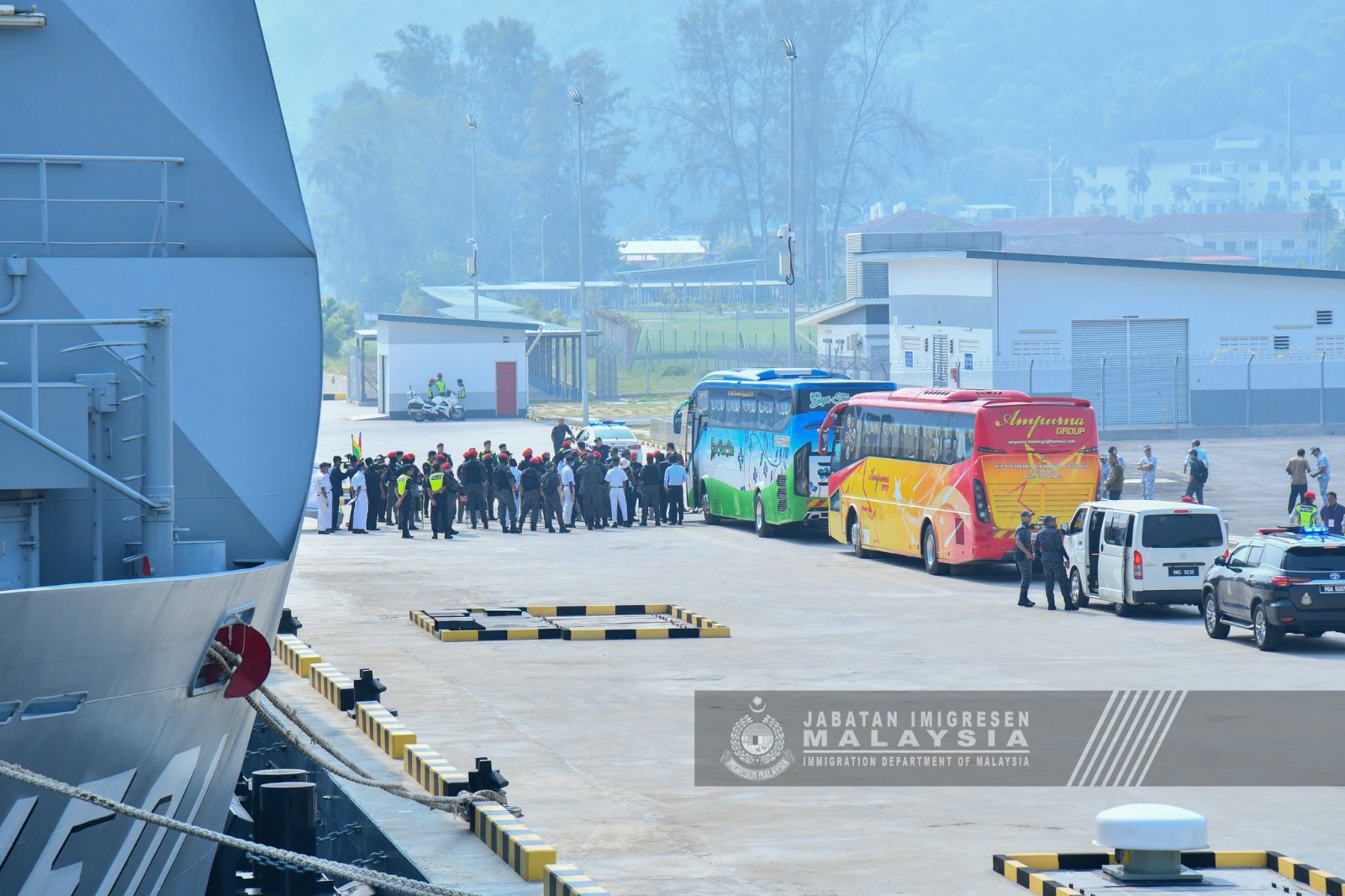
The first phase is being coordinated by the Ministry of Home Affairs, with the involvement of the Ministry of Foreign Affairs, the National Security Council, the Ministry of Defence and the Royal Malaysian Navy. The Malaysian Immigration Department is the lead operational agency responsible for identity verification, documentation, security and logistics.
Makhzan said some of those being repatriated did not have identity documents. As a result, the Immigration Department, together with the Myanmar Embassy and relevant Myanmar authorities, carried out joint verification of their nationality before the necessary travel documents were issued.
The Myanmar government has provided full cooperation in the process and deployed three naval vessels to facilitate the repatriation.
UMS Moattama is being used as the main vessel to transport the returnees, while UMS King Sin Phyu Shin is serving as an escort vessel and UMS Thanlwin as a hospital ship.
The three Myanmar vessels will be escorted by Malaysian Navy ships KD Lekir and KD Teguh Samudera to a designated point within Malaysian waters. From there, the Myanmar vessels will continue their journey to Myanmar.
The operation will also involve patrol vessels from the Malaysian Maritime Enforcement Agency (APMM) and the Marine Police, as well as aerial surveillance by helicopters.
“We will not allow them to travel on their own. Our navy will escort the vessels until the designated point,” Makhzan said.
Meanwhile, UiTM war psychology expert and security and political analyst Dr Noor Nirwandy Mat Noordin said the agreement demonstrated Malaysia’s ability to use diplomatic channels to address cross-border issues.
He said the development also reflected the role of ASEAN countries in pursuing regional solutions to regional problems. He added that it further highlighted Malaysia’s role in advancing regional peace diplomacy, particularly in addressing security and humanitarian issues related to Myanmar.
Following the completion of Ops Pier 1.0, the Immigration Department will assess the outcome of the operation, while the Ministry of Home Affairs will evaluate documentation, security, logistics and inter-agency coordination.
Makhzan said the date and number of people to be repatriated in the next phase had yet to be determined. The schedule will depend on the verification of individuals, operational readiness and further coordination with the Myanmar government.
However, both countries have agreed to complete the repatriation of the total 5,000 Myanmar nationals in stages.
According to the Malaysian government, the repatriation programme is being implemented gradually through diplomatic cooperation between the two countries. The government maintains that the process is being carried out in accordance with the country’s Constitution, sovereignty and the rule of law.