


 Play store

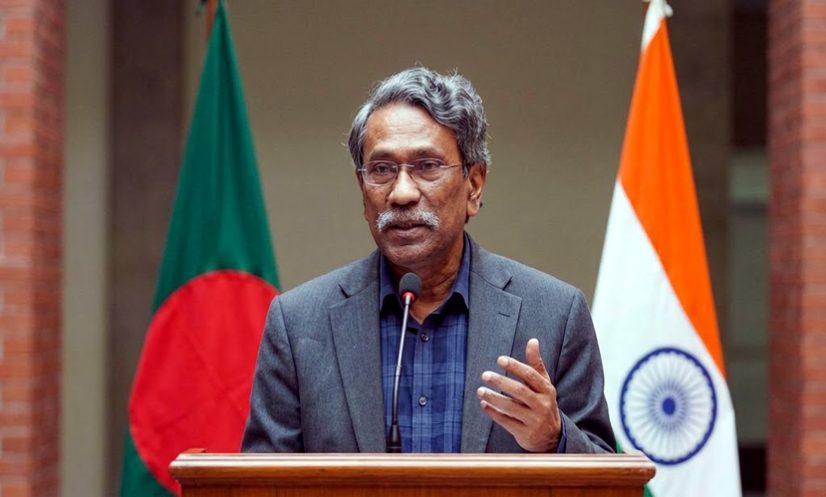
India has yet to fully recognise or address what political analyst and constitutional expert Professor Ali Riaz describes as fundamental flaws in its policy towards Bangladesh, even two years after the political upheaval that led to the fall of Sheikh Hasina’s government.
In recent video commentary and analytical discussions published by vernacular daily Prothom Alo, Riaz argued that New Delhi’s approach to Bangladesh remained shaped by an outdated model that placed excessive emphasis on relations with a particular political regime rather than building durable state-to-state ties.
According to Riaz, one of the central mistakes in India’s Bangladesh policy was its heavy reliance on Sheikh Hasina and her government. Instead of maintaining balanced relations with Bangladesh’s political institutions and wider society, he said, India effectively tied its bilateral engagement to the continuation of one political order.
That approach has created difficulties for India in dealing with the political reality that emerged after Hasina’s ouster in August 2024, Riaz said.
He argued that the political changes in Bangladesh represented more than a change of government and should therefore have prompted New Delhi to reassess the assumptions underpinning its Bangladesh policy.
Riaz’s assessment comes amid continuing tensions between Dhaka and New Delhi, particularly over Sheikh Hasina’s presence in India, her political activities and Bangladesh’s request for her extradition.
He has argued that the responsibility for resetting bilateral relations lies largely with India because, in his assessment, New Delhi’s close association with the former government contributed to the current strain in relations.
“Resetting” the relationship, in his view, would require India to recognise the changed political circumstances in Bangladesh and establish engagement with the state and its institutions rather than relying on a particular political party or leader.
His position echoes a broader argument he has made in Prothom Alo that Bangladesh-India relations should be based on mutual respect and practical state-to-state engagement. In an earlier analysis, he argued that India should maintain relations with the state rather than with any particular political party and that the two countries need to approach their relationship on the basis of political realities rather than emotion.
Sheikh Hasina’s presence in India remains one of the most sensitive issues in the relationship.
Hasina fled Bangladesh for India on 5 August 2024 following the mass uprising that brought down her government. Bangladesh has subsequently sought her extradition, while India has maintained that the matter would be dealt with through the relevant legal process.
Riaz has identified two issues as particularly important for Bangladesh: the extradition of those sought to face justice in Bangladesh and preventing Indian territory from being used for political activities directed against Bangladesh.
In his recent analysis, he maintained that Bangladesh’s position on these issues should not be viewed simply as a temporary political demand. Rather, he said, they are linked to questions of sovereignty, accountability and the nature of future bilateral relations.
It is reported that Dhaka has repeatedly asked India to prevent Hasina from conducting anti-Bangladesh political activities from Indian territory. India, for its part, has said that its policy is not to allow political activities from its territory against another country and has stated that this principle applies in Hasina’s case as well.
Riaz has acknowledged the latter position as a potentially positive step, while arguing that India needs to make clear that such a policy is actually being implemented. He has also pointed to discussions between Bangladesh’s Foreign Minister Khalilur Rahman and Indian High Commissioner Dinesh Trivedi in which the need for a reset in bilateral relations was discussed.
The broader question, according to Riaz, is whether New Delhi has sufficiently adjusted its understanding of Bangladesh following the events of 2024.
He said the overwhelming majority of Bangladeshis do not want a return to the political order that existed before the mass uprising. Instead, he argued, public expectations have shifted towards constitutional accountability, institutional reform and a political system in which state institutions are not subordinated to the interests of a single party or leader.
Riaz has repeatedly stressed the importance of citizen participation and institutional accountability in Bangladesh’s reform process. His broader analysis is that the post-2024 political transition cannot be understood simply as a change in political leadership; it also involves demands for changes to the country’s constitutional and institutional arrangements.
For India, he suggested, this means recognising that Bangladesh’s political landscape has changed fundamentally and that relations based on the assumption of a particular party’s continued dominance are no longer sustainable.
The issue is particularly significant because Bangladesh and India share a long border and have extensive economic, security and regional interests. Their relationship encompasses trade, connectivity, energy, water sharing, border management and wider regional cooperation.
Riaz’s criticism therefore centres not on the need for Bangladesh and India to maintain close relations, but on the basis on which those relations should be conducted.
In his view, a sustainable relationship requires recognition of Bangladesh’s political sovereignty and engagement with the country as a state rather than through preferential ties with a particular political force.
His analysis also comes as Dhaka and New Delhi continue to face disagreements over Hasina’s extradition while maintaining communication on other aspects of bilateral relations. The daily has reported that both sides have indicated an interest in keeping diplomatic channels open and moving the broader relationship forward despite unresolved differences.
Riaz has argued that the longer India fails to adjust its approach to the new political circumstances in Bangladesh, the greater the risk of further erosion of public trust in bilateral relations.
At the same time, he has said Bangladesh’s political parties and policymakers also have responsibilities in managing the relationship. In his analysis of Hasina’s extradition, he urged the government, policymakers and political parties to carefully consider their positions and strategies while maintaining pressure on India over the extradition issue.
The central challenge, therefore, is to move Bangladesh-India relations away from the political assumptions of the past and towards a framework based on sovereign equality, institutional engagement and mutual interests, Riaz’s analysis suggests.
For Bangladesh, he argues, the political changes of the past two years have created a new basis for defining its foreign policy. For India, the challenge is whether it can recognise that shift and recalibrate its approach accordingly.