


 Play store

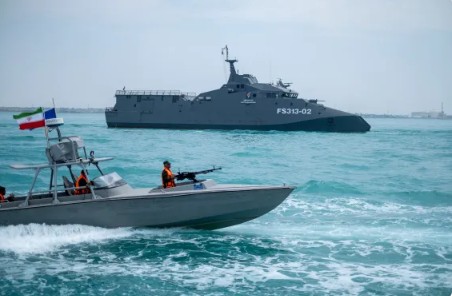
Tehran: Tensions in the Middle East escalated further on Saturday after Iran’s Islamic Revolutionary Guard Corps (IRGC) declared the Strait of Hormuz closed, amid a fresh wave of attacks on commercial vessels and mounting confrontation with the United States.
The announcement came as the United Kingdom Maritime Trade Operations (UKMTO) reported two tanker attacks off the eastern coast of Saudi Arabia, raising fresh concerns about the safety of one of the world’s most important oil shipping routes.
In one incident, a tanker was attacked by a rocket-propelled grenade fired from a small boat about 78 nautical miles northeast of Al Jubayl, Saudi Arabia, on Friday. The vessel sustained damage to its aft port quarter, but all crew members were reported safe.
In a separate incident in the same area, another tanker was struck by an unidentified projectile about 68 nautical miles northeast of Al Jubayl. Its crew were safely evacuated, according to UKMTO. Authorities were investigating both incidents, and vessels were advised to transit with caution.
The latest attacks came amid a broader campaign of assaults on commercial shipping in and around the Strait of Hormuz. Reuters reported on October 14 that Iran had been intensifying attacks on vessels it considered non-compliant with its restrictions, while the US military assessed the threat to commercial shipping as severe.
The Strait of Hormuz connects the Persian Gulf with the Gulf of Oman and the Arabian Sea. It is a critical artery for global energy supplies, and prolonged disruption could affect oil shipments, shipping costs and fuel prices worldwide.
US President Donald Trump has said a US naval blockade has effectively stopped Iranian ships from transiting the waterway. Washington’s maritime restrictions and Tehran’s efforts to assert control over shipping have further heightened the risk of confrontation in the Gulf.
The maritime crisis has also intensified pressure on global energy markets. Brent crude rose to around $110 a barrel amid growing concerns over supply disruptions and attacks on regional energy infrastructure.
Meanwhile, Iranian officials have issued warnings against the use of regional territory or US military bases for attacks on Iran, saying such facilities could face retaliation. Tehran has also continued diplomatic contacts with regional countries as efforts to find a way out of the conflict remain uncertain.
Iranian acting Defence Minister Majid Ibn Reza has dismissed US military signalling over the possible use of powerful conventional bombs against Iranian infrastructure, arguing that Iran’s missile capabilities have altered the strategic balance. President Masoud Pezeshkian has likewise emphasised missile production as a key element of national defence and deterrence.
Iranian Foreign Minister Abbas Araghchi’s reported visit to Iraq for an Organisation of Islamic Cooperation meeting comes against this backdrop of military escalation and regional diplomatic manoeuvring.
The crisis extends beyond maritime security, with fighting and military operations continuing on several regional fronts, including Yemen, Gaza and southern Lebanon. The possibility of further escalation has raised concerns about wider instability across the Middle East.
With attacks on commercial vessels continuing and both Washington and Tehran maintaining hard-line positions, shipping companies face growing uncertainty over safe passage through the Gulf. Any sustained closure or severe restriction of the Strait of Hormuz could have significant consequences for international trade and energy markets. Source: Al Jazeera News