


 Play store

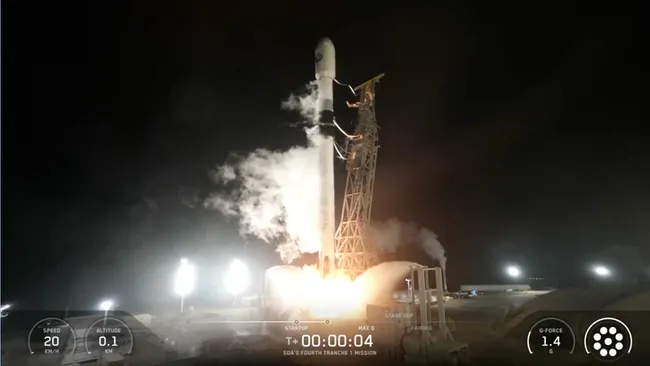
SpaceX launched 21 data-transport satellites for the US Space Force’s Space Development Agency (SDA) aboard a Falcon 9 rocket from California on Saturday.
The rocket lifted off from Vandenberg Space Force Base at 3:39am EDT (0739 GMT), or 12:39am local time, on October 10, five days later than originally scheduled.
An earlier launch attempt on October 5 was aborted during the final minute of the countdown. SpaceX did not disclose the reason for the abort.
The latest mission is part of the SDA’s Proliferated Warfighter Space Architecture (PWSA), a satellite network designed to support global military communications, missile warning and missile tracking.
According to SpaceX, the network uses optically connected satellites in low Earth orbit to provide tactical communications and missile warning, indication and tracking capabilities.
Saturday’s launch was the fourth of nine planned missions to deploy the first operational phase, known as Tranche 1, of the satellite architecture.
The tranche is expected to comprise 154 operational satellites, including 126 data-transport spacecraft and 28 missile-tracking satellites. Four additional satellites will be used for missile-defence testing.
With the latest launch, 84 of the 126 planned data-transport satellites have been deployed, all aboard Falcon 9 rockets launched from Vandenberg since September 2025.
The Falcon 9’s first-stage booster returned to the launch site and landed a little over seven minutes after liftoff. Designated Booster 1103, it completed its sixth mission, having previously flown the SDA’s Tranche 1 mission in July.
SpaceX ended its webcast shortly after the booster landing at the SDA’s request. An update confirming the deployment of the satellites was not immediately available.
The SDA plans to introduce successive generations of the PWSA every two years, with each tranche adding new capabilities to the military satellite network.
Saturday’s mission was the 111th Falcon 9 flight of 2026. More than 70 per cent of the rocket’s launches this year have supported SpaceX’s Starlink broadband satellite network, which comprises more than 11,000 satellites.