


 Play store

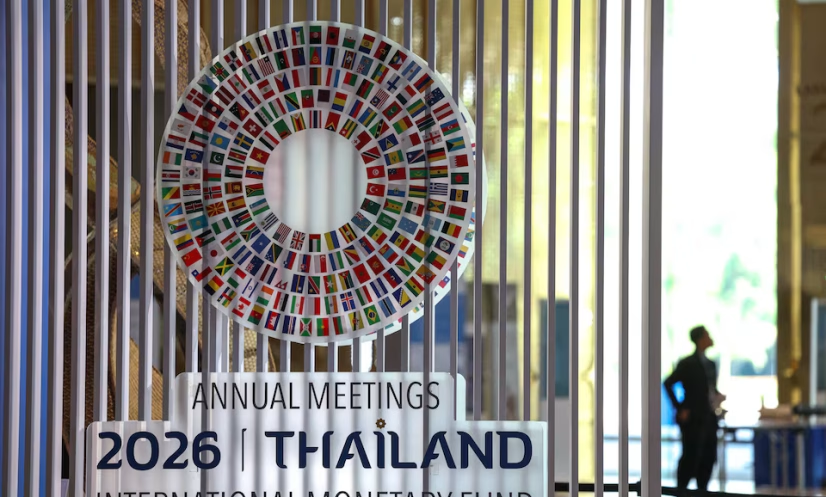
Finance officials from around the world will gather in Thailand this week for the annual meetings of the International Monetary Fund (IMF) and World Bank, facing mounting threats to global growth from the Middle East war, an unprecedented energy supply shock and rising interest rates.
The meetings, being held outside Washington for the first time in three years, will be dominated by the economic fallout from the US-Israeli-led war with Iran, now in its eighth month, which has disrupted energy supplies and fuelled inflation.
World Bank President Ajay Banga told Reuters that global growth had proved more resilient than expected after Iran closed the Strait of Hormuz, a vital shipping route carrying about 20 per cent of the world’s oil. However, mounting pressure from higher diesel and fertiliser prices, along with the risk of a strong El Niño weather pattern, is raising fresh concerns.
Banga said the Bank was not yet revising its global growth forecasts but was closely monitoring developments. The combined effects of higher energy and food costs, debt pressures and extreme weather could create significant challenges in the coming months, he said.
The Group of Seven countries have agreed to release 100 million barrels of diesel and crude oil from emergency reserves to ease supply pressures. US President Donald Trump has also announced a deal with Russia that could bring more diesel to global markets, alongside a temporary waiver of US sanctions on Moscow. The move drew criticism from Ukrainian President Volodymyr Zelenskiy.
More than one billion barrels of oil have been released from inventories since the war began on February 28. However, industry executives warn that readily accessible stocks are dwindling, leaving markets increasingly vulnerable to further price shocks.
IMF Managing Director Kristalina Georgieva has also warned of mounting risks, while the Fund has indicated little change to its forecast of 3 per cent global economic growth in 2026. Some countries, including Ukraine and Gulf economies affected by the conflict, may face downward revisions.
Rising public debt will be another major concern. The IMF says global public debt is at its highest level since World War II and could exceed 100 per cent of gross domestic product before 2030.
Developing economies face particular risks as higher borrowing costs, capital outflows and climate-related shocks strain public finances. Interest payments already account for more than 10 per cent of government revenue in developing countries on average.
Debt relief appears unlikely to gain broad support, while concerns are growing over IMF loan conditions requiring deeper reforms. Critics fear such requirements could force vulnerable countries to impose further spending cuts and tax increases, potentially worsening poverty and triggering social unrest.
US Treasury Secretary Scott Bessent will also skip the high-profile meetings, sending two senior officials in his place. His absence could complicate discussions amid tensions over Iran, Ukraine and other international disputes.