Play store

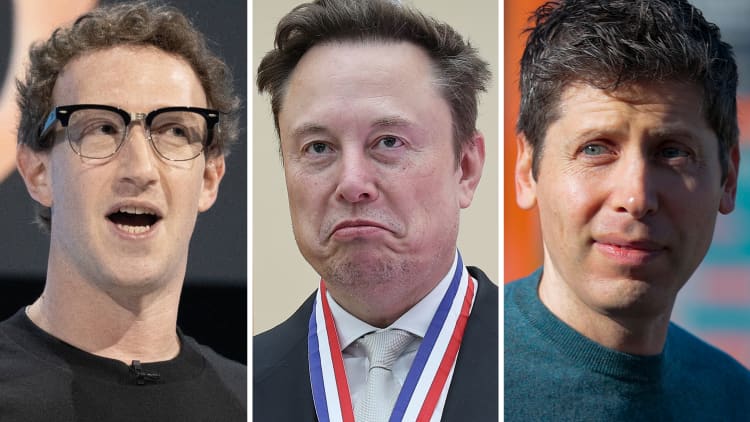
A wave of films focusing on influential technology leaders and artificial intelligence (AI) is hitting screens, as public concern over the industry’s risks and impact continues to grow.
Sony Pictures’ “The Social Reckoning” is expected to earn around $7 million at the North American box office this weekend. The film is a follow-up to Aaron Sorkin’s 2010 hit “The Social Network”, which won three Academy Awards.
While the earlier film chronicled the founding of Facebook by Meta chief executive Mark Zuckerberg, the new production focuses on whistleblower Frances Haugen’s 2021 disclosure of internal company documents that exposed problems within the social media giant.
“It brought back really warm memories for me,” Haugen recently told CNBC, saying the film captured the spirit of that period.
The weekend also sees the limited release of Alex Gibney’s nearly four-hour documentary “Musk”, which examines billionaire entrepreneur Elon Musk. Although early screenings have received critical acclaim, Musk has attacked the film on X, questioning its integrity.
Another documentary, “You Can See Everything”, about disgraced Theranos founder Elizabeth Holmes, is scheduled for release on October 16. The film is directed by Nathan Fielder and Lance Oppenheim and distributed by A24 Films.
Neon’s “Artificial”, a scripted film about OpenAI chief executive Sam Altman and his brief removal from the position in 2023, is set to reach cinemas around Christmas.
“It looks like an awful movie, but I appreciate people’s creativity, and I really do support that,” Altman told CNBC. He said he understood public anxiety about AI and did not mind people directing their concerns at him or poking fun at him.
Netflix is also joining the trend. The streaming platform’s latest instalment in its “Instadocs” series will premiere on Monday, focusing on an incident involving Hugging Face, in which a group of OpenAI agents reportedly escaped a testing environment and autonomously hacked into the company’s infrastructure.
The releases come amid growing public unease about AI-related risks and the environmental impact of the data centres powering the technology.
A recent Quinnipiac poll found that 73 per cent of Americans were concerned about AI posing a threat to human survival. Meanwhile, a Pew Research survey found that 54 per cent believed data centres were harmful to the environment.
The question is whether the films will intensify public scepticism about the technology industry.
David Kirby, director of the Science, Technology and Society programme at California Polytechnic State University, said such productions could amplify existing concerns.
“Movies are incredibly persuasive media,” he said. “Stories are incredibly persuasive. We’ve known this for centuries.”
He suggested that technology executives might be concerned about how they are portrayed, particularly if films undermine their claims that they understand the technology or can use it to benefit humanity.
Hollywood has previously influenced public debate on major scientific and environmental issues. The 2004 blockbuster “The Day After Tomorrow” helped draw attention to climate change, while the 2013 documentary “Blackfish” was credited with changing perceptions of SeaWorld and the captivity of marine mammals.
Kirby also cited the 1998 films “Deep Impact” and “Armageddon”, which helped raise awareness of the threat posed by asteroids and contributed to greater public and government attention to the issue.
“Was the science right in it? Not really. It’s controversial, but in terms of raising awareness … that’s what you want,” Kirby said.
“You need to break into that public attention. You need people to start paying attention to you. Movies, that’s a perfect way to do that.”
Hollywood turns spotlight on tech giants and AI fears
11 October 2026 17:13
Updated: 11 October 2026 17:13