


 Play store

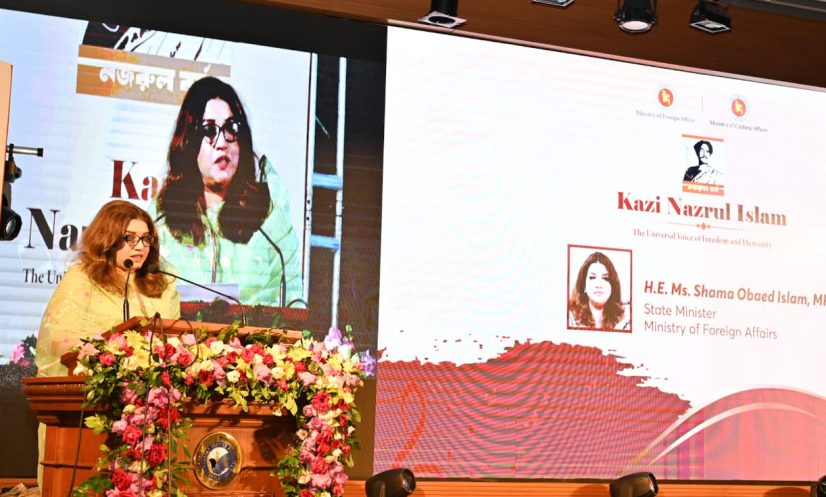
Bangladesh is increasingly viewing culture as a strategic instrument of soft power to strengthen international partnerships, promote people-to-people exchanges and enhance its global standing amid intensifying geopolitical competition, State Minister for Foreign Affairs Shama Obaed Islam said on Sunday.
Describing national poet Kazi Nazrul Islam as a poet of harmony and human solidarity, she said his literary and musical legacy could serve as a powerful cultural ambassador, carrying messages of humanity, tolerance and harmony across borders.
“Diplomacy cannot depend only on dialogues, negotiations or traditional instruments. The world needs the power of culture,” she said, noting that conflicts, strategic rivalries and mounting pressure on multilateral frameworks were challenging international cooperation.
The Ministry of Foreign Affairs, in partnership with the Ministry of Cultural Affairs, organised a seminar titled “Kazi Nazrul Islam: The Universal Voice of Freedom and Humanity” at the Foreign Service Academy in Dhaka. A cultural programme followed the seminar.
Cultural Affairs Minister Nitai Roy Chowdhury attended the event as the chief guest, while State Minister for Cultural Affairs Ali Newaz Mahmood Khyom was among the special guests.
Foreign Secretary Asad Alam Siam, Foreign Service Academy Rector Ambassador Nahida Sobhan and poet Abdul Hye Sikder also spoke at the seminar. Vice-Chancellor of Jatiya Kabi Kazi Nazrul Islam University Professor Dr Mohammad Musharof Hossain presented the keynote address.
Shama Obaed said cultural diplomacy could provide a common platform for bringing people closer by fostering a sense of shared ownership of universal values.
Through creative collaboration and international partnerships, Bangladesh seeks to showcase its rich cultural heritage, values and identity while building goodwill, trust and lasting relationships with the global community, she said.
Highlighting Nazrul’s life and works, the state minister said his literary and musical contributions demonstrated how cultural expression could transcend geographical boundaries, connect societies and promote mutual understanding among nations.
She said the poet’s philosophy remained central to Bangladesh’s cultural identity and its efforts to promote peace, tolerance and international understanding. His legacy, she added, offered an opportunity to introduce his life, literary contributions and universal message to a wider international audience.
Shama particularly highlighted Nazrul’s non-communal philosophy, saying it had contributed significantly to shaping the identity of the Bengali nation, founded on tolerance, respect for diversity and peaceful coexistence among people of different faiths.
These values are deeply rooted in Bangladesh’s social and cultural traditions and reflected in the Constitution’s provisions safeguarding the rights of different religious communities, she said.
Promoting Nazrul internationally would help present Bangladesh as a culturally diverse and intellectually confident nation committed to global peace and development, she added.
The state minister placed particular emphasis on Nazrul’s music, describing it as one of the most enduring aspects of his creative legacy.
His compositions demonstrated how musical traditions from different parts of the world could be brought together to create new forms of artistic expression while preserving a distinctive cultural identity, she said.
According to Shama, Nazrul’s use of lyrics, rhythm, imagery and emotional expression showed that cultural exchange could enrich a society’s traditions rather than diminish its identity.
She also referred to initiatives taken by successive governments led by Shaheed President Ziaur Rahman and former Prime Minister Begum Khaleda Zia to honour the poet and preserve his contributions to Bangladesh’s cultural heritage.
National honours and institutional initiatives recognising Nazrul’s work reflected the importance Bangladesh attaches to his literary and musical legacy, she said.
Shama said the year-long national observance of Nazrul Year offered an important opportunity to celebrate the poet at home while introducing his works, music and universal philosophy to a wider international audience.
Diplomats stationed in Dhaka, senior government officials and cultural activists attended the event.