


 Play store

KATHMANDU: Thousands of families in Nepal are struggling with the psychological toll of missing loved ones following devastating floods and landslides, as uncertainty over their fate leaves relatives caught between hope and grief.
The disaster has renewed concerns about “ambiguous loss”, a psychological concept describing the distress experienced when a loved one disappears without confirmation of whether they are alive or dead.
Dr Brandon Kohrt, a professor of psychiatry, global health and anthropology at George Washington University, said the absence of answers could leave families in a prolonged state of emotional uncertainty.
“Ambiguous loss is not a mental illness. It’s something anyone can go through,” he said in an interview with Inter Press Service (IPS).
Kohrt, who has worked in Nepal for nearly 25 years, said the country had repeatedly experienced such unresolved grief during the civil war, the 2015 earthquake and the latest floods.
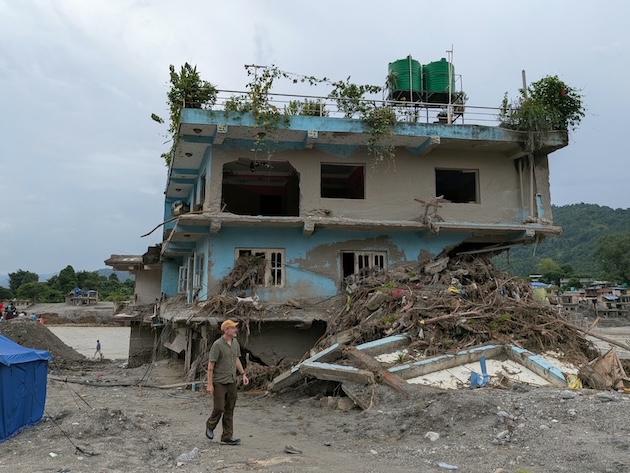
On August 26, floods and landslides swept through the Bhotekoshi and Trishuli river valleys in Rasuwa district, causing widespread destruction and leaving thousands of people missing.
According to figures cited in the interview, 6,145 people remained missing, while only a fraction of the recovered remains had been identified.
The missing include people whose families have been searching for answers, sometimes for weeks, without knowing whether to continue hoping for their return or begin mourning their deaths.
Kohrt said the psychological burden was particularly severe when families had no body to bury and no confirmation of what had happened.
“Nearly every culture has rituals around a body that help us mourn and accept a loss. When there’s no body, we’re stuck in emotional limbo, caught between hope and despair,” he said.
He noted that people responded differently to such uncertainty. Some accepted that their loved ones were gone without formal confirmation, while others continued to hope for their return.
Ambiguous loss can also increase the risk of prolonged and psychologically difficult grief, including depression and anxiety, he said.
Kohrt first arrived in Nepal in 1996, around the beginning of the civil war. Towards the end of the conflict, he worked with the Transcultural Psychosocial Organization Nepal (TPO Nepal) on the mental health needs of former child soldiers.
Some parents whose children had been conscripted as child soldiers never learned what had happened to them.
Those families often faced additional suspicion and blame from their communities because their missing relatives were associated with the conflict, he said.
The situation following the latest floods is different in some respects, as entire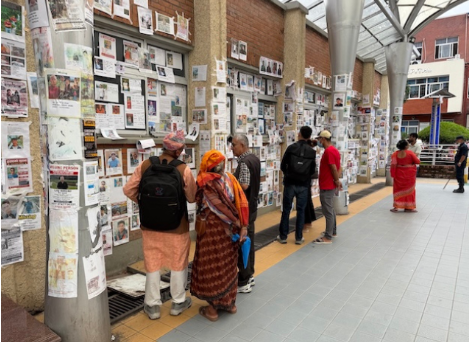 communities have been affected by the disaster.
The 2015 earthquake also left some families without answers. Although most bodies were recovered, landslides buried people in some villages who were never found.
Kohrt said the latest disaster had reinforced the need to recognise the long-term psychological consequences of people disappearing without a trace.
He described the floods as a disaster marked not only by visible destruction but also by absence.
Unlike the earthquake, when damaged buildings and collapsed neighbourhoods were visible, the floods carried away buildings, bridges, vehicles and people, leaving little physical evidence of what had been lost.
Such disasters could become more common as climate change intensified destructive weather events, he warned.
Nepal has traditional rituals that can help families cope with the disappearance of loved ones.
One is Kush Kriya, a substitute funeral ritual performed using grass when a body cannot be found. Kohrt said it could help families mourn, although some were reluctant to perform it while they still believed there was a chance of finding their relatives.
Another ritual, Bakal Garne, involves making a promise or expressing a wish, sometimes at a temple or by releasing fish into a river.
Unlike a substitute funeral, it does not require families to accept that their loved ones have died. Instead, they can perform it while hoping for their safe return or for the recovery of their remains so that funeral rites can be completed.
Providing DNA samples can also have psychological significance beyond helping authorities identify missing people.
Kohrt said the act could give families a sense of purpose and participation in the search, helping them feel less helpless while waiting for answers.
“People need to feel active and engaged, rather than passive and helpless,” he said.
Kohrt said Nepal had developed a strong local mental health emergency response network, reducing the need for foreign experts to take leading roles in disaster response.
Psychiatrists and community psychosocial workers are increasingly taking responsibility for supporting affected communities, while Nepali professionals are also leading donor coordination and planning for longer-term recovery.
He said successful international assistance should ultimately enable local institutions and professionals to lead disaster responses themselves.
Standing before a wall of photographs of missing people at Kathmandu’s Teaching Hospital had been particularly difficult, Kohrt said.
Behind every photograph were relatives and friends struggling to understand what had happened to someone they loved.
Each missing person, he said, represented not just an individual but a wide circle of people affected by the disappearance.
Kohrt also drew on his own experience of grief. A year after the 2015 earthquake, his brother died in the United States, and he was unable to see his body before it was taken to a hospital morgue and cremated.
Although he described that experience as different from the uncertainty facing thousands of Nepali families, he said it helped him empathise with those who had not been able to see their missing loved ones.
Despite the pain and uncertainty, Kohrt said people often found ways to continue with their daily lives.
Families had to care for children and elderly relatives, find new places to live and meet basic needs even while carrying unresolved grief.
However, he cautioned against confusing the ability to carry on with genuine recovery or resilience.
“Day-to-day survival requires focusing on taking care of children, caring for elderly relatives, and finding a new place to live,” he said.
“This shouldn’t be confused with recovery or resilience. It’s just getting by, which so many people do after a disaster.”
He stressed that psychosocial and mental health services needed to remain available over the long term, allowing people to seek support when they were ready to confront their grief.
For families still waiting for news of missing relatives, the search for answers may continue. In the meantime, sustained psychological support can help them navigate the uncertainty without having to face it alone. Source: IPS News