


 Play store

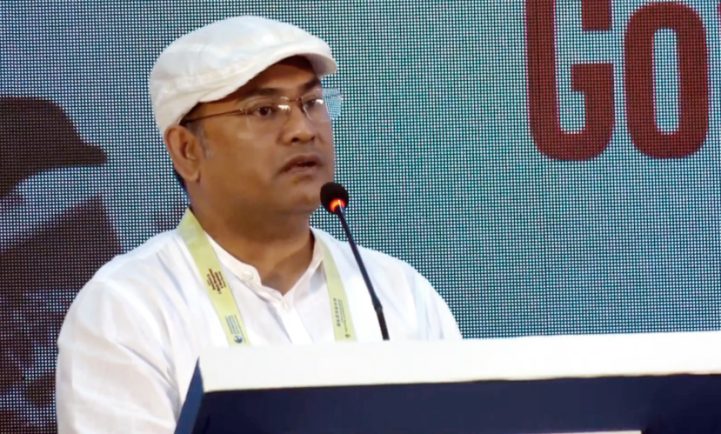
Bangladesh is losing valuable metals and economic revenue due to improper processing of electronic waste (e-waste), said Dr Mohammad Saimum Parvez, special assistant to the prime minister for environment, forests and climate change.
He made the remarks as the chief guest at a seminar titled “Good Governance in E-Waste Management in Bangladesh: Challenges and Prospects” at the Bangladesh-China Friendship Conference Centre in Dhaka on Wednesday.
Dr Saimum Parvez said the government was planning to establish e-waste management centres at divisional and district levels.
“Discussions are underway with foreign investors and local entrepreneurs to process household e-waste into intermediate products for export,” he said.
He added that the government was prioritising domestic waste management rather than importing hazardous e-waste from abroad, in line with the rules of the Basel Convention.
Emphasising public-private cooperation, he said e-waste management could not be ensured through government efforts alone. A sustainable, long-term plan involving stakeholders, private-sector operators and experts was needed.
Referring to the government’s election pledges, he said it was prioritising the three-R principle of reducing, reusing and recycling waste.
Alongside plastic and general waste, the growing volume of e-waste had emerged as a major challenge, he said, stressing the need for effective policies to recycle smartphones, batteries and electric vehicle (EV) waste.
On renewable energy, he said the government was exploring alternative energy sources by harnessing sunlight and coastal wind, while seeking to reduce dependence on fossil fuels through a just transition towards a renewable energy-based economy.
He also said the government planned to plant 250 million trees over the next five years in line with its election manifesto.
To ensure the survival of the trees, the government was working on a tree-monitoring app and satellite imaging systems, he added. These would allow the public to track plantation activities and monitor the expansion of green cover.
In his welcome address, Transparency International Bangladesh (TIB) Executive Director Dr Iftekharuzzaman said corruption existed in various aspects of e-waste management.
Although the E-Waste Management Rules were formulated in 2021, implementation remained stalled due to a lack of capacity and coordination at the Department of Environment, he said.
He also pointed to a shortage of adequate data on e-waste management, which posed challenges to ensuring effective oversight of the sector.
Iftekharuzzaman welcomed the government’s commitment to establishing e-waste processing plants in every district but stressed the importance of recycling waste generated by products used in solar energy systems.
The seminar was informed that around 150,000 electronic voting machines (EVMs) were lying unused in damaged condition across 41 districts, with no effective initiative in place to manage or recycle them.
Other participants included BTRC Commissioner for Engineering and Operations Brig Gen (retd) Iqbal Ahmed, BTRC Director General for Engineering and Operations Brig Gen Shafiur Rahman, TIB Research Associate Abdullah Zahid Osmani and WEEE Society Bangladesh Chairperson Sumon Ahmed Sabir.