


 Play store

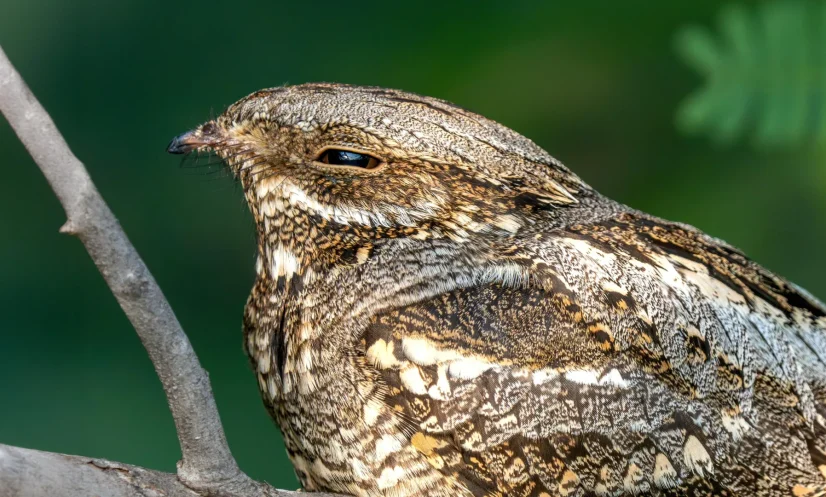
The European nightjar, a bird that migrates thousands of miles between Europe and southern Africa, sacrifices flight efficiency for agility and uses a wingbeat technique previously associated mainly with bats and insects, a new study has found.
Researchers at Sweden’s Lund University discovered that the bird’s wing structure helps it manoeuvre while hunting insects at low speeds but reduces its efficiency in generating lift when flying faster.
The findings challenge the assumption that birds undertaking long-distance migrations have wings primarily optimised for energy-efficient flight.
The European nightjar (Caprimulgus europaeus) faces competing demands, requiring the ability to travel across continents while also flying slowly and making sharp turns to catch insects at night.
To understand how the bird manages these tasks, researchers studied its flight in a wind tunnel, recording wing movements at different speeds and measuring the airflow generated around its wings.
The experiments showed that the nightjar’s broad wing tips, which likely improve manoeuvrability during slow flight, become a disadvantage at higher speeds by reducing the efficiency of lift generation.
“This runs counter to the intuitive image of a long-distance migrant as a perfectly optimized flying machine,” said Christoffer Johansson, an associate professor at Lund University.
Instead, the bird’s wings appear to represent a compromise between the demands of long-distance travel and agile hunting, he said.
The researchers also discovered an unusual feature of the nightjar’s flight: it continues to generate forward thrust while raising its wings during the upward phase of each wingbeat, known as the upstroke.
Such active thrust generation during the upstroke has mainly been associated with bats and insects, making the finding particularly interesting for the study of bird flight.
The discovery suggests that animals with different evolutionary histories may have developed similar aerodynamic solutions to the challenges of flying.
The upstroke can contribute to forward propulsion rather than serving only as a passive or lift-generating movement, Johansson said, particularly when an animal cannot fold its wings substantially during the upward motion.
The findings also offer insights into how evolution shapes animals that must use the same body structures for different purposes. Rather than optimising wings for a single task, natural selection can favour designs that balance competing demands.
The research could also help engineers develop more effective flapping-wing aircraft, including drones and other robotic flying machines. Understanding how the nightjar generates thrust during the upstroke could inform designs for aircraft whose wings face similar mechanical constraints.
The researchers plan to investigate whether the flight mechanism is common among other birds and flying animals or represents a more specialised adaptation of the nightjar.
The work could help distinguish aerodynamic principles specific to the species from those shared more widely across the animal kingdom, potentially opening new avenues for bio-inspired aviation technology.