Play store

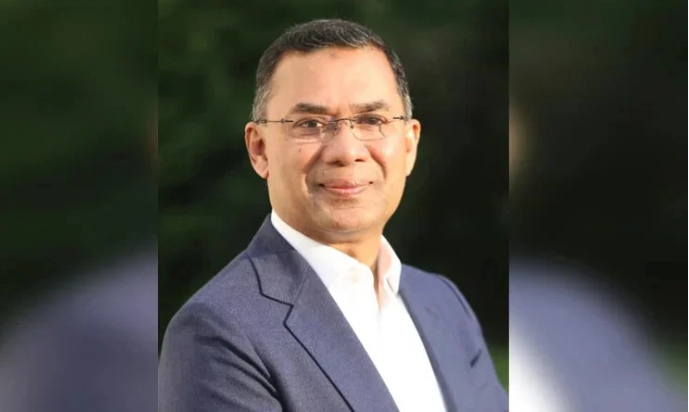
Japan expects Prime Minister Tarique Rahman’s upcoming visit to create fresh momentum for economic cooperation, boost investor confidence and strengthen the two countries’ Strategic Partnership, with investment, infrastructure development and human resource development high on the agenda.
The visit is also expected to deepen bilateral understanding, advance shared priorities on regional peace and security, and reinforce cooperation in support of Bangladesh’s development goals.
Tarique Rahman will pay an official visit to Japan from October 26 to 29 at the invitation of Japanese Prime Minister Sanae Takaichi. The two governments formally announced the visit on October 20.
During the visit, the Bangladesh prime minister will hold high-level bilateral talks with Takaichi at her office in Tokyo on October 27. The Japanese prime minister will also host a luncheon in his honour, Foreign Secretary Asad Alam Siam said at a media briefing at the Foreign Ministry.
“Japan welcomes Prime Minister Tarique Rahman’s first visit to Japan as Prime Minister,” the Economic Section of the Japanese Embassy in Dhaka said in response to a query from BSS about Tokyo’s expectations from the visit.
Japan hopes the visit will advance cooperation towards regional peace and security and shared prosperity, while providing an opportunity for both countries to reaffirm their common priorities and explore ways to align bilateral cooperation more closely with Bangladesh’s development objectives.
On the economic front, the Japanese side indicated that investor sentiment was improving in response to the new government’s pro-business policies.
“We also attach importance to improving the investment environment, advancing infrastructure cooperation and strengthening human and institutional capacity,” the embassy’s Economic Section said.
The prime minister is scheduled to deliver the keynote address at the Japan-Bangladesh Economic Forum and meet Japanese business leaders to discuss investment opportunities, trade expansion and industrial cooperation.
His tentative programme also includes meetings with representatives of the Japan-Bangladesh Parliamentary Friendship League and the Japan-Bangladesh Committee for Commercial and Economic Cooperation.
Meetings are also planned with the presidents of the Japan International Cooperation Agency (JICA) and the Japan External Trade Organization (JETRO), the governor of the Japan Bank for International Cooperation (JBIC) and the chairman of the Sasakawa Peace Foundation.
The proposed itinerary includes visits to an LNG terminal and a power plant in Futtsu City, Chiba, the headquarters of UNIQLO and a Toyota factory in Nagoya. These visits are expected to provide opportunities to explore Japan’s experience in energy infrastructure, manufacturing, technology and industrial development.
Attracting fresh Japanese investment, expanding bilateral trade and accelerating ongoing development projects are expected to be among the principal economic priorities of the visit.
The two countries are expected to discuss the effective implementation of the Bangladesh-Japan Economic Partnership Agreement (EPA), signed in February 2026, and explore ways to expand market access for Bangladeshi products in Japan.
The agreement is expected to provide a framework for strengthening trade and investment ties, while closer engagement with Japanese businesses could help Bangladesh attract investment in export-oriented industries, manufacturing and other productive sectors.
Foreign Secretary Asad Alam Siam said memorandums of understanding or cooperation arrangements might be announced during the visit in areas including agriculture, fisheries, human resource development, skills enhancement, civil aviation, trade, environmental conservation and local government modernisation.
Detailed discussions are also planned on Japanese support for establishing factories in Bangladesh, generating employment and developing human resources in line with the prime minister’s priorities.
Improving the investment climate is likely to be particularly important as Bangladesh seeks to attract more foreign direct investment, diversify its industrial base and create jobs for its growing workforce.
Japan’s Economic Section in Dhaka said the visit would provide an opportunity to discuss investment-related challenges, reinforce business confidence and lay a sound foundation for future economic initiatives.
It also stressed the importance of effective follow-up to high-level discussions, noting that translating shared priorities and commitments into practical outcomes would be essential to sustaining business confidence and encouraging further investment.
Progress in ongoing cooperation was another priority for Japan. Tangible improvements in existing initiatives, the embassy indicated, would help reinforce confidence among investors and businesses considering new projects in Bangladesh.
Beyond bilateral economic relations, the two sides are expected to discuss regional and international peace and stability, a sustainable and peaceful resolution to the Rohingya crisis, and stronger cooperation in addressing energy-related challenges.
Energy cooperation is particularly significant as Bangladesh seeks to strengthen energy security, improve infrastructure and secure reliable supplies to support industrial growth.
The proposed visit to energy facilities in Japan could also provide an opportunity to exchange views on energy infrastructure and related technologies, although the outcome of such discussions will depend on the agreements and initiatives finalised during the visit.
Japan has remained one of Bangladesh’s major development partners since independence, extending support for infrastructure development, human resource development and institutional capacity building.
Major Japanese-supported projects in Bangladesh include Dhaka’s metro rail system, the third terminal of Hazrat Shahjalal International Airport and infrastructure development at Matarbari.
These projects reflect the breadth of Japan’s engagement in Bangladesh’s infrastructure and economic development. Continued cooperation in transport, energy and industrial infrastructure is expected to remain important as Bangladesh pursues further economic expansion.
The visit will also provide an opportunity to review the progress of existing projects and identify areas where Japanese financing, technology and expertise could contribute to Bangladesh’s development priorities.
The visit comes as Bangladesh and Japan seek to build on the Strategic Partnership established in 2023 and broaden cooperation beyond traditional development assistance.
Investment, trade, infrastructure, technology transfer and human resource development are expected to remain central to the partnership as both countries explore new avenues for economic engagement.
For Bangladesh, the immediate challenge will be to translate political goodwill and business discussions into concrete investment commitments, new industrial projects and employment opportunities. For Japan, an improved investment environment and effective implementation of agreed initiatives will be important in encouraging businesses to expand their engagement with Bangladesh.
The Japanese side has emphasised that sustained follow-up will be necessary to turn the visit’s discussions into tangible outcomes.
The four-day visit is therefore expected to serve not only as an opportunity to reaffirm longstanding bilateral ties but also as a platform to strengthen economic cooperation, improve investor confidence and give fresh impetus to the Bangladesh-Japan Strategic Partnership.