


 Play store

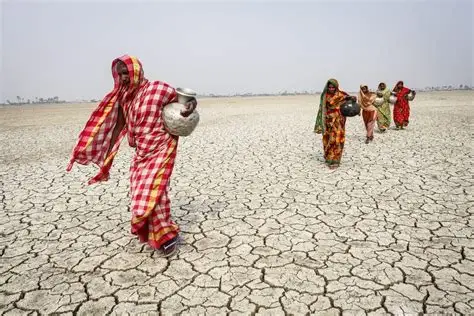
Rajshahi: The government has taken an initiative to expand safe water supply and sanitation facilities in 123 upazilas across 16 districts in the Barind region under Rajshahi and Rangpur divisions, with an estimated cost of Tk 1,203.73 crore.
The Local Government Division has proposed the project, titled “Safe Water Supply and Sanitation Project in the Barind Region”, for implementation by the Department of Public Health Engineering (DPHE) from October 2026 to March 2030, with the entire cost to be financed by the government.
“The project will improve public health and living standards in the greater Barind region through the expansion and development of safe water supply and sanitation facilities,” the Planning Commission said in its project summary prepared for consideration by the Executive Committee of the National Economic Council (ECNEC).
The project is scheduled to be placed before the next ECNEC meeting, set to be held tomorrow at the Bangladesh Secretariat, with ECNEC Chairman and Prime Minister Tarique Rahman in the chair.
A senior Planning Commission official told BSS that the project proposes installing 59,778 improved twin-pit latrines for low-income households, alongside 4,394 community-based water supply units, 22,176 shallow tubewells and 4,829 deep tubewells.
The plan also includes 5,399 shallow tubewells equipped with submersible pumps and reservoirs, 1,113 deep tubewells with submersible pumps and reservoirs, 125 public toilets, 1,068 ring wells and 1,797 rainwater harvesting systems.
In addition, the project provides for the re-excavation of ponds and the construction of 16 pond sand filters to improve access to safe water.
The initiative comes amid growing concerns over water scarcity in the Barind region, where declining groundwater levels, recurring droughts and inadequate groundwater recharge have made access to safe drinking water increasingly difficult.
According to the project document, the Barind region ranks second among six water-availability hotspots identified in the Bangladesh Delta Plan 2100.
“Climate change, excessive groundwater extraction and inadequate groundwater recharge are making the shortage of safe water in the Barind region increasingly acute,” the official said.
Groundwater levels fall significantly during the dry season, causing shortages of drinking water and irrigation supplies across large parts of northern Bangladesh. Although the situation improves to some extent during the monsoon, the seasonal recovery is insufficient to resolve the region’s persistent water challenges.
The project document also shows that only 63.6 per cent of the population in the region has access to basic sanitation facilities.
Inadequate sanitation increases the risk of waterborne diseases and environmental pollution, threatens public health and reduces productivity, ultimately hampering socioeconomic development, it said.
The Planning Commission selected the 123 upazilas across the two divisions for the project in view of recurring droughts, irregular rainfall, falling groundwater levels and limited access to safe water sources. Climate change and population growth have further intensified the pressure on available water resources.
The proposed infrastructure is expected to improve access to safe drinking water, promote hygienic sanitation practices and reduce the health risks associated with unsafe water and inadequate sanitation, particularly among low-income households.
The project also seeks to diversify water sources through community-based supply systems, tubewells, ring wells and rainwater harvesting facilities, while pond re-excavation and pond sand filters are expected to support alternative water supply options in suitable locations.
The project cost has been distributed across four fiscal years, with Tk 292.93 crore allocated for 2026-27, Tk 350.37 crore for 2027-28, Tk 367.58 crore for 2028-29 and Tk 192.85 crore for 2029-30.
The project evaluation committee recommended approval at a meeting held on January 26, 2026, subject to compliance with its decisions.
The Planning Commission said the initiative was also consistent with the government’s election manifesto commitment to developing modern and safe communities through improved safe water supply and waste management.
As the estimated cost exceeds Tk 50 crore, the project requires ECNEC approval under the government’s development project formulation, processing, approval and revision guidelines issued in June 2022.
After completing the necessary procedures, the Planning Commission has recommended placing the project before ECNEC for consideration and approval.
If approved, the initiative will represent a major public investment in addressing the Barind region’s longstanding water and sanitation challenges. Its effectiveness, however, will depend on timely implementation, proper maintenance of the installed facilities and sustainable management of groundwater and other water resources.