


 Play store

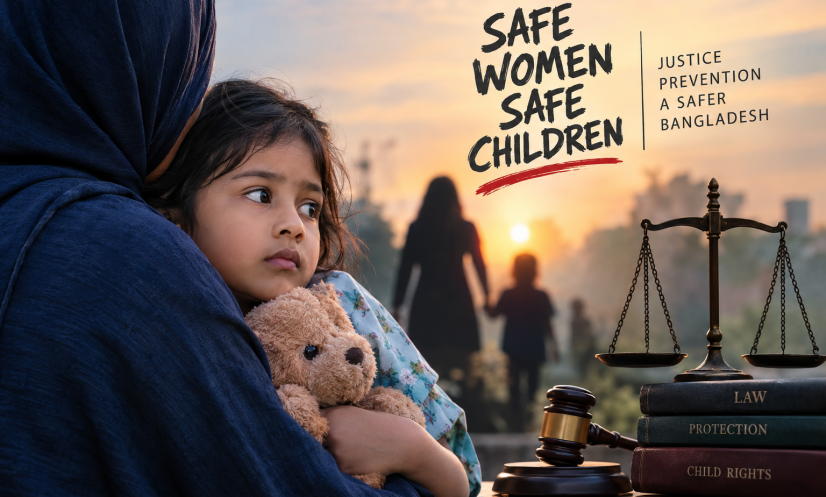
➤Sexual violence against women and children is not merely a criminal justice issue; it is a test of a society’s commitment to human dignity, public safety and the rule of law. Rape, child sexual abuse, molestation and other forms of sexual harassment can cause lasting physical and psychological harm, while undermining public confidence in families, educational institutions and social protection systems.
Bangladesh needs stronger preventive measures, more effective investigations and greater institutional accountability to address these crimes. At the same time, allegations of organised conspiracies, deliberate provocation or attempts to damage an institution’s reputation must be assessed through credible evidence rather than speculation.
The central question is not whether society should take sexual violence seriously—it must. The real challenge is how to prevent abuse, protect survivors, establish the truth and ensure justice without allowing misinformation, prejudice or institutional influence to obstruct the process.
☞The evidence demands action-
The Violence Against Women Survey 2024, conducted by the Bangladesh Bureau of Statistics (BBS) with support from the United Nations Population Fund (UNFPA), provides an important indication of the scale of violence against women in Bangladesh.
According to findings released on October 13, 2025, 76 per cent of women surveyed reported experiencing at least one form of violence by a current or former husband during their lifetime. Some 49 per cent reported such experiences during the preceding 12 months. The survey interviewed 27,476 women.
These findings highlight the need for stronger protection mechanisms, accessible support services and greater public awareness. They also underline the importance of addressing the social stigma, fear of retaliation and barriers to justice that may prevent survivors from reporting abuse.
The figures relate to violence as defined by the survey and should not be interpreted as the prevalence of rape or any single category of sexual offence.
Children face additional vulnerabilities in homes, schools, madrasas, residential institutions and online environments. Protecting them requires more than public condemnation after a crime has occurred. It requires preventive policies, responsible supervision, safe reporting channels and timely intervention.
☞Crime, institutional failure or conspiracy? Evidence must decide-
When allegations of sexual abuse emerge, public discussion can quickly become polarised. Some may attribute an incident to individual criminal behaviour or institutional negligence, while others may allege deliberate provocation or a wider conspiracy.
☞Neither explanation should be accepted or dismissed without evidence.
Authorities must investigate the alleged offence, establish the facts, identify any accomplices where relevant and examine whether negligence or abuse of authority contributed to the incident. If credible evidence points to a coordinated conspiracy or a deliberate attempt to spread false allegations, that claim should also be investigated independently.
However, allegations of conspiracy must never become an excuse to silence complainants, discredit survivors or delay investigations. Equally, an allegation alone does not establish guilt.
A credible justice system must protect survivors while respecting the legal rights of accused persons. The presumption of innocence, proper evidence collection and impartial judicial proceedings are essential to achieving fair outcomes.
The principle is straightforward: neither institutional reputation nor public pressure should determine the truth. Evidence and due process must prevail.
☞Madrasa education: Quality and safeguarding must go hand in hand
Madrasas are an important part of Bangladesh’s educational and religious landscape. Strengthening their academic standards, ethical education and student-protection systems should be part of a broader effort to improve safety across all educational institutions.
An allegation involving an individual must not be used to stigmatise the entire madrasa community. At the same time, religious identity or institutional reputation must never shield anyone from accountability for proven wrongdoing.
Madrasas, schools, colleges and residential educational facilities should adopt clear safeguarding policies and establish confidential, accessible mechanisms for reporting abuse.
Teachers, hostel supervisors and other staff entrusted with children should receive appropriate training and be subject to relevant screening procedures and codes of conduct. Students should receive age-appropriate guidance on personal boundaries, bodily autonomy, respect, safe behaviour and how to seek help.
Institutional authorities should also ensure appropriate supervision in residential facilities, protect students’ privacy and cooperate with law enforcement when allegations warrant formal investigation.
Educational quality should not be measured solely by examination results or religious knowledge. The safety, dignity and wellbeing of students must be equally important indicators of institutional performance.
☞Accountability must extend from institutions to the state-
Protecting women and children requires coordinated action involving police, local administration, social services, educational authorities and community organisations.
◑First, complaints must be taken seriously and investigated without unnecessary delay. Survivors should have access to medical care, psychological support and legal assistance.
◑Second, institutions must establish transparent procedures for receiving complaints, preserving evidence and referring suspected criminal offences to the appropriate authorities. Internal disciplinary measures should not replace criminal investigations where the law requires them.
◑Third, independent oversight is essential when allegations involve people in positions of authority or institutions with potential conflicts of interest. Investigations must be protected from political pressure, personal influence and attempts to suppress evidence.
◑Fourth, local communities should participate in prevention through awareness programmes involving parents, teachers, women’s representatives, social workers and religious leaders. Community-based initiatives, however, must not conduct informal trials or pressure survivors into settlements.
Finally, digital safety requires greater attention. Online harassment, blackmail, the non-consensual distribution of intimate images and the sexual exploitation of children demand effective reporting mechanisms, public awareness and appropriate legal action.
Accountability should be practical, measurable and consistent. Announcements alone will not create safer communities without implementation and regular evaluation.
☞Survivor support and rehabilitation are essential-
Justice does not end with filing a complaint or initiating a prosecution. Survivors may need safe accommodation, medical treatment, psychological care, legal representation, educational support and assistance in rebuilding their lives.
Authorities and support organisations should protect survivors from intimidation, victim-blaming and social exclusion. Particular care is necessary to protect the identities and personal information of children.
The rehabilitation of people convicted of offences may also have a role in preventing repeat offending, where appropriate. Behaviour-change programmes and post-release support must operate within the law and never compromise survivors’ safety.
These responsibilities must remain distinct: survivors deserve protection and support, while allegations against accused persons must be investigated fairly and proven offences must be punished in accordance with the law.
☞Religious and moral education can strengthen prevention-
Bangladesh’s diverse religious and social traditions offer opportunities to promote justice, compassion, self-restraint and respect for human dignity.
Religious leaders, teachers, parents and community organisations can help challenge the normalisation of abuse, discourage victim-blaming and encourage people to report wrongdoing through appropriate channels.
In Islam, the principle of justice is emphasised in Surah An-Nisa, verse 135, which calls for standing firmly for justice. Its practical application requires fairness towards complainants and accused persons alike, regardless of their social position, religious identity or influence.
Leaders of other faith communities can similarly promote their traditions’ teachings on compassion, responsibility and the protection of vulnerable people.
Yet moral instruction alone cannot eliminate sexual violence. Ethical education must be supported by effective law enforcement, accountable institutions, social protection and equal access to justice.
Seven priorities for a safer Bangladesh
Bangladesh should focus on seven practical priorities:
Prevention: Expand public awareness programmes and identify risks in educational, residential and community settings.
Safeguarding: Introduce and enforce child-protection policies in schools, madrasas, colleges and residential institutions.
Impartial investigations: Ensure that evidence, not institutional influence or public pressure, determines the course of an investigation.
Survivor-centred services: Improve access to healthcare, psychological support, legal assistance and safe accommodation.
Institutional transparency: Establish clear complaint procedures, independent oversight and meaningful accountability.
Reliable data: Improve the collection and assessment of information on complaints, investigations, prosecutions and prevention outcomes while protecting privacy.
Community participation: Engage families, educators, journalists, social workers and religious leaders in sustained efforts to prevent abuse.
These measures should be supported by regular monitoring to determine whether they are improving safety, access to justice and institutional accountability.
Justice must come before speculation
Sexual violence against women and children cannot be treated as an inevitable feature of society. Nor should every incident be labelled a conspiracy without credible evidence.
Bangladesh needs a response that combines prevention with impartial investigation, legal accountability with survivor support, and moral education with institutional reform.
Madrasas and other educational institutions must provide safe environments for students. Families and communities must reject abuse and victim-blaming. Public authorities must investigate complaints fairly, protect vulnerable people and ensure that proven offences are dealt with under the law.
A safer society will not emerge through rumours, collective blame or the protection of institutional reputations at any cost. It will emerge when every credible allegation is taken seriously, every investigation follows the evidence, and every individual receives the protection and fairness guaranteed by law.
The national commitment must be clear: protect every child, uphold every woman’s dignity, establish the truth through impartial investigation and ensure justice for proven crimes.
Info.Sources:
Bangladesh Bureau of Statistics and UNFPA, Violence Against Women Survey 2024; UNICEF Bangladesh, Child Protection resources.