


 Play store

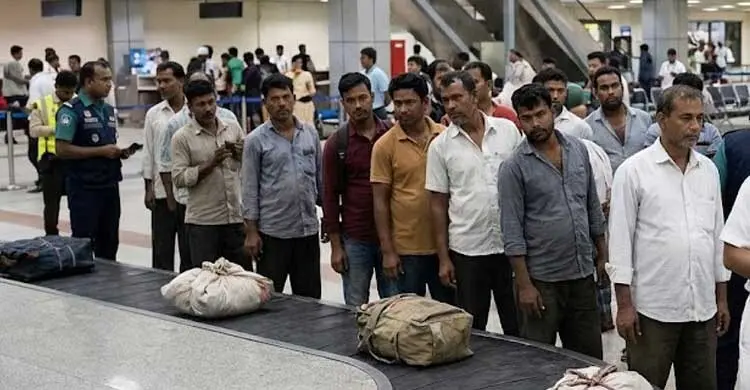
A total of 35 undocumented Bangladeshi migrants have been deported from Italy, Greece and Cyprus, arriving in Dhaka on a special charter flight on Friday (October 23).
Of the returnees, 19 were deported from Italy, 10 from Greece and six from Cyprus.
Immigration police and airport sources told InfoMigrants that the flight, numbered PVG 9445, landed at Hazrat Shahjalal International Airport at 8:15am.
BRAC’s Migration Programme provided emergency assistance, counselling and financial support to help the returnees reach their respective homes, with assistance from the Civil Aviation Security authorities and the expatriate welfare desk at the airport. Representatives of Bangladesh’s Foreign Ministry and the European Union were also present.
Shariful Hasan, associate director of BRAC’s Migration Programme and Youth Platform, confirmed that the 35 Bangladeshis arrived in Dhaka on the special flight.
In 2017, the Bangladesh government signed standard operating procedure (SOP) agreements with European countries to facilitate the return of undocumented Bangladeshi migrants. Since then, around 5,000 Bangladeshis have been repatriated under the arrangements, according to BRAC.
The NGO said Cyprus, Italy, Romania and France were among the countries that had returned the largest numbers of Bangladeshi migrants.
According to available information, the charter flight originated in Rome, the Italian capital. Migrants from Greece and Cyprus were reportedly brought to Rome to board the same flight. The aircraft then made stopovers in Cape Town and Islamabad before arriving in Dhaka.
Earlier this month, European Commissioner for Internal Affairs and Migration Magnus Brunner visited Dhaka. During the visit, Bangladesh and the EU agreed to work towards eliminating irregular migration and creating opportunities for skilled Bangladeshi workers to enter the European labour market through legal channels.
Brunner praised the strategic partnership and cooperation between Bangladesh and the EU.
He said preventing human trafficking and closing irregular migration routes were priorities for both sides. Reducing irregular migration, he added, would make it easier for Bangladeshi workers to access the European labour market through legal pathways.