


 Play store

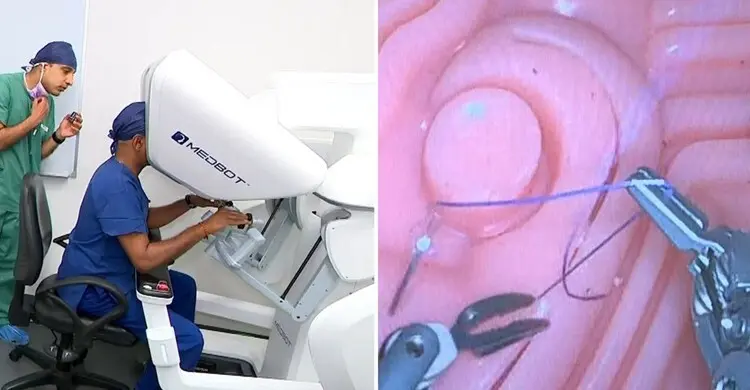
SYDNEY: In a breakthrough that could transform access to specialised medical care, a surgeon in Sydney has successfully performed a remotely controlled surgical procedure on an artificial kidney in Shanghai, China, nearly 7,500 kilometres away.
Associate Professor Ruben Thanigasalam conducted the cross-continental demonstration from the Chris O’Brien Lifehouse in Sydney, while a robotic surgical system operated on the artificial organ at a hospital in Shanghai. The procedure was reported by Australian media on Monday.
The demonstration highlights how advances in robotic surgery and high-speed telecommunications could allow specialists to perform complex procedures on patients in distant locations without travelling to the hospitals where the patients are being treated.
The operation used an advanced robotic system known as Toumai, controlled through a high-speed 5G internet connection. The surgeon’s hand movements in Sydney were transmitted to the robotic arms in Shanghai, allowing them to carry out the procedure with precision.
During the demonstration, Thanigasalam cut into the artificial kidney and then carefully stitched it back together. The procedure was completed successfully, with no noticeable delay or disruption to the connection, according to the report.
The technology is designed to translate a surgeon’s movements into corresponding actions by robotic instruments at a remote location. Reliable connectivity is essential because even a slight delay in transmitting movements could affect precision and safety during an operation.
The successful demonstration marks a significant step towards expanding the potential use of remote robotic surgery, particularly in countries where patients in rural and remote communities have limited access to specialist medical services.
Australia, with its vast geographical area and widely dispersed population, faces particular challenges in providing advanced healthcare outside major cities. Patients in remote areas often have to travel long distances to Sydney and other metropolitan centres to receive treatment from specialised surgeons.
If the technology becomes available for routine clinical use, patients could potentially undergo certain complex procedures at local hospitals under the remote guidance and control of specialists based in major cities. This could reduce travel costs, shorten waiting times and improve access to specialised treatment.
The potential benefits are not limited to Australia. Remote robotic surgery could eventually help connect medical specialists across national borders, allowing hospitals in areas with shortages of experienced surgeons to access expertise from leading medical centres elsewhere in the world.
However, the technology would require rigorous clinical testing, reliable telecommunications infrastructure and strong safeguards to ensure patient safety before it could be widely introduced. Hospitals would also need contingency arrangements to deal with connection failures or technical problems during surgery.
The Sydney-Shanghai demonstration was described as the first test of its kind in Australia. Doctors hope that, with the necessary funding and further development, the technology could progress beyond laboratory demonstrations to operations on human patients within the next six months.
Such a transition would depend on further validation, regulatory approval and the establishment of appropriate clinical safety standards.
Although the demonstration was performed on an artificial organ rather than a patient, it offers a glimpse of a future in which geographical distance may no longer be a major barrier to accessing specialist surgical expertise.