


 Play store

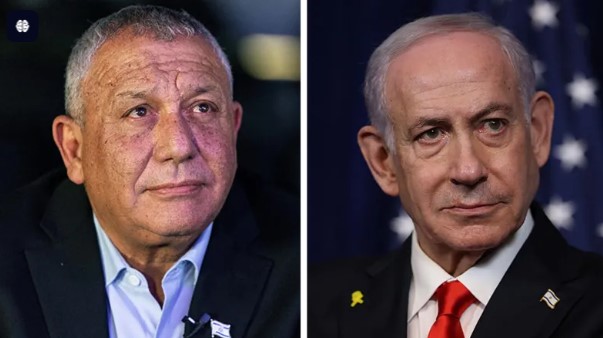
JERUSALEM: Voter turnout has reached record levels as Israelis cast their ballots in an election widely viewed as one of the most consequential in the country’s history, with incumbent Prime Minister Benjamin Netanyahu facing a tight challenge from former military chief Gadi Eisenkot.
Polling published on Friday suggested the two were running almost neck and neck in the race for prime minister. However, neither political bloc was projected to secure the 61 seats needed to form a majority government, raising the prospect of weeks or months of coalition negotiations.
The campaign has centred on security and democracy, with the election widely seen as a referendum on Netanyahu’s rule.
Several major parties reported alleged irregularities at polling stations on Tuesday morning. However, Israel’s Central Election Committee (CEC) said there was no evidence of systematic tampering with ballot papers.
Israel’s proportional representation system has long required parties to form coalitions to govern. The tight race has made the outcome particularly uncertain, with competing parties already setting limits on potential alliances.
Eisenkot, leader of the newly formed Yashar Party, heads the so-called “change bloc”, a coalition of parties with differing ideologies united by their aim of ousting Netanyahu.
The bloc also includes former prime minister Naftali Bennett and Avigdor Lieberman, both right-wing politicians known for their hardline security positions, as well as Yair Golan, a left-leaning former general.
For Netanyahu, who first became prime minister in 1996, a return to power depends on securing another alliance with the far-right and ultra-Orthodox parties in his current governing coalition, described as the most right-wing in Israel’s history.
Arab parties are also contesting the election. Arabs make up about one-fifth of Israel’s population, and many identify as Palestinian citizens of Israel. Their parties could potentially hold the balance of power, although all but one of the leading Jewish parties have ruled out working with them.
Security has dominated the campaign, with opposition parties blaming Netanyahu for the unprecedented security failure that preceded the Hamas-led attacks on Israel on October 7, 2023. Nearly 1,200 people were killed and 251 taken hostage to Gaza in the attacks.
The opposition has called for an independent commission of inquiry, a move Netanyahu has long resisted, arguing that such an investigation would be biased against him.
Opposition leaders have also accused Netanyahu of undermining democracy. He faces an ongoing corruption trial, with charges he denies, and continues to pursue controversial judicial reforms that triggered mass protests before the October 7 attacks.
Netanyahu has sought to present himself as the country’s strongest security leader, pointing to what he describes as strategic victories in Israel’s wars across the Middle East and his close relationship with US President Donald Trump.
Israel’s Channel 12 reported on Sunday that Netanyahu had pushed for last-minute military action that could trigger a confrontation with Iran before the election, but was opposed by military chief Eyal Zamir. CNN reported the following day that Netanyahu had also tried to persuade Trump to authorise fresh strikes on Iran, but Trump declined. Netanyahu denied both reports.
In the final days of the campaign, Netanyahu drew attention for posting an AI-generated image depicting a nuclear bomb striking Tel Aviv. He warned that he was the only leader capable of protecting Israel if Iran acquired nuclear weapons. Eisenkot described the prime minister as “hysterical”.
Cons