Play store

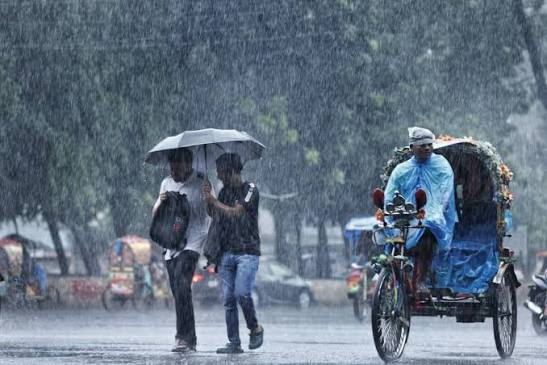
As relentless monsoon rain continued to lash the capital, the worst suffering was borne not only by stranded commuters but also by thousands of daily wage earners whose livelihoods depend on working outdoors.
For the third consecutive day, prolonged rainfall disrupted normal life in Dhaka on Monday, leaving many low-income workers without income while forcing office-goers, students and other residents to wade through waterlogged streets.
Among those hit hardest was Rafiqul Islam, a soil chopper, who said the continuous rain had left him unemployed for several days.
“I have no money left to buy essentials for myself and can’t send money to my family living in the village,” said Rafiqul, adding that every day without work pushes his family deeper into financial uncertainty.
Like Rafiqul, hundreds of construction workers, day labourers, van pullers and street vendors were seen waiting idly at roadside intersections, hoping the weather would improve enough for them to earn at least a day’s wage.
Rickshaw pullers also reported a sharp decline in passengers despite spending long hours on flooded roads.
“They blame us for charging a little extra during the rain, but they don’t consider that we get far fewer passengers when the weather is like this,” said Shamsul Haque, a rickshaw puller.
“Our income falls significantly even though we work under much tougher conditions,” he added.
Meanwhile, rain began again across the capital on Monday morning after a brief lull overnight, renewing fears of waterlogging in many low-lying areas.
The Bangladesh Meteorological Department (BMD) recorded 175mm of rainfall in Dhaka over the past 24 hours, marking the capital’s highest single-day rainfall of the current monsoon season.
During the same period, Chattogram recorded 160mm of rainfall, the second-highest in the country.
Although rainfall intensity eased somewhat in the capital on Monday, the BMD forecast increased rainfall activity in Rangpur, Rajshahi, Mymensingh and Sylhet regions over the coming hours.