


 Play store

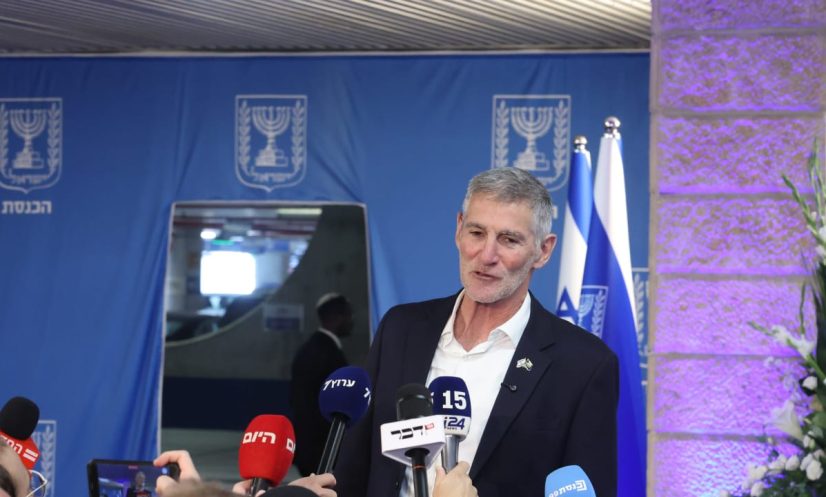
Tensions and mutual suspicions are growing within the bloc led by Gadi Eisenkot over efforts to form a new government, with questions emerging about whether key partners are genuinely committed to a coalition involving the ultra-Orthodox parties.
Sources within the bloc have expressed doubts about Democrats party leader Yair Golan’s willingness to support a 61-seat coalition that includes the haredi parties.
According to the sources, Golan prefers a minority government backed from outside by the Joint List and Ra’am and has little interest in bringing the ultra-Orthodox parties into a governing coalition.
They say Golan is not simply keeping both options open but is leaning towards the minority government model.
Against this backdrop, sources view the Democrats’ recent legislative proposals on religion and state as reflecting the party’s genuine ideological position rather than an attempt to appeal to voters or pressure the haredi parties into negotiations.
The issue has emerged as one of the first major sources of disagreement within the Eisenkot-led bloc as it explores possible paths to forming a government.
Suspicions have also emerged over the conduct of former prime minister Naftali Bennett and his faction.
The faction did not hold a media briefing after its meeting, issuing only a short statement and declining to take questions from journalists. Bennett has also maintained a relatively low media profile.
Some sources within the bloc believe Bennett may not be fully committed to forming a government and could see another election as an opportunity to strengthen his political position.
According to these sources, Bennett could benefit from maintaining his position on equal participation in military service and his campaign against draft evasion if the country heads to another election.
Comments by members of Bennett’s electoral list about their willingness to advance military conscription legislation have added to concerns over whether all prospective coalition partners share the same vision or are prepared to make the compromises needed to form a government.
Meanwhile, the haredi parties are increasingly pessimistic about the prospects of reaching agreements that would allow a new government to be formed.
Sources within the haredi parties said their willingness to hold discussions with the Eisenkot-led bloc was genuine and that they remained open to considering proposals.
They insisted that they were not engaging in negotiations merely as a political manoeuvre. However, they said the chances of reaching an agreement remained slim because of significant differences between the sides.
Yisrael Beytenu leader Avigdor Liberman clarified at a faction meeting that Eisenkot’s negotiating team was leading the talks with the haredi parties.
Liberman said he fully supported Eisenkot, remained in close coordination with him and held regular meetings with him, but was not personally conducting the negotiations.
At the same time, several sources within the haredi parties told local media that they had greater confidence in Liberman’s ability to reach an understanding with them than in Eisenkot and his negotiating team.
The differing positions underline the challenges facing the Eisenkot-led bloc as it seeks to build a coalition, with disagreements over the role of the haredi parties, military conscription and the possibility of a minority government adding to uncertainty over the outcome. Sopurce: Jerujalem Post