


 Play store

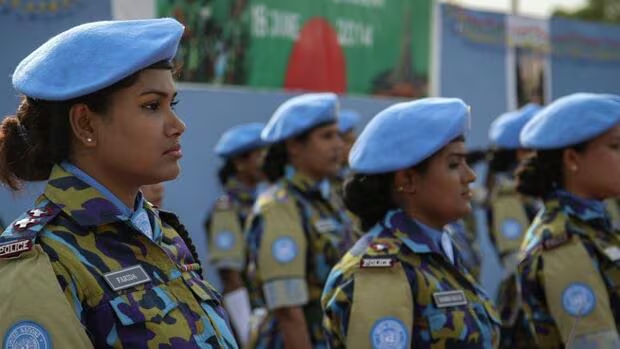
Dhaka: The growing complexity of conflicts around the world is expanding the roles of Bangladeshi women peacekeepers in United Nations (UN) missions, with increasing emphasis on community engagement, civilian protection and addressing sensitive issues such as conflict-related sexual violence.
Beyond their conventional military and policing responsibilities, women peacekeepers are increasingly contributing to efforts to prevent gender-based violence, protect women and children, provide humanitarian assistance and build trust with local communities, officials familiar with the matter said.
Changing security and humanitarian challenges in conflict-affected regions have also underscored the importance of coordinated efforts by male and female peacekeepers, further strengthening Bangladesh’s contribution to international peacekeeping operations.
“The growing complexity of peacekeeping challenges in conflict-affected regions has made the coordinated participation of both women and men increasingly important,” Director of the Inter Services Public Relations (ISPR) Directorate Lieutenant Colonel Sami-Ud-Dowla Chowdhury told media.
The Bangladesh Institute of Peace Support Operation Training (BIPSOT) provides specialised training to women peacekeepers, focusing particularly on gender-related advisory responsibilities, addressing conflict-related sexual violence and ensuring their effective participation in regular peacekeeping operations.
Bangladesh adopted its National Action Plan on Women, Peace and Security in 2019 to promote women’s participation in peace and security initiatives.
An ISPR spokesman said a total of 2,025 women from Bangladesh’s Armed Forces had participated in UN peacekeeping operations as of September 30, 2026.
Currently, 293 female military personnel are deployed in different UN missions, including 280 from the Army, five from the Navy and eight from the Air Force, he said.
Bangladesh Police has also deployed 927 female personnel to UN peacekeeping missions over the years, while four women police officers are currently serving in missions abroad, the official added.
According to the Canada-based, UN-hosted Elsie Initiative Fund for Uniformed Women in Peace Operations (EIF), the number of Bangladeshi women peacekeepers serving in UN missions increased from 263 in 2020 to 507 in 2022 and 533 in 2023. Their respective participation rates stood at 4 per cent, 7.41 per cent and 7.61 per cent.
Available statistics show that a total of 2,952 women from Bangladesh’s three armed services and police have participated in UN peacekeeping missions, while 297 are currently serving in different operations.
In a statement marking the International Day of UN Peacekeepers on June 10, 2026, then Acting UN Resident Coordinator in Bangladesh Carol Flore-Smereczniak said Bangladesh had deployed 206,476 personnel to UN peacekeeping operations since 1988.
As of mid-2026, a total of 4,212 Bangladeshi peacekeepers were serving in nine missions worldwide.
She said the country’s longstanding contribution reflected its commitment to professionalism, sacrifice, mutual trust and principled multilateralism.
The participation of Bangladeshi women in UN peacekeeping operations has evolved significantly over the years. An ISPR report published on December 4, 2017, described their involvement as an important milestone.
In 2017, two female pilots of the Bangladesh Air Force, Flight Lieutenant Naima Haque and Flight Lieutenant Tamanna-e-Lutfi, served in the UN peacekeeping mission in the Democratic Republic of the Congo.
A 160-member all-female Formed Police Unit (FPU) from Bangladesh also served in Haiti from 2015 to October 2017, contributing to security operations, community assistance and reconstruction efforts.
Meanwhile, 30 of the 150 Bangladeshi peacekeepers awarded UN medals in Wau, South Sudan, in 2024 were women, according to the Armed Forces Division (AFD).
Officials said women peacekeepers play a particularly important role in engaging with local women on sensitive issues, identifying security threats, assisting survivors of violence and building confidence among communities.
In many instances, local women feel more comfortable discussing sensitive matters with female peacekeepers than with their male counterparts, allowing peacekeeping personnel to gain a better understanding of security concerns that might otherwise remain unreported.
The importance of women’s participation is also reflected in the UN’s Uniformed Gender Parity Strategy 2018-2028. At the end of 2024, women accounted for 8.2 per cent of military contingent personnel in UN peacekeeping missions.
The UN aims to increase women’s representation in military contingents to 15 per cent by 2028, while setting a target of 25 per cent for military observers and staff officers.
“Expanding women’s professional skills, leadership opportunities and access to positions of responsibility would further strengthen their contributions to civilian protection and building trust among local communities,” the ISPR director said.
Beyond their contribution to international peace and security, participation in UN missions also offers Bangladeshi women opportunities for professional development, financial benefits, leadership experience and greater international recognition, an official concerned said.