Play store

Despite constitutional guarantees and government programmes, thousands of disadvantaged children remain outside the education system, relying on makeshift schools run by NGOs.
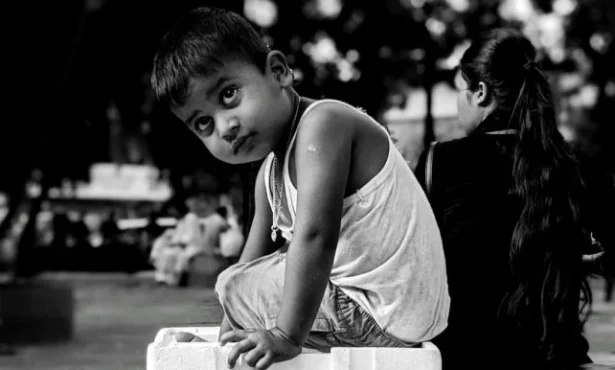
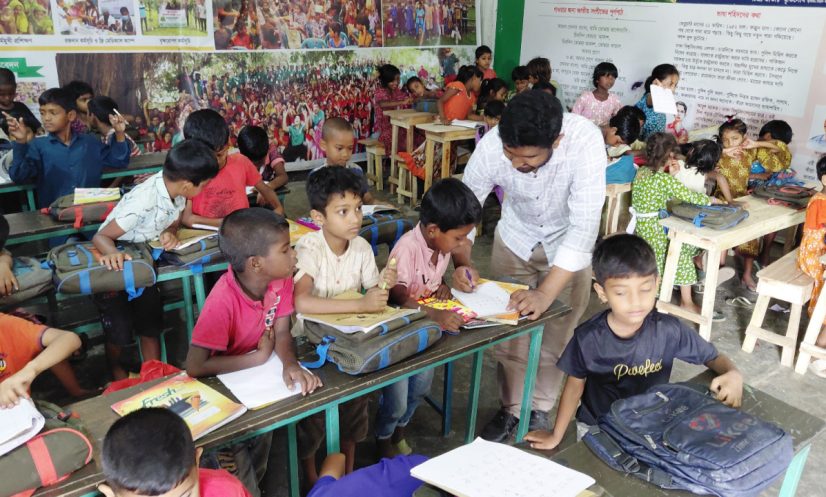
Under a flyover near Dhaka’s Airport Railway Station, a group of children gather every morning on a red tarpaulin spread beneath the open sky. Their makeshift classroom, known as ‘School Under the Sky’, offers education, food and a sense of belonging to children who have dropped out of school or become separated from their families.
Run by the NGO LIDO, the school uses games, songs and interactive activities to teach children who struggle to attend conventional schools. Among its students is 13-year-old Ayan Islam, whose education stopped because his family could not afford school fees and examination costs. Now living near the railway station, he dreams of becoming a teacher.
However, the initiative highlights a wider failure to ensure every child’s right to education.
A 2025 survey by Caritas Bangladesh found that 51.6% of the street children surveyed were not enrolled in any school or madrasa, while 94.3% were excluded from government social safety-net programmes. The survey covered 667 street children and 1,246 low-income families in Dhaka, Mymensingh and Rajshahi.
Although Article 17 of the Constitution guarantees the state’s responsibility to expand free and compulsory education, many disadvantaged children remain beyond the reach of public services.
The 1990 Compulsory Primary Education Act and the 2014 Non-Formal Education Act also provide provisions for bringing out-of-school children, including street children, into alternative education programmes.
The government has launched a Tk158.73 crore project, titled ‘Alo’, to provide non-formal primary education to 19,200 out-of-school children in 64 selected upazilas across the country by December 2028. Another 19,200 young people are expected to receive pre-vocational education and training.
However, field-level classes have yet to begin, and there is no dedicated ongoing programme for street children in Dhaka’s railway stations, bus terminals and slums, according to officials at the Bureau of Non-Formal Education.
Education experts say government initiatives must go beyond approving projects and allocating funds. They stress the need to identify children excluded from mainstream schools, provide trained teachers and ensure their eventual integration into formal education.
LIDO’s organisers say their school is intended as a bridge to safer accommodation and mainstream education, rather than a permanent alternative. However, the centre itself faces shortages of basic facilities, including toilets and reliable access to drinking water.
Legal experts also argue that the government must ensure education for disadvantaged children regardless of whether they have birth certificates, permanent addresses or legal guardians.
The challenge, therefore, is not simply to establish schools but to reach children who have been left behind. Until the government turns its legal commitments and projects into effective action, many street children will continue to depend on the goodwill of private organisations for their most basic right: education.