Play store

Archaeologists have uncovered thousands of ancient stone tools, animal fossils and rare plant remains at a prehistoric lakeside site in southern Saudi Arabia, offering a rare insight into human life around 125,000 years ago, when parts of the Arabian Peninsula were covered by lakes, grasslands and rich vegetation.
The discoveries were made at Uruq al-Julaybah in the Mundafan region of the Empty Quarter. Announced by the Saudi Heritage Commission, the findings resulted from a joint investigation involving the Commission, King Abdullah University of Science and Technology (KAUST) and Griffith University.
Published in the journal Science, the research brings together evidence from archaeology, geology, botany and micropaleontology to reconstruct the ancient environment and the activities of early human populations.
During the last Interglacial period, around 125,000 years ago, much of the Arabian Peninsula experienced a warmer and wetter climate, creating conditions that supported lakes, grasslands and diverse wildlife. Scientists refer to this period as “Green Arabia”.
Using satellite-based terrain modelling, researchers reconstructed an ancient lake covering about 340 square kilometres, with depths reaching up to 29 metres. Sediments and aquatic organism remains suggest that it was a relatively stable freshwater environment surrounded by grasslands and vegetation.
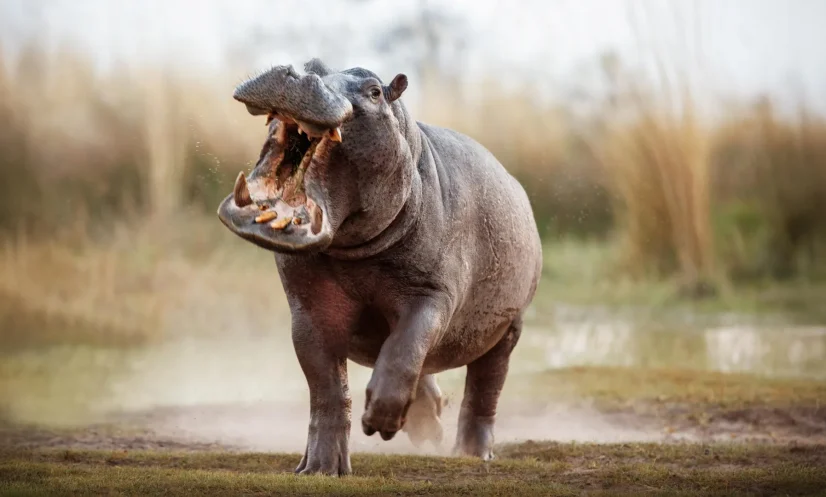
Researchers identified more than 500 fossil specimens across more than 130 locations. The remains included evidence of hippos, extinct long-horned buffaloes, camels, Arabian oryx, gazelles and ostriches, highlighting the region’s rich prehistoric ecosystem.
Archaeologists also recovered 5,511 stone tools measuring more than two centimetres from the main excavation area. More than 98 per cent were made of flint. Analysis showed that their makers used the Levallois technique, an advanced method of preparing stone cores to produce carefully shaped flakes.
Further examination of the tools revealed traces of plants, including vegetation containing toxic compounds. Resin and woody residues suggest that some stone tips were attached to handles or shafts, possibly for use as hunting weapons.
Other plant remains indicate that people processed tubers, bushes and palm leaves. The evidence suggests that vegetation served a range of purposes, including food preparation and the making of everyday tools and equipment.
Researchers said the presence of potentially toxic plant compounds raises the possibility that prehistoric hunters used poisonous substances in their hunting technology. However, they stressed that this interpretation remains tentative. The site also provides some of the earliest known evidence of palm-related vegetation in the region.
The combination of animal fossils, stone tools and plant remains from the same dated archaeological setting makes Uruq al-Julaybah particularly significant. It allows researchers to build a detailed picture of how early humans used the resources available around the ancient lake.
Freshwater, wildlife, vegetation and materials for making tools appear to have made the lake’s shores an attractive place for human activity. Evidence points to stone-tool production, the preparation of hunting equipment, and the processing of animals and plants.
“It is very exciting to see how the collaboration of so many different specialists allows to reconstruct this uniquely complete picture of life, behavior and the environment in the distant past,” said Professor Frans van Buchem, a KAUST professor of geology and co-lead scientist.
Dr Faisal Al-Jibreen, a Heritage Commission researcher and professor of Paleolithic archaeology who participated in the project, described the Lake Mundafan discovery as a significant archaeological find. He said it would help explain how environmental conditions shaped the lives of humans and animals in southern Saudi Arabia during early prehistory.