


 Play store

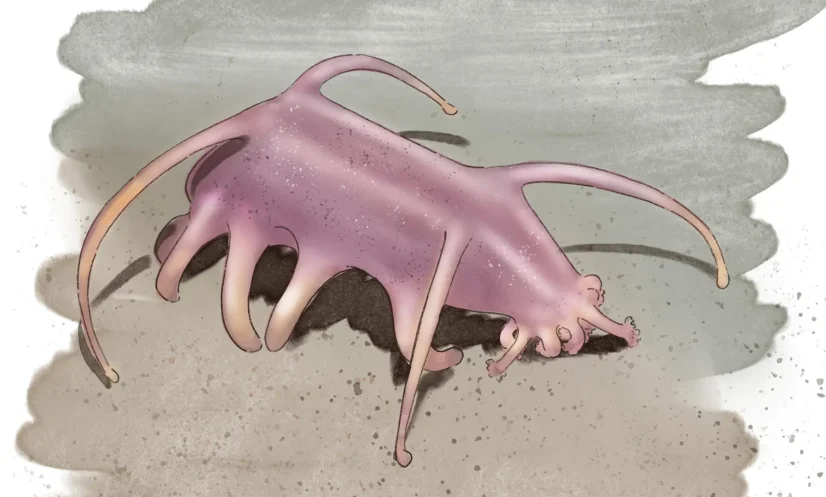
Scientists have discovered a previously unknown bacterium living inside the body walls of deep-sea creatures known as sea pigs, revealing a surprising relationship between the microorganisms and their marine hosts.
Researchers from the University of Tokyo and several other Japanese institutions identified the bacterium, named Candidatus Abyssoplasma scotoplanesicola. It has an exceptionally small genome but contains genes responsible for producing unusually large proteins, some exceeding 5,000 amino acids.
The findings offer new insights into how bacteria adapt to living in close association with other organisms and how they retain specialised functions while becoming increasingly dependent on their hosts.
The researchers examined eight sea pigs collected during deep-sea expeditions. They analysed DNA extracted from different tissues and used fluorescence imaging to determine where the bacteria were located inside the animals.
The results showed that the newly identified bacterium was particularly abundant in the sea pigs’ body walls. It accounted for more than 70 per cent of bacterial 16S rRNA gene sequences in body-wall samples from three sea pig species, according to the research team.
The bacterium belongs to a broader group of microorganisms known to live in close association with marine invertebrates, but its genetic characteristics are sufficiently different for researchers to propose a new genus and species.
One of the most striking discoveries was its compact genome, containing just 649,000 DNA bases, approximately one-seventh the size of the genome of Escherichia coli, a widely studied bacterium.
However, despite its small genome, 27.6 per cent of its genetic material is devoted to genes encoding surface-associated proteins.
Some of these proteins contain more than 5,000 amino acids, far exceeding the average bacterial protein length of around 300 amino acids.
Researchers believe the giant proteins may help the bacteria interact with sea pig tissues or enable bacterial cells to attach to one another and form clusters. Their precise functions, however, remain unclear.
The bacterium also appears to lack genes involved in certain energy-generating pathways commonly found in other microorganisms, suggesting it may have lost some of the biological machinery required for independent survival.
Yu Yoshida, a PhD student at the University of Tokyo’s Graduate School of Frontier Sciences and lead author of the study, said information about bacteria living beneath the body walls of deep-sea animals remains limited.
Sea pigs are small, gelatinous sea cucumbers that inhabit the ocean floor. They use numerous tube-shaped feet to move slowly across the seabed, feeding on decaying organic matter and helping recycle nutrients in deep-sea ecosystems.
Despite their unusual appearance, they play an important ecological role. Young king crabs have also been observed using sea pigs as shelter from predators.
Researchers say understanding the microorganisms living inside these animals could help explain how close relationships between bacteria and marine organisms evolve, particularly in deep-sea environments where sea cucumbers account for a substantial share of the biomass of large seafloor animals.