Play store

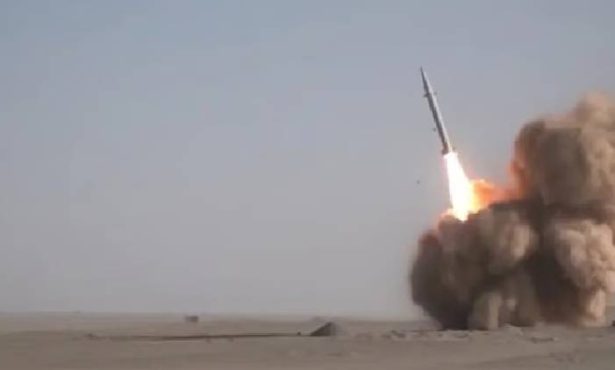
Iran and Iran-backed militia groups have carried out more than 115 drone and missile strikes on 26 US military bases and facilities housing American equipment across the Middle East through August, causing billions of dollars in damage, according to an Associated Press (AP) analysis.
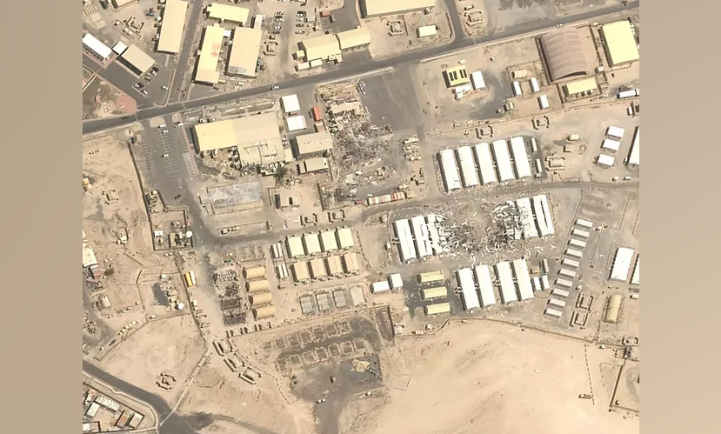
The analysis, published on October 31, used satellite imagery to examine the damage inflicted on US military installations in the region. It found that Iran initially targeted early-warning systems before expanding its attacks to aircraft, hangars, warehouses and other buildings.
The findings showed that more than two dozen US military installations across the Middle East had been targeted, significantly altering Washington’s military posture in the region.
Kuwait’s Ali Al Salem Air Base was hit at least 30 times after the United States and Israel launched their war against Iran in February. At least 15 aircraft hangars, several warehouses and 10 buildings near residential areas were damaged or destroyed, the analysis found.
AP also interviewed four regional officials with direct knowledge of the attacks and the resulting damage.
The analysis found that hundreds of buildings and other infrastructure at US bases were damaged or destroyed between April 1 and June 30.
The findings provide a broader picture of the damage than previously available independent assessments, including reviews by the Pentagon’s inspector general. The Trump administration and the US military have released limited information about casualties and equipment losses during the conflict.
US Central Command (CENTCOM), which oversees American military operations in the Middle East, declined to comment on the damage to bases and equipment, citing operational security concerns.
Kuwait bears the brunt of attacks
Satellite imagery showed that Kuwait was the most heavily targeted country, although US facilities in Bahrain, Iraq, Jordan, Oman, Qatar, Saudi Arabia and the United Arab Emirates were also hit.
The deadliest attack on US troops during the conflict occurred in Kuwait. Six American soldiers were killed in a drone strike at Port Shuaiba on March 1.
Camp Buehring in Kuwait also suffered extensive damage, with most of its aircraft hangars rendered unusable. The base’s gathering facilities were particularly affected because relatively few aircraft were stationed there.
A gymnasium was destroyed in March, while a military shopping facility was hit in late July. Garages and dining facilities were also severely damaged, according to two regional officials who spoke to AP on condition of anonymity.
Rafael Cohen, director of the National Security Programme at the RAND School of Public Policy, said damage to American military equipment had been inevitable, even though the US retaliatory attacks against Iran were much more intense.
He noted that modern warfare had exposed militaries worldwide to the threat of large-scale, relatively inexpensive drone attacks.
Early-warning systems were primary targets
Iran initially focused on systems designed to detect and intercept incoming attacks before expanding its targets to other military facilities.
Within the first two days of the conflict in late February, Iranian strikes destroyed protective structures housing US radar systems at Camp Arifjan in Kuwait and the Naval Support Activity base in Bahrain.
Iran also targeted mobile radar systems at Prince Sultan Air Base in Saudi Arabia and Muwaffaq Salti Air Base in Jordan.
N.R. Jenzen-Jones, director of technical intelligence consultancy Armament Research Services, said Iran had prioritised key components of the US air defence network.
He said the attacks targeted critical early-warning radars that were particularly difficult and expensive to repair or replace.
One radar in Jordan was reportedly destroyed. According to manufacturer Raytheon, it was one of only 13 such systems operated by the US Army. Budget documents put the cost of each radar at around $500 million.
Another radar in Qatar was severely damaged, although it remains unclear whether it was completely destroyed. Qatar purchased the system under a $1.1 billion contract in 2013. It was reportedly the only system of its kind in the region.
Jenzen-Jones said the apparent objective was to weaken the ability of the United States and its allies to respond to subsequent attacks.
After striking radar systems, Iran launched more than 50 successful attacks on 18 locations housing US military equipment during the first month of the war, with particular attention to areas where aircraft were stationed.
Aircraft and other military assets damaged
Two regional officials told AP that Iranian attacks damaged aerial refuelling aircraft, communications systems, fuel depots and accommodation facilities for American troops.
A March strike on Prince Sultan Air Base damaged the rear section of a Boeing E-3 Sentry surveillance aircraft. An attack also targeted a CIA unit at the US Embassy in Riyadh.
A regional military official who recently visited the Saudi air base described extensive destruction, with debris and damaged construction materials scattered across the facility. He said he saw destroyed barracks and dining halls.
The attack that damaged the surveillance aircraft also affected several other planes, including two aerial refuelling tankers.
An October update to a Congressional Research Service report said 15 US aircraft had been damaged at military bases across the region.
Another regional military official familiar with the damage said Al Dhafra Air Base, located about 20 miles (32 kilometres) south of Abu Dhabi in the UAE, came under repeated attacks early in the conflict.
Aircraft hangars, other infrastructure, early-warning radar systems and surveillance drones were among the assets damaged there.
Uncertainty over future US military presence
The scale of the damage has raised questions about the effectiveness of US defences and the future of American military installations in the Middle East.
Two regional officials said the United States had moved significant military assets away from the Persian Gulf, including fighter aircraft, air defence systems, communications equipment and other facilities essential to operating its bases.
The developments have added uncertainty as President Donald Trump considers the possibility of renewed attacks following the midterm elections, while Tehran has vowed a major retaliation.
Any resumption of hostilities could result in further extensive and costly damage to American military installations.
It has also raised questions about whether Washington will rebuild its bases and replace damaged equipment in the region once the conflict ends.