


 Play store

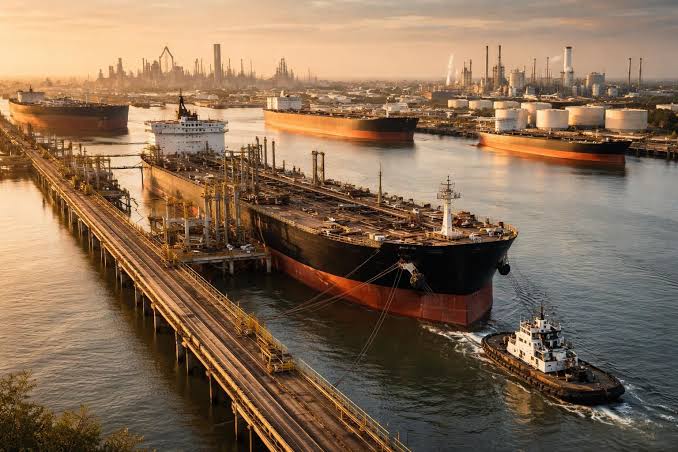
The United States has achieved record exports of crude oil, liquefied natural gas (LNG) and refined petroleum products in 2026, as rising domestic production and disruptions to Middle Eastern supplies boost global demand for American energy.
The growth has strengthened the country’s position as a leading global energy supplier, although intensifying competition from other major exporters could make further gains in market share increasingly difficult.
Over the past decade, US energy exports have expanded significantly following the launch of LNG exports in 2016 and the removal of restrictions on crude oil shipments, except to Canada.
The United States has since overtaken Qatar and Australia to become the world’s largest LNG exporter. It is also the leading exporter of propane and ethane and regularly ships more crude oil than any OPEC member except Saudi Arabia.
According to data from energy analytics firm Kpler cited by Reuters, the US share of global crude oil exports has increased from up to 5 per cent in 2018 to around 15 per cent.
Its share of global LNG exports has also surged from about 5 per cent in 2018 to 30 per cent in recent months, making it the world’s largest supplier.
The United States has an even stronger position in the propane market, accounting for a record 70 per cent of global exports so far this year, Kpler data showed.
US propane exports reached 2 million barrels per day in the first half of 2026, up 11 per cent from the same period a year earlier, according to the Energy Information Administration (EIA). The increase came as the Iran war disrupted Middle Eastern supplies to India and other South Asian countries.
US ethane exports also reached a record 794,000 barrels per day in August, the latest available EIA data showed.
Meanwhile, crude oil and petroleum product exports hit all-time highs this year as disruptions to shipments through the Strait of Hormuz increased demand for alternative supplies from the United States.
The expansion is expected to continue in the coming years as new LNG export facilities become operational and domestic oil production increases. Buyers are also showing greater interest in supplies that do not require passage through geopolitically sensitive waterways such as the Strait of Hormuz and the Bab el-Mandeb Strait.
However, maintaining the rapid growth in global market share could prove challenging as competing exporters expand their production and export capacities.
In the oil market, Brazil and Guyana are emerging as major competitors with rising output, while Canada is planning a new pipeline to increase shipments to Asia and reduce its dependence on the US market.
Competition is also expected to intensify in the LNG sector. Canada is seeking to expand its exports, while Qatar plans to significantly increase its LNG production and export capacity despite suffering a major setback from this year’s Middle East crisis.
US propane exports could also face constraints from limited export infrastructure and drought-related restrictions affecting the Panama Canal, partly linked to the El Niño weather phenomenon, according to the US administration.
Analysts say the United States is likely to increase its energy exports in absolute terms, but further gains in global market share will depend increasingly on international demand, competitive pricing and the ability of rival producers to restore or expand supplies.
Geopolitical developments and energy security concerns will also remain important factors shaping global trade flows.