Play store

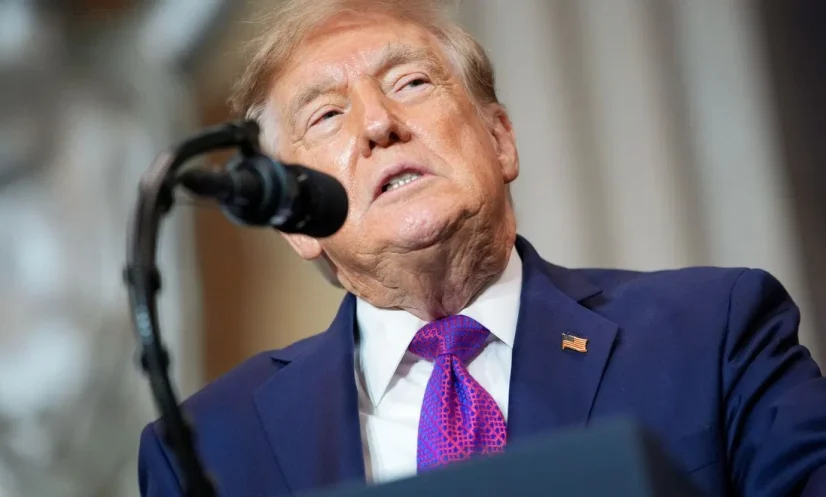
US President Donald Trump has called for an investigation into a routine revision of economic growth figures, alleging without evidence that the changes were deliberately delayed to influence the country’s midterm elections.
Trump criticised what he described as “FAKE” economic figures a day after the US Commerce Department revised its estimate of third-quarter gross domestic product (GDP) growth sharply upward to 4.3 per cent from an earlier estimate of 3.4 per cent.
Such revisions are a routine part of the economic data reporting process.
“Why wasn’t the correct number issued before the Election? I am asking for an immediate investigation of this situation,” Trump wrote on his Truth Social platform.
“This is not a small error, this is a massive, and purposeful, error,” he added.
In another lengthy post marking the US Thanksgiving holiday, Trump again criticised the economic data revisions while taking aim at several of his perceived political opponents and critics of his White House renovation plans.
“I would like to wish a Happy Thanksgiving to even those who issued fake Economic Numbers, just prior to the Election, and corrected them yesterday, three weeks late,” he wrote.
He described the revision as a “RECORD SETTING ERROR” and called for an immediate investigation.
Trump’s allegations echo his recent unsubstantiated claims questioning the outcome of the November 3 midterm elections, in which his Republican Party suffered a major defeat.
Democrats won control of Congress as voters expressed dissatisfaction with economic pressures linked to the Iran war and Trump’s unpredictable tariff policies.
Throughout his two presidencies, Trump has repeatedly challenged established political, legal and economic norms in the United States.
The 80-year-old president has often defended his economic record by pointing to strong GDP growth, which has remained robust despite economic headwinds, largely supported by a boom in artificial intelligence investment.
In releasing the revised GDP estimate on Wednesday, the Commerce Department’s Bureau of Economic Analysis said the growth mainly reflected an acceleration in investment and an increase in government spending, partly offset by a decline in exports.