Play store

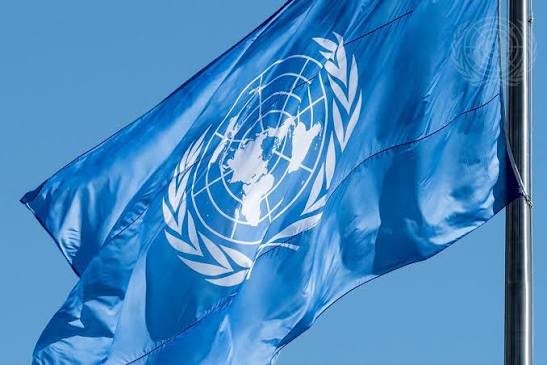
The United Nations is facing mounting pressure to select its next secretary-general as the race to succeed Antonio Guterres enters a critical stage, with the Security Council yet to reach a consensus after nine rounds of informal voting.
Guterres is due to step down next month, but divisions among the council’s permanent members have complicated the selection process, raising concerns about whether a successor can be agreed upon before the end of the year.
The administration of US President Donald Trump has remained tight-lipped about its preferred candidate and had hoped new contenders would enter the race. However, former US Ambassador to the UN Robert Wood believes it is now too late for additional candidates to join.
He said the selection had become particularly important amid ongoing wars, geopolitical tensions and declining public confidence in the UN.
“We need to get this decision right. It has to be the right person,” Wood said, highlighting the need for leadership capable of reforming the organisation.
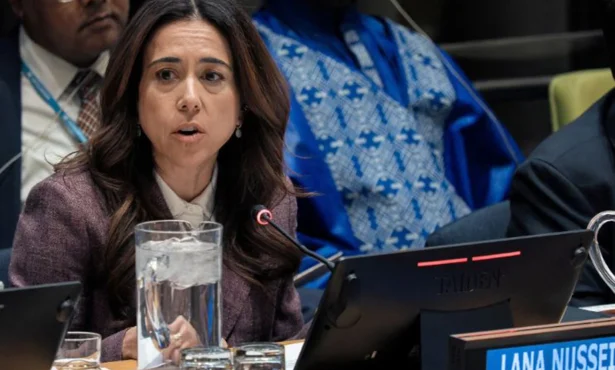
The race is largely seen as a contest among four candidates: Rebeca Grynspan, a former vice-president of Costa Rica and former head of the UN Conference on Trade and Development; Rafael Grossi, director-general of the International Atomic Energy Agency; Carolyn Rodrigues-Birkett, Guyana’s former foreign minister and UN ambassador; and Lana Nusseibeh, a former ambassador of the United Arab Emirates.
Nusseibeh has faced criticism from activists over the UAE’s alleged support for a militia accused of atrocities in Sudan.
Latin American countries are also arguing that it is their region’s turn to lead the UN, in line with the organisation’s informal practice of regional rotation.
Elizabeth Cousens, president of the UN Foundation, described the field of candidates as exceptionally strong, saying all four leading contenders had faced opposition from at least two permanent members of the Security Council during the informal voting rounds.
She urged council members to unite behind a candidate soon so that the selection could be presented to the General Assembly before the end of the year.
Cousens said the candidates had considerable experience leading institutions, negotiating international agreements and handling major geopolitical challenges.
However, Anjali Dayal, a professor of international politics at Fordham University, warned that the next secretary-general would have little time to prepare for the demanding job if the selection process continued until December.
She said appointing someone only weeks before taking office would leave insufficient time to organise a team, receive briefings and prepare to lead the complex global organisation.
The US State Department has said it wants the next secretary-general to focus on the UN’s core responsibilities, particularly peace and security, rather than what it described as politicised ideological agendas that have undermined the organisation’s effectiveness.
Dayal pointed to the contradictions facing the selection process, noting that some permanent Security Council members have themselves taken actions that challenge the UN Charter while expecting the next secretary-general to uphold it.
The United States bypassed the UN in launching its war against Iran, while Russia violated the UN Charter by invading Ukraine, she noted.
The next leader will therefore face the difficult task of securing the support of powerful countries while maintaining the organisation’s principles and credibility, she said.
UN observers believe behind-the-scenes negotiations and political bargaining may be underway to break the deadlock. Such discussions could involve offers of senior UN positions to permanent Security Council members in an effort to overcome potential vetoes.
The secretary-general is appointed by the General Assembly on the recommendation of the Security Council, where any of the five permanent members can block a candidate through a veto.
With the deadline approaching, the council faces growing pressure to agree on a successor who can restore confidence in the UN and steer it through an increasingly turbulent international environment.