


 Play store

Dhaka: Four Indian nationals are among the 182 people listed in a statement protesting National Parliament Speaker Hafiz Uddin Ahmed Bir Bikram’s remarks on India’s role in the Liberation War during his visit to Pakistan. The list also includes citizens of the United Kingdom, Greece and Georgia, in addition to Bangladeshis.
Moreover, several people whose names appeared on the list have said they knew nothing about the statement and had not signed it.
The information was revealed in a report published by digital investigative media outlet The Dissent on Sunday (November 29).
Earlier, a mainstream news portal published a report late Saturday night titled “182 citizens issue statement protesting Speaker’s remarks during Pakistan visit”.
The Dissent said a report on the same issue was also published that day by BD Digest, a website it described as a pro-Awami League propaganda outlet.
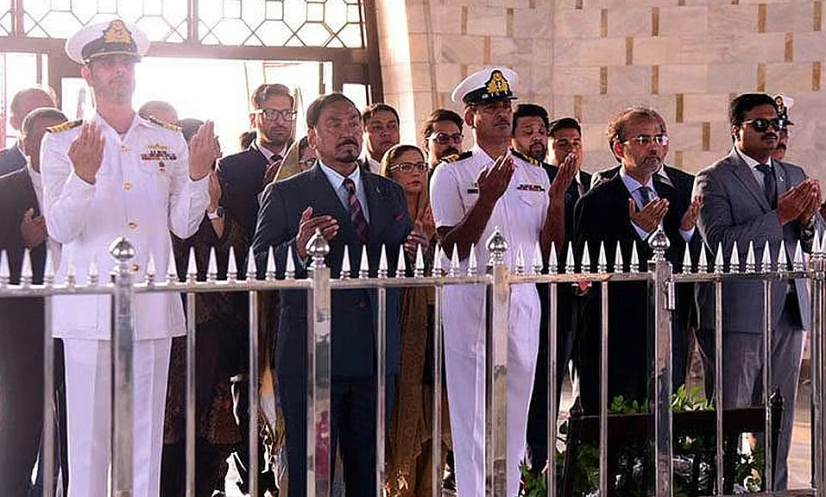
Speaker Hafiz Uddin Ahmed travelled to Islamabad on November 23 at the special invitation of the Speaker of Pakistan’s National Assembly.
During a visit to the Pakistani Parliament building on November 25, he spoke to journalists about the 1971 Liberation War and the fall of Dhaka. He also questioned India’s role in Bangladesh’s Liberation War and independence.
Speaking to journalists, Major Hafiz said India’s primary objective during the 1971 Liberation War was not to support the Bengali people but to weaken Pakistan. He also remarked that Bangladesh had been turned into a colony of a neighbouring country over the past 15 years.
Following his remarks, the news portal published the report titled “182 citizens issue statement protesting Speaker’s remarks during Pakistan visit”.
According to the report, 182 citizens from different walks of life condemned Hafiz Uddin Ahmed’s comments on India’s role in the Liberation War during his Pakistan visit. In a statement issued on Saturday, they said his remarks had “distorted and questioned the recognised historical realities of the Liberation War”. They also strongly protested and condemned the comments.
Although the report published the names of the signatories, it did not specify their nationalities or the countries they belonged to.
After analysing the list, The Dissent found that it included citizens of India, the United Kingdom, Greece and Georgia, alongside Bangladeshis.
The Dissent identified at least four Indian nationals on the list, all of whom are employed at different institutions in India. One of them is Dr Madhulika Samanta, Joint Director General of the Archaeological Survey of India.
The others include Gargya Chatterjee, an assistant professor at the Indian Statistical Institute and one of the founders of the West Bengal-based organisation Bangla Pokkho; Soumik Nandi Majumdar, an assistant professor at Kala Bhavana, Visva-Bharati University; and Dr Debashish Ghorui, a faculty member at GLS University in Gujarat.
Among the UK-based signatories are Susan Collins, an emeritus professor at University College London (UCL) and an artist, and Gary Stevens, a lecturer and artist at the same university. David Lewis, a professor at the London School of Economics, is also on the list.
Greek poet Christos Koukis and Georgian poet and translator Manana Matiashvili are also listed as signatories.
The mainstream news portal identified them as individuals associated with the Crete International Poetry Festival and an associate professor at Caucasus University, respectively.
The Dissent further reported that at least three people had said their names were included in the statement without their knowledge.
Sujan Sen Gupta, a graduate student at Colorado State University in the United States, said in a Facebook post that he had neither signed any statement nor been aware of it. The news portal subsequently removed his name from the report.