


 Play store

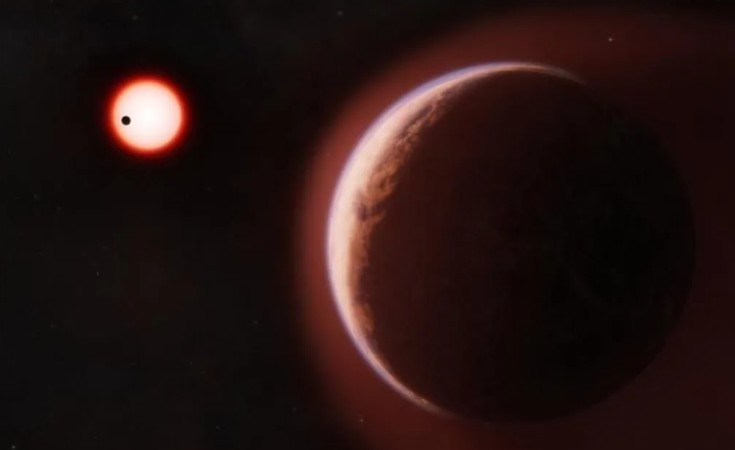
The ancient question, “Are we alone?” is shifting from the realm of philosophy to hard, empirical science. As astronomers deploy next-generation technology to peer into the deep cosmos, the search for extraterrestrial life is narrowing its focus on a handful of promising alien worlds. While a definitive “smoking gun” biosignature remains elusive, recent atmospheric discoveries are bringing humanity closer than ever to understanding our place in the universe.
In a landmark breakthrough, scientists have confirmed the presence of an atmosphere on LHS 1140b, a rocky, Earth-sized exoplanet orbiting within the habitable zone of a distant star. Currently, the only gas detected in its upper atmosphere is helium. While helium alone cannot sustain life, its discovery is a profound proof of concept.
Researchers strongly believe that heavier, more life-favorable gases—such as nitrogen, carbon dioxide, or water vapor—may be pooling deeper within the planet’s atmospheric layers, shielded from cosmic winds.
“People are fascinated by the big questions: Are we alone? Is there life beyond Earth?” said Dr. David Charbonneau of Harvard University. “This study represents the first confirmed detection of an atmosphere on a rocky planet in the habitable zone outside our solar system.”
The detection confirms that rocky worlds in the “Goldilocks zone” (where liquid water can exist) can retain their atmospheres, a crucial prerequisite for habitability.
The journey to finding alien life is rarely a straight line, as evidenced by the oceanic candidate K2-18b. This “sub-Neptune” world, believed to possess a water-rich interior, captured global headlines when initial data suggested the presence of dimethyl sulphide (DMS). On Earth, DMS is exclusively produced by marine life, primarily phytoplankton.
However, the scientific method demands rigorous skepticism. A NASA-led reanalysis concluded that the initial signal was too faint to definitively confirm the presence of DMS. Furthermore, geochemical modeling revealed that non-biological, planetary processes could also produce the gas. Rather than a defeat, the K2-18b study serves as a masterclass in scientific caution, reminding astronomers that a true biosignature must be unmistakable.
Closer to home, the TRAPPIST-1 system—a miniature solar system featuring seven rocky, Earth-sized planets orbiting a red dwarf star—remains a primary target for NASA’s James Webb Space Telescope (JWST).
While the lack of an atmosphere on TRAPPIST-1d was a disappointment, TRAPPIST-1e sits squarely in the star’s habitable zone. Its potential to harbor an atmosphere remains an open, tantalizing question that upcoming deep-space observations hope to answer.
Every scanned atmosphere and every debunked signal brings humanity one step closer to its ultimate discovery. The cosmic frontier is finally talking back—and scientists are listening closely. Source: BBC News