


 Play store

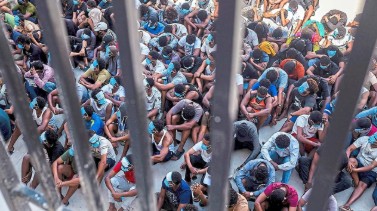
Nearly 1,800 Bangladeshis who travelled to Cambodia with promises of well-paid jobs are facing uncertainty over their return home after allegedly falling victim to recruitment fraud, with some reportedly forced to work at online scam centres.
Many have struggled to escape the situation, with some allegedly subjected to abuse when they tried to flee. Immigration complications, financial hardship and the prospect of fines for overstaying have further complicated their efforts to return to Bangladesh.
According to Anirban Survivor Voice Foundation, an organisation working on migrants’ rights and led by survivors, more than 2,000 Bangladeshis remain stranded in Cambodia, with the return of around 1,800 of them uncertain.
The organisation fears that their situation could become more complicated if the problems are not resolved by 31 October, as Cambodia’s immigration rules impose fines for overstaying.
The plight of the stranded Bangladeshis came to wider attention on 3 September, when Cambodian immigration police detained 32 Bangladeshis at Phnom Penh airport as they attempted to return home.
Some of the detainees were allegedly forced to work at online scam centres. Sources said they were detained over immigration irregularities and other complications.
Although two of the 32 were released earlier, the remaining 30 were held at an immigration detention centre in Cambodia. Following prolonged diplomatic communication and other necessary steps, they have since been released and received clearance to return to Bangladesh.
Zahir Imam, first secretary (labour) at the Bangladesh Embassy in Bangkok, told the media that many of the 30 released Bangladeshis had already obtained travel authorisation and purchased tickets. He expressed hope that they would return home soon.
However, sources said the returnees must pay for their own air tickets, making repatriation difficult for those who cannot afford the cost.
Earlier, the Wage Earners’ Welfare Board under the Ministry of Expatriates’ Welfare and Overseas Employment had instructed the embassy’s first secretary in Bangkok to take necessary steps to secure the release of the 30 Bangladeshis. The initiative followed an application from Anirban Survivor Voice Foundation, according to a letter signed by the board’s deputy director, Mohammad Zakir Hossain.
The release of the 30 detainees has not resolved the wider crisis. Zahir Imam said the embassy had received requests for assistance concerning 1,796 Bangladeshis stranded in Cambodia through phone calls, emails, direct applications and members of the expatriate community.
He said around 350 to 400 Bangladeshis had returned home since July. However, the embassy had been unable to verify every name on the list or establish the current whereabouts and circumstances of everyone listed.
Bangladesh has no embassy in Cambodia, and consular assistance and related services for Bangladeshis in the country are handled by the Bangladesh Embassy in Bangkok. This arrangement has created additional challenges in identifying stranded workers, collecting the necessary documents and arranging their return.
The case has also raised questions about the monitoring of Bangladeshi workers after they are sent abroad.
According to the Bureau of Manpower, Employment and Training (BMET), 15,963 Bangladeshi workers received clearance to work in Cambodia between 1 January 2025 and 30 September 2026.
Shariful Hasan, associate director of BRAC’s migration programme and youth platform, said nearly 16,000 people had been sent to Cambodia with BMET clearance, questioning whether any effective mechanism existed to track where they were working and what jobs they were doing.
Concerns have also grown over the risk of human trafficking involving Bangladeshis recruited for overseas employment. Cambodia was not included among the destinations listed during a discussion organised by the Ministry of Home Affairs last year on human trafficking from Bangladesh. The destinations mentioned included India, Malaysia, Brunei, Thailand, Italy, Greece, Portugal, Cyprus, Spain, Saudi Arabia, Oman, Qatar, Iraq and Libya.
Recent cases involving Bangladeshis allegedly deceived by promises of jobs in Cambodia have brought the country into focus as a possible emerging destination for trafficking and labour exploitation.
Although steps have been taken to secure the release and return of some victims, the safe repatriation of the large number of workers still stranded remains uncertain. Without timely resolution of immigration issues and access to money for fines, documentation and travel, many could face further hardship.