


 Play store

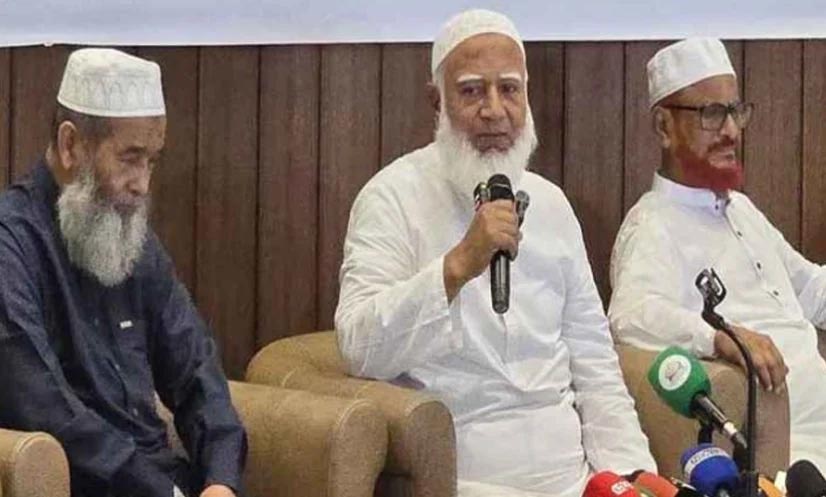
Leader of the Opposition and Bangladesh Jamaat-e-Islami Ameer Dr Shafiqur Rahman on Wednesday said the country’s ongoing political crisis stemmed from the government’s failure to implement the verdict of the referendum, insisting that constitutional reform, rather than limited constitutional amendment, reflects the people’s mandate.
Speaking at a post-budget views-exchange meeting with journalists at the LD Hall of the Jatiya Sangsad Bhaban, Shafiqur Rahman said his party remains firm in its demand for the formation of a Constitutional Reform Council instead of nominating representatives to a special parliamentary committee on constitutional amendments proposed by the ruling party.
“The people gave a mandate for constitutional reform, not merely for constitutional amendment. Therefore, we cannot agree to the proposal to join the special parliamentary committee,” he said.
The opposition leader argued that the referendum delivered a clear public mandate for comprehensive constitutional reform, but the government’s decision to pursue amendments through a parliamentary committee runs contrary to that verdict.
“A political crisis has been created because the verdict of the referendum has not been implemented,” he said.
Despite the disagreement, Shafiqur Rahman said his party remains open to dialogue, stressing that political disputes in a parliamentary democracy should be resolved through discussions and consensus.
“We are ready to hold talks with the government to reach a political solution,” he said.
Explaining the party’s recent street programmes, the Jamaat chief said the opposition had been compelled to take its campaign to the people after failing to secure adequate opportunities to debate the issue in Parliament.
“It requires the Speaker’s permission to discuss the matter in Parliament, but no such permission is needed in the parliament of the people, the streets,” he said.
As the opposition was not getting sufficient space to present its position inside the House, he said, it had decided to raise the issue directly before the public.
“We have taken the side of the people. We want the public verdict to be implemented,” he added.
Commenting on the national budget for the 2026-27 fiscal year, Shafiqur Rahman said the government had accepted several proposals put forward by the opposition. These include withdrawing the provision allowing the legalisation of undisclosed money and scrapping the proposed tax on small grocery shops and marginal businesses.
He also proposed changing Bangladesh’s fiscal year from the current July-June cycle to a January-December calendar year, arguing that the existing system encourages excessive government spending during the final quarter of the fiscal year.
According to him, this practice often leads to wasteful expenditure, corruption and weak project implementation.
The Jamaat chief further urged the government to ensure that the reduction of taxes on 61 essential commodities translates into lower market prices for consumers.
“If effective monitoring is not ensured, the benefits of tax reductions will be absorbed by business syndicates instead of reaching ordinary people,” he warned.
Shafiqur Rahman also criticised the absence of budget allocations for the July Museum and the July Foundation, saying the July movement holds significant historical importance and should be preserved for future generations through appropriate institutional support.