


 Play store

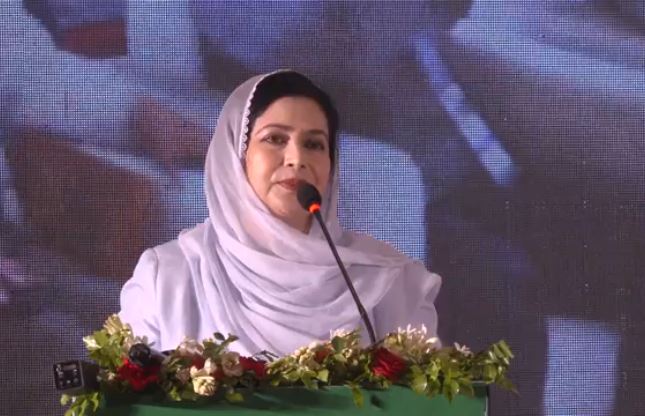
Prime Minister’s wife and Vice President of the Ziaur Rahman Foundation (ZRF), Dr Zubaida Rahman, on Wednesday called for a nationwide expansion of critical care services, urging the government to establish Intensive Care Units (ICUs) in every district and sadar hospital to reduce the stark disparity in healthcare access between urban and rural Bangladesh.
Speaking as the chief guest at the inaugural session of the National Conference-2026 of the Bangladesh Society of Critical Care Medicine at Hotel InterContinental Dhaka, she said life-saving emergency healthcare facilities remain overwhelmingly concentrated in the capital and a few major cities, leaving millions of rural residents without access to advanced treatment.
“While nearly 68 to 70 percent of our population lives in rural areas, around 80 to 90 percent of life-saving critical care facilities are located in Dhaka and other major urban centres. Emergency healthcare services, including ICUs, must be expanded across rural Bangladesh,” she said.
Highlighting the country’s shortage of critical care facilities, Dr Zubaida said Bangladesh currently has only 1.7 critical care beds and around nine general hospital beds per 100,000 people, figures that fall far below international standards.
She noted that 38 of the country’s 64 districts still have no ICU facilities, while the overwhelming majority of existing critical care units remain concentrated in Dhaka.
Describing the situation in rural communities, she said patients suffering from life-threatening conditions often fail to receive timely treatment because advanced medical facilities are located far from where they live.
“Newborns, pregnant women, elderly patients suffering from pneumonia or stroke, and victims of serious road accidents in remote areas are dying prematurely simply because they cannot access critical care in time,” she said.
Dr Zubaida also pointed to severe shortages of specialist physicians, including anaesthesiologists, cardiologists and neurologists, as well as trained critical care nurses and modern medical equipment.
She stressed that addressing these challenges requires careful planning, efficient resource management and strong political commitment.
“We must change this situation through proper planning and determination, even within our existing resource constraints,” she said.
Emphasising the importance of emergency medical transportation, Dr Zubaida said many critically ill patients lose valuable time because of inadequate ambulance services and long travel distances.
“Although it may not be possible to establish ICU facilities immediately in every remote area, patients can be transported much more quickly to district hospitals if modern ambulances equipped with life-support facilities are made available,” she said.
She also praised the country’s physicians for their dedication despite working under significant constraints.
“Despite the absence of an ideal healthcare system, our doctors continue to work tirelessly day and night to save lives and keep hope alive for countless families,” she said.
Recalling the contributions of Ziaur Rahman and Begum Khaleda Zia, Dr Zubaida urged all stakeholders to work together to ensure that quality, life-saving healthcare services reach every corner of the country.
Among those attending the conference were Social Welfare Minister Dr AZM Zahid Hossain, Health Minister Sardar Md Sakhawat Husain, Health Secretary Kamruzzaman Chowdhury, Bangladesh Medical University Vice-Chancellor Professor Dr F M Siddiqui, BSCCM President Professor Dr Arif Ahsan, General Secretary Dr Md Zafar Iqbal, Doctors Association of Bangladesh (DAB) President Professor Dr Harun Ar Rashid, General Secretary Dr Zahirul Islam Shakil, Director of the Directorate General of Health Services Professor Dr Probhat Chandra Biswas, Additional Director General Professor Dr Fowara Tasmin and other senior physicians, health officials and medical professionals.