


 Play store

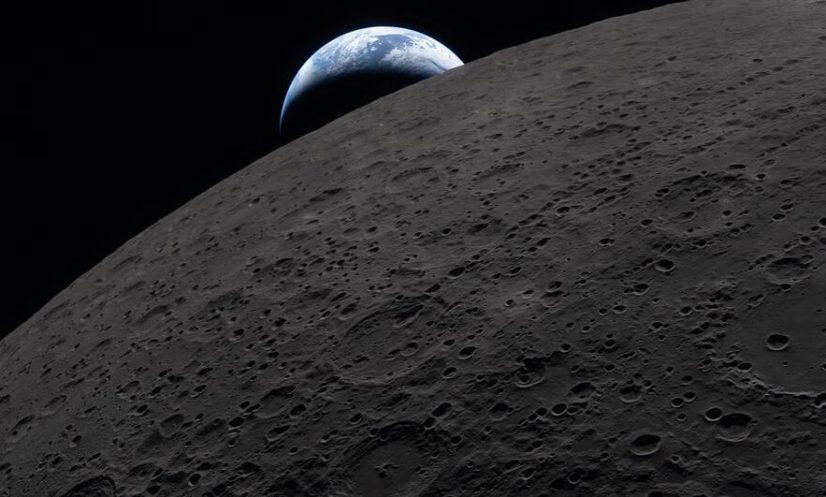
As countries accelerate plans to return to the Moon, the United Nations has warned that the new era of lunar exploration must not come at the cost of Earth’s environment or the long-term sustainability of outer space.
Marking International Moon Day on Monday, the UN called on governments and space agencies to place environmental protection at the heart of future space missions, amid mounting concerns over the rapid growth of space debris and its potential impact on Earth’s atmosphere.
“Decades of rapidly expanding space activity have shown that each launch leaves an environmental footprint, and it can take a long time to understand the impact fully,” said Jason Jabbour, Senior Officer at the UN Environment Programme (UNEP).
“That is why it is so crucial to consider the sustainability of these programmes from the very beginning,” he added.
The warning comes as global interest in lunar exploration reaches its highest level in decades. Earlier this year, NASA’s Artemis II mission carried four astronauts on a 10-day journey around the Moon, a key milestone in plans to establish a long-term human presence on the lunar surface during the 2030s. China, India, Japan and several private companies are also expanding their lunar ambitions.
However, the UN cautioned that increasing activity in space is being accompanied by an alarming rise in orbital pollution.
According to UN estimates, around 140 million pieces of space debris larger than one millimetre are currently orbiting Earth. Although most fragments are too small to track, they travel at extremely high speeds and can seriously damage satellites, spacecraft and future missions.
Scientists are also becoming increasingly concerned about the environmental effects of discarded satellites and rocket components re-entering Earth’s atmosphere. During re-entry, spacecraft release metals such as aluminium, lithium and copper, which researchers are studying for their possible impacts on atmospheric chemistry, cloud formation and the ozone layer.
Rocket stages that remain in orbit for years before breaking apart add further to the growing debris problem. Smaller objects, including discarded bolts, protective covers and lens caps, also contribute to orbital congestion, while collisions between debris generate countless microscopic particles that scientists believe are already making the night sky brighter.
Although most spacecraft burn up before reaching the ground, larger heat-resistant components can survive re-entry, posing risks to people, infrastructure and marine ecosystems.
The UN stressed that preserving outer space has become as important as protecting Earth’s environment.
The concept of space sustainability aims to ensure that exploration beyond Earth is carried out responsibly so future generations can continue to use and benefit from space without facing escalating environmental hazards.
International agreements already prohibit harmful contamination of outer space, while UN member states have adopted guidelines requiring countries to minimise the creation of debris, prevent accidental explosions in orbit, avoid the deliberate destruction of spacecraft and safely remove retired satellites and rocket bodies.
Under the 1972 UN Liability Convention, countries launching spacecraft remain legally responsible for damage caused by their space objects on Earth, including missions conducted jointly by multiple nations.
To address emerging environmental risks, UNEP and the UN Office for Outer Space Affairs are working together to strengthen scientific research on the ecological impacts of space activities and integrate environmental protection into future global space governance.
The Moon has inspired humanity for thousands of years and continues to play a vital role in sustaining life on Earth by driving ocean tides that help oxygenate coastal waters, transport nutrients and support marine ecosystems. As humanity prepares for a sustained return to Earth’s nearest celestial neighbour, the UN says protecting both space and the planet must remain central to the next chapter of exploration. Source: UN News