


 Play store

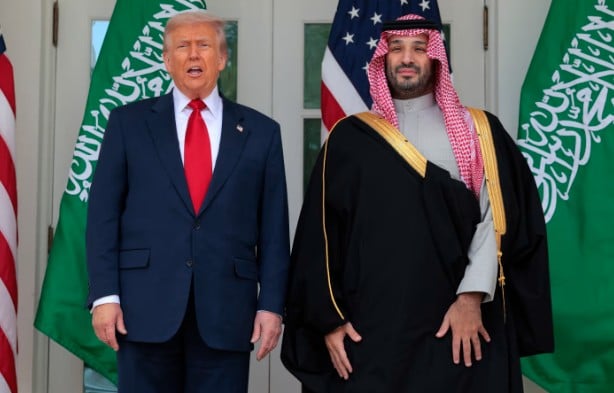
US President Donald Trump has approved a landmark civil nuclear cooperation agreement with Saudi Arabia, paving the way for the kingdom to develop a civilian nuclear energy programme in partnership with American companies in a deal valued at tens of billions of dollars.
The agreement, reported by The Wall Street Journal on Tuesday citing US officials, is expected to deepen strategic ties between Washington and Riyadh while placing the United States at the centre of Saudi Arabia’s long-term nuclear ambitions. However, it is also likely to ignite intense debate in Congress over nuclear proliferation risks in the volatile Middle East.
According to the report, the agreement will remain in force for 30 years and is expected to generate significant commercial opportunities for US companies by giving them the leading role in designing, building and operating Saudi Arabia’s civilian nuclear infrastructure.
The deal effectively sidelines other international competitors seeking contracts in the kingdom’s emerging nuclear sector, reinforcing the Trump administration’s broader strategy of promoting American industries overseas while strengthening alliances in the Gulf.
One of the agreement’s most significant provisions would allow American companies to build a uranium enrichment facility inside Saudi Arabia if a joint US-Saudi review concludes that such a plant is necessary for the kingdom’s civilian energy needs.
Uranium enrichment is regarded as one of the most sensitive aspects of nuclear technology because the same process used to produce fuel for civilian nuclear reactors can also, if enriched to much higher levels, be used to produce material for nuclear weapons.
To address those concerns, the agreement gives the United States a central oversight role in monitoring Saudi Arabia’s nuclear programme. Trump administration officials argue that close American involvement will help ensure the programme remains exclusively peaceful and complies with international non-proliferation standards.
“The US role is intended to provide transparency and confidence that Saudi Arabia’s nuclear activities will not be diverted toward weapons development,” officials familiar with the agreement told the newspaper.
Saudi Arabia has long sought to establish a civilian nuclear energy programme as part of its ambitious Vision 2030 economic transformation plan, which aims to diversify the kingdom’s economy beyond oil and develop new industries.
The kingdom argues that nuclear power is essential to meet rapidly growing domestic electricity demand while reducing the amount of crude oil burned for power generation, allowing more oil to be exported.
Saudi officials have repeatedly stated that they seek nuclear technology for peaceful purposes, including electricity generation, desalination and scientific research.
Nevertheless, Saudi Arabia’s nuclear ambitions have attracted international scrutiny because Crown Prince Mohammed bin Salman has previously said the kingdom would pursue nuclear weapons if regional rival Iran were to develop one.
Those remarks have heightened concerns among non-proliferation experts that civilian nuclear technology could eventually contribute to a regional arms race unless strict safeguards remain in place.
The proposed agreement is expected to be submitted to the US Congress in the coming days for mandatory review under US nuclear cooperation laws.
Lawmakers from both parties are expected to scrutinise the deal closely, particularly provisions related to uranium enrichment and long-term monitoring mechanisms.
Several members of Congress have previously expressed reservations about allowing Saudi Arabia to enrich uranium on its own soil, arguing that such capabilities could weaken global efforts to prevent the spread of nuclear weapons technology.
Supporters of the agreement, however, argue that bringing Saudi Arabia’s nuclear programme under American supervision is preferable to allowing the kingdom to seek assistance from rival powers such as China or Russia, both of which have expanded their nuclear cooperation with countries across the Middle East.
They contend that US participation would provide stronger oversight, higher safety standards and greater transparency than alternative partnerships.
The agreement also carries significant economic implications. American engineering, construction and energy companies are expected to secure lucrative contracts to build reactors, enrichment facilities and related infrastructure, potentially creating thousands of jobs in the United States over the coming decades.
If Congress approves the agreement, it would rank among the most significant US-Saudi civilian nuclear partnerships in history and further strengthen a strategic relationship that has long been built on energy cooperation, security collaboration and regional diplomacy.
At the same time, the deal is likely to remain the focus of intense political debate as lawmakers weigh its economic and strategic benefits against concerns over nuclear proliferation and the broader security implications for an already fragile Middle East.