Play store

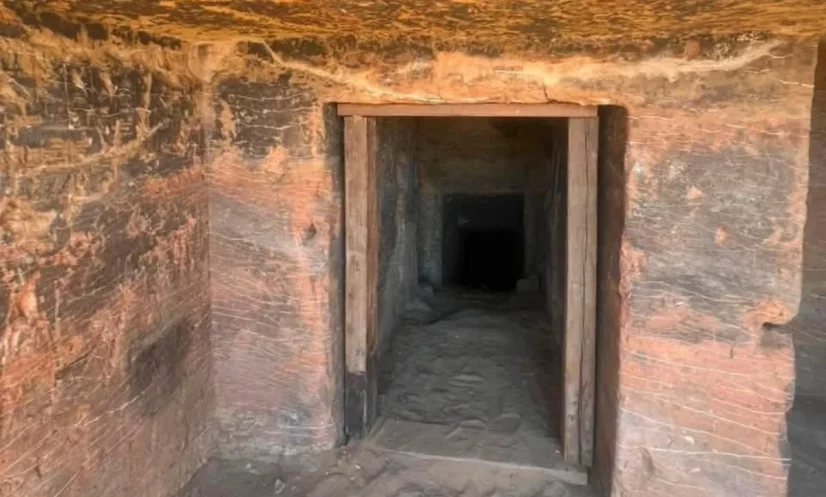
Archaeologists have uncovered the tombs of three high-ranking officials from Egypt’s New Kingdom at the Bubasteion necropolis in Saqqara, revealing inscriptions, carved scenes and artefacts that offer fresh insights into the country’s ancient government, military and religious life.
The discovery was announced by Egypt’s Ministry of Tourism and Antiquities, which said the excavation is part of an ongoing research project at Saqqara, a UNESCO World Heritage Site and one of Egypt’s most important archaeological complexes.
The excavation uncovered hieroglyphic inscriptions, decorated reliefs and burial remains linked to senior officials, helping fill gaps in the historical record of New Kingdom society.
The first tomb belonged to Mentuhotep, whose northern walls depict offering bearers and hunting scenes.
A prominent carving shows him seated beside his mother, Iahhotep, reflecting the family’s high social status.
Inscriptions identify Mentuhotep as Hereditary Prince, Mayor, King’s Follower, Administrator, Overseer of Foreign Lands, and Overseer of the Army of the City of Khebeshet, indicating he held both senior administrative and military responsibilities during the early New Kingdom.
Archaeologists said a burial shaft inside the tomb remains unexcavated and will be explored during the next field season in hopes of uncovering more information about Mentuhotep’s family and official career.
The second tomb belonged to Pareemwaya, also known as Samut, who served as Great Merchant of the Temple of Ptah.
Inscriptions identify his wife, Tui, as Lady of the House, his mother, Atbiu, as a Singer of Amun, and also mention his four sons, providing rare details about an elite New Kingdom family.
The third tomb belonged to Nehsi, identified in surviving inscriptions as Overseer of the House. Although much of the structure has been damaged over time, the tomb also mentions his wife, Neferuptah, who held the title Lady of the House.
Among the most significant discoveries is part of a column from Nehsi’s tomb bearing a hieroglyphic inscription describing the return of a military commander from Naharin in present-day northern Syria.
Researchers say the inscription helps date the tomb to the New Kingdom and provides new evidence of Egypt’s diplomatic and military connections with the ancient Near East.
Officials from Egypt’s Supreme Council of Antiquities said the discovery adds important new information about the Bubasteion necropolis.
Excavations at the site will continue, with archaeologists planning to investigate additional burial shafts and nearby areas in search of further discoveries.