Play store

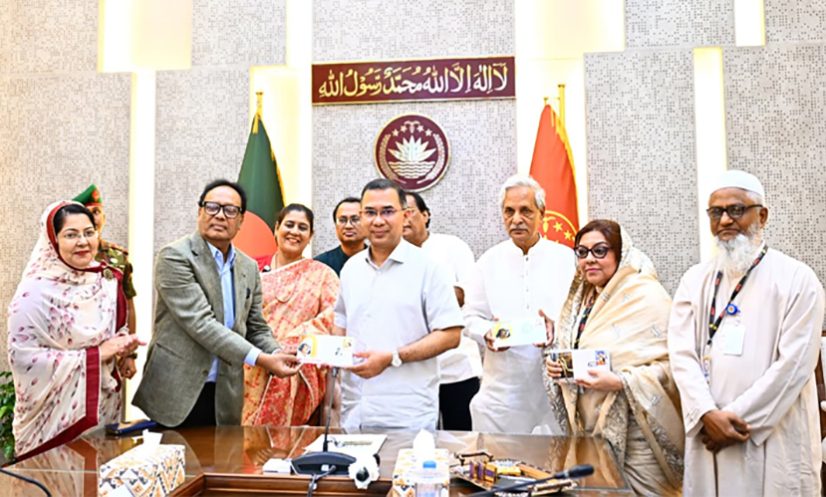
Prime Minister Tarique Rahman on Thursday said National Poet Kazi Nazrul Islam wielded his pen as a powerful weapon against colonial rule, oppression, exploitation, discrimination and all forms of injustice, describing him as an enduring source of inspiration for Bangladesh and its people.
The prime minister made the remarks while virtually inaugurating the year-long “Nazrul Year 2026–2027” programme at an event organised by the Cabinet Division at the Bangladesh Secretariat.
“Nazrul was a rare genius whose influence has been immense throughout every stage of the nation’s life,” he said, adding that the poet’s contribution continues to shape Bangladesh’s socio-economic, political, literary, cultural and intellectual development.
The government has declared the period from May 25, 2026, to May 25, 2027, as “Nazrul Year” to commemorate the life and legacy of the National Poet. At the programme, it was also announced that the government is examining the feasibility of declaring Trishal in Mymensingh, a place closely associated with Nazrul’s life, as “Nazrul City.”
Describing Kazi Nazrul Islam as the Rebel Poet, the Poet of Love, the Poet of Youth and a symbol of Bangladesh’s cultural heritage, Tarique Rahman said Nazrul emerged as a beacon of hope for a subjugated and oppressed nation.
“Whether through revolutionary songs, patriotic compositions, Islamic music, devotional bhajans and kirtans, Shyama Sangeet, or poems on love, nature, humanity, childhood and youth, Nazrul gave us some of the finest expressions of our collective spirit,” he said.
The prime minister said Nazrul’s writings had inspired generations of Bangladeshis to stand against injustice and oppression and played a significant role during the Liberation War.
“His poetry and songs became the language of resistance during our Liberation War and have inspired every democratic movement since then,” he said.
He stressed that Nazrul remains as relevant today as ever, particularly for young people navigating the challenges posed by rapid technological advancement and artificial intelligence.
Referring to Nazrul’s poems such as Ami Hobo Shokal Belar Pakhi and Thakbo Nako Boddho Ghore, the prime minister said their moral and humanistic messages could help guide the younger generation in today’s complex world.
“As a political worker, I believe National Poet Kazi Nazrul Islam represents the very soul of Bangladesh,” he said. “Throughout his life, he championed equality without distinction among Hindus, Muslims, Buddhists and Christians.”
He added that the government remains committed to building a discrimination-free society where people of all religions, ethnicities and communities can live safely and with equal rights.
Calling on the National Committee for the Celebration of Nazrul Year, the prime minister urged scholars, researchers and cultural activists to organise literary conferences, seminars, research initiatives, theatre festivals, musical performances and art exhibitions throughout the year to promote Nazrul’s ideals.
He also emphasised the need to use Nazrul’s literature and humanistic philosophy to protect young people from negative influences and strengthen their moral values.
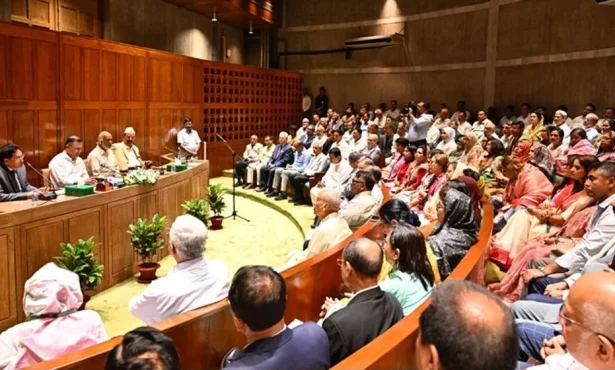
The inauguration ceremony was attended virtually by government officials, Nazrul scholars and Nazrul music artistes from across the country. A commemorative postage stamp and the official logo for “Nazrul Year” were also unveiled.
Cultural Affairs Minister Nitai Ray Chowdhury chaired the event. Local Government, Rural Development and Cooperatives Minister Mirza Fakhrul Islam Alamgir, Information Minister Zahir Uddin Swapon, Prime Minister’s Adviser on Policy and Strategy Dr Zahed Ur Rahman, and Prime Minister’s Press Secretary AAM Saleh Shibly were also present.