


 Play store

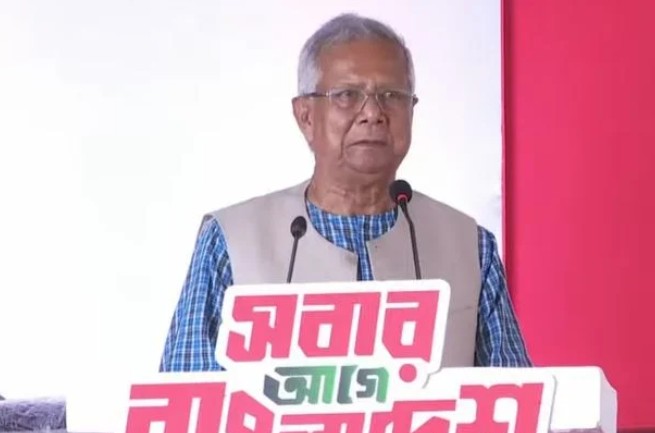
Former Chief Adviser to the interim government Professor Muhammad Yunus on Wednesday described the newly inaugurated July Memorial Museum as the starting point of a new Bangladesh, saying it would preserve the nation’s collective memory and continue to inspire future generations.
Speaking at the inauguration ceremony of the museum at Ganabhaban in the capital, Prof Yunus said the memorial represents more than a physical institution.
“The July Memorial Museum is not just an establishment. It is the beginning of a new chapter in Bangladesh’s history,” he said.
“The path of a new Bangladesh will begin from here. If we lose our way, we will start from here again,” he added.
Prof Yunus said the museum would become the centre of the nation’s historical memory and serve as a lasting reminder of the July Mass Uprising and the sacrifices made by those who participated in the movement.
“If we ever lose our way in the future, the journey of a new Bangladesh will start from here again,” he said.
Calling on young people to play an active role in preserving the legacy of the uprising, Prof Yunus urged them to become the custodians of the nation’s history.
“I ask the youth of the country to become the writers of this memory and move forward in building a new Bangladesh,” he said.
At the end of his speech, he encouraged citizens to visit the museum every year to remember the events of the July Mass Uprising and draw inspiration from its ideals.
Prime Minister Tarique Rahman, who formally inaugurated the museum earlier in the day, attended the programme along with Liberation War Affairs Minister Ahmed Azam Khan, Home Minister Salahuddin Ahmed, Cultural Affairs Minister Nitai Roy Chowdhury, and the Prime Minister’s Adviser on Information and Cultural Affairs Dr Zahed Ur Rahman, among others.
Established at Ganabhaban, the former official residence of ousted prime minister Sheikh Hasina, the July Memorial Museum has been created to preserve the documented history of the 2024 July Mass Uprising, commemorate the sacrifices of the martyrs and participants, and educate future generations about one of the country’s most significant political movements.
The museum features photographs, official documents, video footage, personal belongings, eyewitness accounts and other exhibits related to the uprising. It is also expected to organise guided tours, educational programmes and research activities to help students, researchers and visitors better understand the events that reshaped Bangladesh’s political landscape.