


 Play store

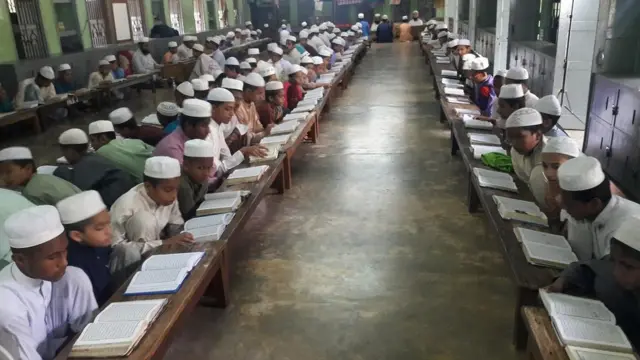
The Al-Haiatul Ulya Lil-Jamiatil Qawmiya Bangladesh has banned corporal punishment of students at Qawmi madrasas and ordered all affiliated institutions to form or reconstitute student protection committees and make them operational immediately.
The directive was issued on Saturday (Sept 19) on the instructions of Al-Haiatul Ulya Chairman Allama Mahmudul Hasan, following reports and allegations of student abuse and unethical activities at some Qawmi madrasas in the media and on social media.
The directive said discipline must be aimed solely at the correction and welfare of students and must never be retaliatory.
Teachers have been instructed not to punish students while angry and to follow a gradual approach to discipline. They should first issue a gentle warning, followed by mild reprimands if necessary. As a final step, parents may be called in and informed in writing so that appropriate measures can be taken with their involvement.
However, under no circumstances may students be beaten as punishment, the directive said.
It specifically prohibits hitting students with sticks, canes or any other instrument, as well as striking the face, head or sensitive parts of the body. Any form of punishment that could cause broken bones, bleeding or visible marks is also prohibited.
The directive also bans public humiliation, verbal abuse, harsh or insulting language, derogatory nicknames and other forms of psychological abuse.
Teachers or female teachers who violate these instructions will be held accountable under Shariah and applicable laws and regulations, it said.
Al-Haiatul Ulya said that if an individual is genuinely involved in a crime or unethical activity, a proper investigation and legal action must be ensured and no offender should be protected.
At the same time, it said isolated incidents should not be used to discredit the entire Qawmi madrasa education system, its students or teachers, nor should the actions of individuals be attributed to madrasa institutions, boards or the wider community of scholars and students.
Every madrasa has been instructed to form or reconstitute a student protection committee and keep it active. Students, teachers and staff must have a mechanism to report allegations of misconduct, abuse or harassment to the committee.
The directive requires investigations to be completed and reports submitted within seven days of receiving a complaint.
In serious cases, the accused may be temporarily relieved of their duties while the investigation is ongoing.
If a madrasa is found to have no protection committee, an inactive committee or to have failed to take action after receiving a complaint, its affiliation with the relevant board may be suspended or cancelled, according to the directive.
The directive also calls for regular Islahi sessions for teachers and students at every madrasa.
It orders mandatory training sessions for newly appointed teachers and encourages more frequent parent meetings.
It also stresses strengthening communication and trust between parents and madrasa authorities and ensuring that problems are promptly brought to the attention of the authorities.
Each of the six Qawmi madrasa boards has been instructed to establish a separate madrasa monitoring cell and launch a dedicated hotline for receiving complaints.
Following any complaint, the board, madrasa authorities and protection committee must jointly arrange an immediate and impartial investigation.
The directive also calls for greater caution in verifying the character and credibility of candidates during the recruitment of teachers and staff.
At the same time, it says the boards should provide legal remedies through their panels of lawyers for innocent teachers, female teachers, muhtamims or institutions who become victims of false allegations, baseless reports or media trials.
The central hotline of Al-Haiatul Ulya, 01700-763178 (WhatsApp), may also be used for communication, it said.
Signed by Chairman Allama Mahmudul Hasan, the directive instructed the country’s six Qawmi madrasa boards and their affiliated institutions to take the necessary measures without delay.
It said the directive was prepared based on decisions taken at the 69th meeting of the standing committee, chaired by Allama Mahmudul Hasan on Sept 12, and an earlier meeting of the relevant subcommittee held on July 29.
The directive also said its preparation drew on the teachings and writings on education and training by scholars of Deoband, including Maulana Ashraf Ali Thanwi and Sheikhul Hadith Maulana Muhammad Zakariya Kandhalvi, as well as fatwas issued by prominent Islamic institutions.