


 Play store

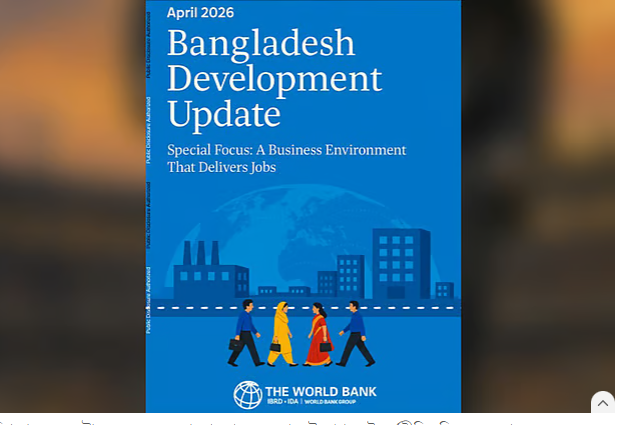
DHAKA: Bangladesh’s economic growth is slowing, while private investment and employment have weakened, according to the World Bank’s October 2026 Bangladesh Development Update.
The report, titled “Make Subsidies and Social Protection Work Better for the Poor,” says gas and electricity shortages are disrupting industrial production, non-performing loans are rising in the banking sector, and banks are facing severe capital shortfalls. At the same time, high inflation is eroding people’s real incomes and purchasing power.
The World Bank said the government spends significant amounts on social protection, electricity and fuel, and fertilizer subsidies, but a substantial portion of the benefits does not reach the poorest households. Some relatively well-off families receive benefits, while many of the poorest remain outside social safety-net programmes.
The report identifies restoring stability in the banking sector, ensuring energy security and good governance, and increasing tax revenues as key areas for reform. It also recommends gradually reducing broad-based subsidies while expanding targeted assistance for poor and vulnerable households.
Growth slows to 3.4%
The World Bank estimates that Bangladesh’s real GDP grew by 3.4% in the 2025-26 fiscal year, down from 5.8% in 2022-23. Growth fell to 4.2% and 3.5% in the following two fiscal years.
Growth dropped to 2.2% in the third quarter of the last fiscal year, the lowest quarterly growth rate since the COVID-19 pandemic.
The report attributes much of the slowdown to weaker investment. Private investment fell by 0.5% and public investment by 0.7% in 2025-26. Real exports of goods and services also declined by 4.8%.
Implementation of the Annual Development Programme fell to historically low levels, partly due to reviews of major infrastructure projects, caution over approving new projects and weak implementation capacity.
Industry and employment under pressure
Industrial growth stood at around 2% in 2025-26, while industrial output contracted by 0.3% in the third quarter—the first quarterly contraction in the sector since the pandemic.
Gas and electricity shortages have forced many factories to operate below capacity. Some businesses have reduced working hours, suspended production or laid off workers.
The report noted that Bangladesh, which was nearly self-sufficient in gas until 2017, now relies on imports to meet about one-third of its total demand. Heavy dependence on several major gas fields and the floating LNG terminal at Maheshkhali means disruptions at a single facility can reduce supplies across large areas.
The economic slowdown has also affected the labour market. Many women who lost jobs in the industrial and services sectors have left the workforce. Female labour-force participation fell from 42.8% in 2022 to 38.4% in 2024. However, the absence of a new labour-force survey since 2025 makes it difficult to assess the latest situation accurately.
Inflation eases but remains high
Average inflation declined from 10% in fiscal 2024-25 to 8.7% in the last fiscal year. Point-to-point inflation stood at 8.3% in August.
However, higher electricity and fuel prices, supply disruptions and growth in the money supply have kept inflation elevated. Average retail electricity prices rose by around 16.7%.
Wages for low-income workers have failed to keep pace with inflation, with real wages turning negative again in August.
The World Bank said money supply increased in 2025-26 due to government borrowing from banks, subsidies and interest payments, remittance inflows and the central bank’s dollar purchases. However, private-sector credit and productive investment did not increase at the same pace, potentially putting greater pressure on prices than on production.
Poverty rises
According to the World Bank’s model-based estimates, the poverty rate under the international poverty line of $3 per day rose by 1.1 percentage points to 10.1% in fiscal 2025-26. Around 2.1 million additional people fell below this poverty threshold in one year.
Under the national poverty line, the poverty rate increased for the fourth consecutive year. It stood at 18.7% in 2022 and is estimated to have risen to around 22.5% last fiscal year.
Income inequality also increased during the period.
Banking sector faces major risks
The World Bank identified weaknesses in the banking sector as one of the most serious risks to Bangladesh’s economy.
The non-performing loan ratio rose from 20.2% at the end of December 2024 to 33.2% in June 2026. The ratio was 58.9% for Islamic banks and 43.2% for state-owned commercial banks.
The banking sector’s overall capital adequacy ratio fell to negative 2.6% in December 2025, compared with a minimum regulatory requirement of 10%.
The report said that because of relaxed provisioning rules, banks had not been required to maintain provisions equivalent to around $17 billion by March 2026. As a result, the full extent of weaknesses in the banking sector may not yet be reflected in their balance sheets.
Unsecured liquidity support from Bangladesh Bank to weak banks reached Tk 760 billion in June 2026. Asset-quality reviews of six Islamic banks have been completed, but progress for other banks has been slower.
The World Bank welcomed the passage of the Bank Resolution Act and the Deposit Protection Act. However, it warned that repeated concessions and liquidity support for weak banks could delay the recognition and resolution of actual losses.
Private-sector credit growth hits 33-year low
Bangladesh Bank cut its policy interest rate by 0.5 percentage points to 9.5% on July 30, marking the first reduction in the policy rate in six years.
Despite the move, credit growth to individuals and private businesses fell to 4.5% in June, the lowest level in 33 years. In contrast, credit growth to the government reached 30.4%.
On June 29, the central bank capped the spread between deposit and lending rates at 4% for loans other than credit cards and consumer financing.
The World Bank warned that limiting interest-rate spreads in this way could make it harder for small and riskier businesses to obtain loans. Banks could become more inclined to lend to large companies or the government rather than small and medium-sized enterprises, potentially weakening bank profitability and their ability to rebuild capital.