Play store

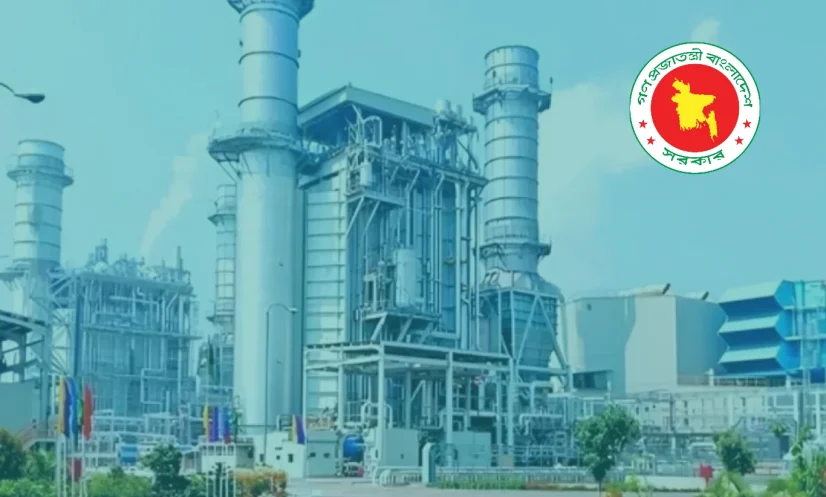
The Bangladesh Chemical Industries Corporation (BCIC) has set a target of increasing fertiliser production to 2.7 million metric tonnes within the next three to five years, with the government planning to establish three new factories to boost domestic output and reduce import dependence.
The proposed factories include a urea fertiliser plant in Bhola with a daily production capacity of 1,700 metric tonnes, a triple superphosphate (TSP) plant in Chattogram with an annual capacity of 400,000 metric tonnes and a urea formaldehyde-85 (UF-85) plant in Palash of Narsingdi with an annual capacity of 24,000 metric tonnes.
The BCIC will implement the projects, according to officials of the Ministry of Industries. The initiatives are expected to strengthen fertiliser supplies to the agriculture sector and create new employment opportunities in the industrial sector.
The expansion plan comes amid a significant gap between domestic production and national demand, particularly for non-urea fertilisers, forcing the country to rely heavily on imports.
In the 2025-26 fiscal year, Bangladesh’s annual demand for urea stood at 2.6 million metric tonnes, while demand for TSP and diammonium phosphate (DAP) was 750,000 metric tonnes and 1.485 million metric tonnes respectively.
However, BCIC factories produced only 68,259 metric tonnes of TSP and 82,142 metric tonnes of DAP during the fiscal year, meeting just 9.10 per cent and 5.53 per cent of the respective demands.
The corporation currently operates seven fertiliser factories, including five urea and two non-urea plants.
BCIC officials said the government provides subsidies of Tk 23,000 per metric tonne of urea, Tk 49,170 per metric tonne of TSP and Tk 98,840 per metric tonne of DAP.
Alongside setting up new plants, the government is emphasising the expansion of production capacity and modernisation of existing factories.
The proposed urea fertiliser factory in Bhola is expected to produce 1,700 metric tonnes daily, contributing to the country’s domestic production capacity.
According to BCIC, the plant will require 45-50 million cubic feet of natural gas per day to maintain production once operational. Ensuring an adequate and uninterrupted gas supply will therefore be crucial to implementing the project.
Speaking to Bangladesh Sangbad Sangstha (BSS), BCIC Chairman Md Babul Mia said increasing domestic production capacity was essential to meeting the country’s urea demand.
“If implemented, construction of the proposed urea fertiliser factory in Bhola will play an important role in increasing production capacity,” he said.
However, adequate gas supply, technical preparedness, financing and necessary government approvals would be important for implementing the project, he added.
The three proposed factories are expected to strengthen domestic fertiliser production, reduce dependence on imports and ensure a more reliable supply for farmers.