


 Play store

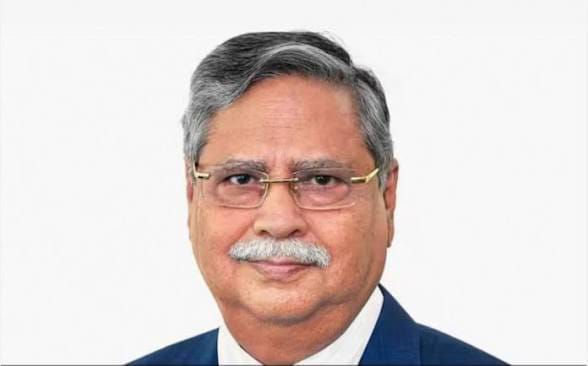
President Mohammed Shahabuddin is likely to resign from office soon, with ill health expected to be cited as the official reason, according to multiple sources familiar with ongoing discussions.
Sources within the government and the ruling Bangladesh Nationalist Party (BNP) said the party’s top leadership has conveyed its expectation that the President, who was elected during the Awami League administration, should step down. Parallel discussions are also underway regarding his potential successor.
A source familiar with the communication between the BNP leadership and Bangabhaban, speaking on condition of anonymity, told this correspondent on Wednesday night that the President’s resignation could come “very soon.”
“There is a strong possibility that the President will resign shortly,” the source said.
Another source said the BNP leadership has already begun informal consultations over a successor. While senior BNP leaders, including Khandaker Mosharraf Hossain and Abdul Moyeen Khan, had earlier been mentioned in political circles as possible candidates, discussions have recently shifted towards a senior government secretary currently serving in an important post on a contractual basis. However, no official decision has been made.
Contacted by this correspondent, BNP Standing Committee member Khandaker Mosharraf Hossain said he was unaware of any such development.
“I know nothing about the matter,” he said. “Naturally, if the office becomes vacant, many names will be discussed.”
As of Wednesday night, neither Bangabhaban nor the government had issued any official statement regarding the President’s possible resignation.
However, a Bangabhaban source claimed that President Shahabuddin has informally indicated to some staff members that he may soon leave the presidential residence. According to the source, he intends to take a period of rest after leaving office and may travel abroad for medical treatment.
Under Article 50(3) of the Constitution, the President may resign by submitting a written resignation to the Speaker of Parliament.
Article 54 provides that if the office of the President becomes vacant or the President is unable to perform his duties because of illness, absence or any other reason, the Speaker will discharge the functions of the office until a new President is elected.
The Constitution also requires that a presidential election be held within 90 days of a vacancy.
As the ruling BNP commands a parliamentary majority, its nominee would be expected to secure election to the presidency.
Political observers say the appointment carries added significance because the next general election is scheduled to take place during the tenure of the next President, making the office particularly important in the country’s constitutional framework.
Mohammed Shahabuddin assumed office as Bangladesh’s 22nd President on April 24, 2023, after being elected unopposed as the Awami League nominee. His five-year term is due to expire in April 2028.
Following the political transition after the August 5, 2024 uprising and the formation of an interim government, Shahabuddin remained in office throughout the constitutional transition and later continued after the BNP assumed power.
Although various political groups, including organisations associated with the July Movement, had demanded his resignation following the change in government, neither the interim administration nor the BNP formally sought his removal.
The Presidency has yet to comment on the reports, and there has been no official confirmation that the President intends to resign.