


 Play store

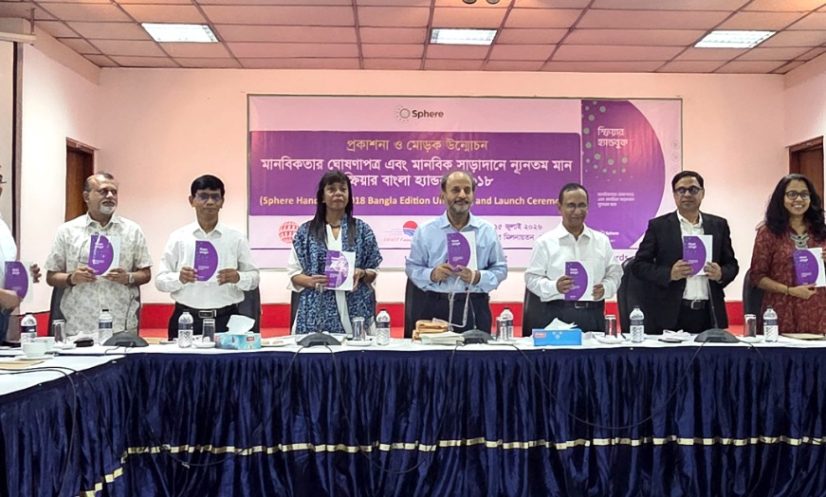
Humanitarian experts, government officials and development partners on Saturday called for a more coordinated, accountable and standardised humanitarian response in Bangladesh as the Bangla edition of the Sphere Handbook was officially launched in Dhaka.
Speakers at the event said disaster-affected people have the right to receive humanitarian assistance with dignity and stressed that humanitarian actors must adhere to internationally recognised standards to ensure quality, accountability and effectiveness in emergency response.
The programme was organised jointly by Sphere Community Bangladesh (SCB), COAST Foundation and Disaster Forum. SCB serves as a national platform to promote Sphere standards and strengthen quality and accountability in humanitarian action across Bangladesh.
The Bangla edition of the handbook is expected to make globally accepted humanitarian standards more accessible to frontline responders, volunteers and local humanitarian organisations, enabling them to better understand and apply the principles during disaster and emergency operations.
The Sphere Handbook combines the Humanitarian Charter, Protection Principles, the Core Humanitarian Standard (CHS) and minimum standards covering health, water, sanitation and hygiene (WASH), food security and nutrition, and shelter and settlements.
Speaking as the chief guest, Director General of the Department of Disaster Management Razwanur Rahman said translating the Sphere Handbook into Bangla represents an important step towards integrating international humanitarian standards into the government’s Standard Operating Procedures (SOPs).
United Nations Resident Coordinator in Bangladesh Carol Flore-Smereczniak stressed the importance of turning humanitarian principles into practical action.
“We must move from paper to practice to ensure timely and dignified assistance reaches those who need it most,” she said.
UNHCR Deputy Representative Juliette Murekeyisoni said localising the handbook would strengthen accountability and make humanitarian action more inclusive.
Speaking on behalf of local humanitarian organisations, COAST Foundation Executive Director Rezaul Karim Chowdhury said the Bangla handbook would help ensure emergency responses in Bangladesh consistently meet international standards.
Representing the Sphere Secretariat in Geneva, Zunaira Shams highlighted the handbook’s emphasis on disability inclusion, while Tooba Siddiqi, Regional Sphere Focal for Asia, underscored the importance of localising global humanitarian standards.
Takeshi Komino of the Asian Disaster Reduction and Response Network (ADRRN) said people affected by disasters should be made aware of their rights and entitlements so they can hold humanitarian agencies accountable.
“We should follow the Sphere standards to ensure disaster-affected communities understand their rights,” he said.
Plan International Bangladesh’s Kobita Bose called for a national action plan with clearly defined responsibilities to promote wider implementation of the Sphere standards across Bangladesh.
Meanwhile, Tahmina Haque of the NGO Platform Cox’s Bazar emphasised the importance of applying the standards more broadly in the humanitarian response for Rohingya refugees.
The event brought together representatives from government agencies, the United Nations, international and national NGOs, humanitarian clusters and development organisations, including the International Federation of Red Cross and Red Crescent Societies (IFRC), CARE Bangladesh, IOM, Save the Children, Concern Worldwide, Friendship, ADAB, Islamic Relief Bangladesh, ESDO and several humanitarian experts.
Participants expressed hope that the Bangla edition of the Sphere Handbook would strengthen the capacity of humanitarian responders across Bangladesh and contribute to more effective, coordinated and rights-based disaster response in the years ahead.