


 Play store

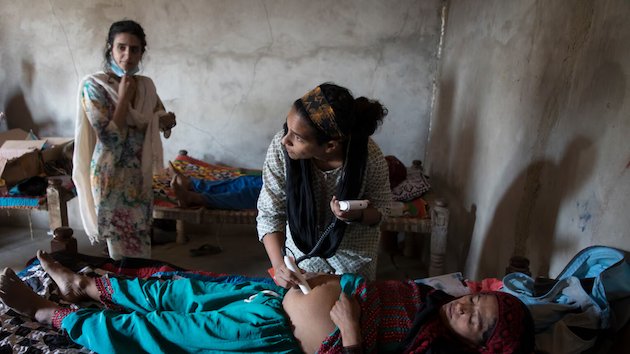
Extreme heat is increasingly threatening pregnant women and newborn babies worldwide, with almost all maternal-health professionals surveyed across five continents saying they have cared for women or infants whose health was affected by high temperatures.
A survey of 1,001 healthcare professionals in Australia, Brazil, India, the United Kingdom and Zimbabwe found that 98% had personally cared for a pregnant woman whose health they believed had been adversely affected by extreme heat. Meanwhile, 99% said they had cared for a foetus or newborn whose health, in their professional judgment, had been affected by extreme heat.
The findings, released in Fiji as climate ministers and officials gathered ahead of the COP31 climate summit, paint a concerning picture of how rising temperatures are affecting maternity wards, delivery rooms and newborn-care units.
The survey was commissioned by global health foundation Wellcome and conducted among obstetricians, gynaecologists, doctors, midwives, nurses and other maternal-health professionals between September 17 and October 1.
The findings were released at the launch of Birthright, a global campaign seeking greater protection for pregnant women, babies and healthcare workers as temperatures rise.
Speaking at the event, United Nations Climate Change Executive Secretary Simon Stiell said climate change was creating a new and potentially deadly risk around pregnancy and childbirth.
“The picture is clear and very disturbing: as extreme heat worsens, pregnancy and birth are now a new faultline in the global climate crisis, and one which is potentially fatal,” Stiell said.
“The faultline must not become another deep chasm of climate-driven suffering, inequality and injustice.”
Among pregnant women, 25% of health professionals surveyed reported seeing muscle cramps or muscle aches they believed extreme heat had contributed to or worsened. Another 24% reported severe fatigue, sleep problems or reduced ability to carry out daily activities.
Some 23% reported breathing difficulties or worsening respiratory symptoms, while the same proportion reported pregnancy complications requiring additional monitoring or treatment and hypertensive disorders, including pre-eclampsia.
More than one in five respondents reported mental distress, anxiety or stress linked to heat. Another 21% said they had encountered severe maternal illness requiring medical attention or hospital care.
Meanwhile, 20% reported dizziness, fainting or loss of consciousness, while 19% reported preterm contractions, labour or birth. Nearly 18% said they had observed pregnancy loss or stillbirth in circumstances where, in their professional judgment, extreme heat had contributed to or worsened the problem.
The survey did not attempt to establish that heat alone caused individual complications. The responses instead reflected the professional judgment and clinical experience of the healthcare workers surveyed.
The findings involving babies were similarly concerning. Some 36% of health professionals reported dehydration or heat-related illness among newborns, while 34% reported low birth weight or restricted foetal growth.
Another 33% had observed breathing, feeding or temperature-regulation difficulties. Some 28% said babies required additional monitoring, treatment or neonatal care, with a similar proportion reporting preterm birth.
During the newborn period, 38% of respondents reported low birth weight or restricted growth, while 36% reported dehydration or heat-related illness and another 36% reported breathing, feeding or temperature-regulation problems.
Almost 30% said heat-related conditions resulted in babies requiring additional monitoring, treatment or neonatal care. Nine% reported stillbirth or neonatal death in cases where they believed extreme heat had contributed to or worsened the condition.
Stiell said rising temperatures could no longer be treated simply as an environmental issue.
“The climate policy process is measured in degrees, targets and finance,” he said. “But a deep test of climate action is far simpler: whether we protect life at its most fragile.”
He said the world was entering conditions for which many health systems had not been designed.
“We are in a new, hotter world, as the world continues to burn planet-heating fossil fuels, overwhelmingly in G20 economies,” Stiell said.
“The last eleven years smashed records.”
He said rising temperatures meant “rising danger in pregnancy”, citing evidence linking extreme heat to premature birth, stillbirth, low birth weight and maternal complications.
The survey also revealed significant differences between countries. Eighty-five percent of respondents in Zimbabwe said heat-related cases or complications affecting pregnant women had increased during the previous five years. The figure was 79% in Australia, 74% in Brazil, 66% in the United Kingdom and 62% in India.
When respondents were asked about foetal or newborn health, 89% of Zimbabwean health professionals reported an increase in heat-related cases or complications. The corresponding figures were 79% in Brazil, 78% in Australia, 68% in the United Kingdom and 66% in India.
The results suggest that the effects are being felt across countries with very different climates, incomes and healthcare systems.
Concern was also widespread. More than 92% of respondents said they were concerned about the impact of extreme heat on the health and wellbeing of pregnant women in the areas where they worked, while 90% expressed concern about foetal health during pregnancy and childbirth and the health of babies during the newborn period.
Zimbabwe recorded one of the highest levels of concern, with 97% of respondents concerned about foetal and newborn health.
“No one is immune,” Stiell said. “But the risks and impacts are not shared equally.”
Extreme heat was also disrupting the healthcare systems expected to protect women and infants. Some 29% of health workers said they had seen increased urgent or emergency presentations during periods of extreme heat, while 28% reported difficulties safely storing or using medicines, supplies or medical equipment.
Twenty-seven percent said pregnant women and their families found it harder to travel to or access healthcare. Another 25% reported increased demand for advice, monitoring or treatment, while the same proportion reported staff illness, fatigue or a reduced ability to work safely.
Twenty-four percent had experienced interruptions to electricity, water, cooling systems, medical equipment or other essential services, while a similar proportion reported healthcare services becoming overburdened or having insufficient capacity. Nearly one-quarter said temperatures inside healthcare facilities had become unsafe or uncomfortable.
The findings highlight the limitations of simply advising pregnant women to stay cool when families lack air conditioning, cannot afford electricity, work outdoors or live far from medical services.
“‘Staying cool’ is simply not an option when there is no cool place to go,” Stiell said.
“A safe birth is already too often shaped by geography, income and access to care. Without action, extreme heat will widen that injustice.”
Health professionals identified several factors limiting pregnant women’s ability to protect themselves and their babies from extreme heat. Some 26% cited limited awareness or understanding of the health risks of extreme heat during pregnancy, while 24% cited the need to work outdoors or in hot conditions.
About 23% pointed to limited support from family or the wider community, while the same proportion cited limited access to cooling or air conditioning. Another 23% identified the cost of electricity, water or other protective measures.
Other barriers included existing health conditions, inadequate access to safe drinking water, homes that were difficult to keep cool, lack of employer support and difficulties travelling to healthcare facilities.
Only 0.4% of respondents said no factors limited women’s ability to protect themselves from extreme heat.
Stiell said such conditions showed how climate change risk was increasingly intertwined with inequality.
“Someone working outdoors, living in unregulated housing, travelling far to a clinic, or relying on facilities without water, power or cooling, cannot be protected by advice alone,” he said.
The issue is particularly sensitive for Pacific Island countries, many of which have contributed only a tiny fraction of historic greenhouse gas emissions but face rising sea levels, intensifying storms, heat and pressure on food, water and health systems.
“Here in the Pacific, climate change is no abstraction,” Stiell said. “It is felt in homes, villages, farms, fisheries and clinics, in journeys for care, and in the availability and cost of food, water, power and transport.”
The Fiji event was held as ministers and climate officials gathered for a pre-COP meeting hosted by Australia and Fiji from October 5 to 8. The meeting is intended to advance negotiations ahead of COP31 in Antalya, Türkiye, while giving greater prominence to Pacific Island perspectives and climate solutions.
Despite the growing risks, many healthcare workers said they needed more support to respond effectively.
An overwhelming 92% said they wanted additional training and resources to help pregnant women during periods of extreme heat. Fifty-five percent said clearer national or international guidance would help them perform their jobs better.
When asked what would most improve their ability to protect women and babies, 33% selected practical information and materials for pregnant women and families, while 31% called for improvements to buildings, cooling, ventilation, water or electricity.
Twenty-nine percent wanted stronger referral pathways and better coordination between health services. A similar proportion called for improved data and surveillance on heat, pregnancy and newborn health, as well as better local heat alerts and communication.
Another 28% said more staff, time or funding during periods of extreme heat would help, while the same proportion called for greater community outreach to people who might otherwise be difficult for health services to reach.
Stiell urged governments to make maternal and newborn health an explicit part of national climate adaptation and heat-response strategies.
“What is not named in a plan is too often not funded, not measured and not protected,” he said.
He outlined three priorities: making pregnancy and newborn care part of national adaptation, health and extreme-heat planning; converting scientific evidence into direct protection through improved guidance, professional training, heat alerts and safer medical facilities; and improving monitoring.
“Harm that is not counted is too easily ignored,” Stiell said.
“As temperatures rise, data must show where risks are growing, which interventions work, which communities are exposed, and where finance and technology support is needed.”
The survey found broad support among health workers for stronger policy action. Some 81% agreed that without further action, extreme heat would increasingly endanger maternal, foetal and newborn health during the next five years.
Eighty-two percent said protecting pregnant women and babies from extreme heat should become a higher priority for health-system leaders and policymakers, while another 82% agreed that better evidence on heat, pregnancy and newborn health would help drive effective action.
Stiell linked the issue to broader international climate finance negotiations, saying commitments on adaptation finance agreed at COP30 in Brazil needed to be implemented. He also called for governments and the international financial system to help mobilise $1.3 trillion annually for developing nations.
“For small islands and other nations that did practically nothing to cause this climate crisis, it underscores the need for support at scale,” he said.
He also pointed to the Belém Gender Action Plan and Belém Adaptation Indicators as mechanisms that could help governments measure climate-related health risks and build more resilient health services.
Stiell praised Türkiye’s COP31 presidency and Australia, which is serving as President of Negotiations, for putting health on the agenda ahead of the Antalya summit.
For Stiell, the issue ultimately goes beyond climate-negotiating language.
“Mothers, midwives, doctors, nurses and families speak from lived experience. We should listen,” he said.
The survey suggests those voices are delivering a clear warning: pregnant women are struggling with heat exposure, babies are requiring additional care, health workers are seeing more complications, and healthcare facilities are facing pressure on electricity, water, medicines and staff.
“Pregnancy should be a time of hope,” Stiell said. “But for millions, it is becoming a time of anxiety, as climate impacts fill everyday life with risk.”
He ended with an appeal for governments to treat the protection of mothers and babies as a basic test of climate policy.
“A changing climate must never be accepted as a reason pregnancy and birth become less safe,” he said.
“A newborn’s healthy start must never depend on a family’s ability to escape the heat.” Source: IPS News