


 Play store

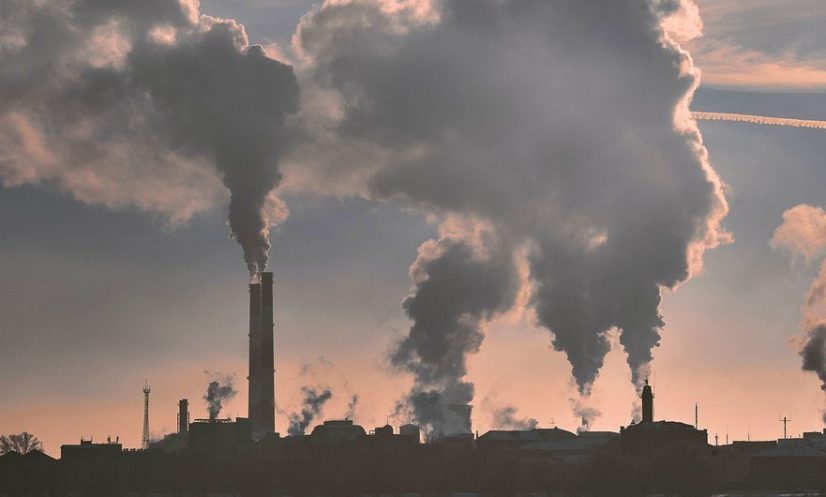
Global concentrations of carbon dioxide (CO2) and other major greenhouse gases reached record highs in 2025, locking in further long-term global warming, the World Meteorological Organization (WMO) said on Tuesday.
The agency’s latest Greenhouse Gas Bulletin put the average global concentration of CO2 at 426.8 parts per million (ppm) in 2025, equivalent to 153 per cent of the pre-industrial level recorded in 1750.
“Every additional part per million matters because it traps additional heat. In effect, we are supercharging the ocean and the atmosphere. That means that heat waves, tropical cyclones, and rainstorms are intensifying faster than our historical baselines prepared us for,” WMO Deputy Secretary-General Ko Barrett told journalists in Geneva.
Concentrations of methane and nitrous oxide, the second and third most important long-lived greenhouse gases generated by human activities, also reached record highs in 2025.
“Another year, another new record. Greenhouse gases are trapping an unprecedented amount of heat in the atmosphere, providing energy for more extreme weather and associated risks to our economies and societies,” Barrett said.
“The past 11 years have been the warmest on record and this trend is set to continue. CO2 has a very long lifetime and so will affect the global climate not just for years but for decades and even centuries,” she added.
When the WMO first published the bulletin in 2004, the annual average CO2 concentration measured by its Global Atmosphere Watch network was 377.5 ppm, compared with nearly 427 ppm today.
The rate of increase in CO2 concentrations has tripled since the 1960s, rising from an annual average of 0.8 ppm to 2.4 ppm a year during the decade from 2011 to 2020.
The exceptional 3.5 ppm increase recorded in 2023-2024 coincided with a strong El Niño, which reduced the biosphere’s capacity to absorb carbon through increased drought, drier vegetation and more wildfires, said WMO senior scientific officer Oksana Tarasova.
Although the annual increase slowed to 2.8 ppm between 2024 and 2025, it still represented a substantial addition of carbon to the atmosphere from fossil fuel burning, Tarasova said.
She warned that CO2 concentrations could rise further in 2026 due to fossil fuel burning and the development of a powerful El Niño, which could affect land-based carbon sinks, as happened in 2023-2024.
The bulletin measures the amount of greenhouse gas accumulating in the atmosphere, rather than annual emissions. About half of the CO2 emitted each year remains in the atmosphere, while the rest is absorbed by land ecosystems and oceans.
The US National Oceanic and Atmospheric Administration’s Annual Greenhouse Gas Index shows that the warming effect of greenhouse gases on the climate increased by 56 per cent between 1990 and 2025. CO2 accounted for about 81 per cent of that increase, known as radiative forcing.
As countries shift their energy systems towards decarbonisation, the WMO has also called for close monitoring of two potent but less abundant gases associated with electricity production and distribution: molecular hydrogen (H2) and sulphur hexafluoride (SF6).
SF6 is widely used as an electrical insulator and arc suppressant in power distribution equipment. Its use has increased steadily over the past three decades alongside global electrification.
The gas remains in the atmosphere for more than 1,000 years and has a 100-year global warming potential approximately 24,300 times that of CO2. The increase in SF6 concentrations in 2025 was the highest on record, the bulletin said.
Hydrogen concentrations rose by 5.3 per cent between 2010 and 2024. Hydrogen is being used for energy storage and to help decarbonise sectors such as steelmaking and shipping, as well as for long-duration energy storage and transport.
However, leakage from production facilities, pipelines, storage tanks and fuel cells is becoming a growing concern, the WMO said.
Although hydrogen is not itself a greenhouse gas, it affects atmospheric chemistry and can contribute indirectly to global warming.
“Both H2 leakage and SF6 persistence represent potential threats that could undermine the climate benefits of the energy transition,” the WMO said, stressing that careful monitoring of the atmosphere is essential to detect, understand and prevent unintended consequences.
The WMO publishes the bulletin to provide authoritative scientific data for negotiators attending the annual UN climate conference. The 31st Conference of the Parties (COP31) is scheduled to take place in Antalya, Türkiye, from 9 to 20 November, with the aim of turning climate commitments into concrete action. Source: UN NEWS