


 Play store

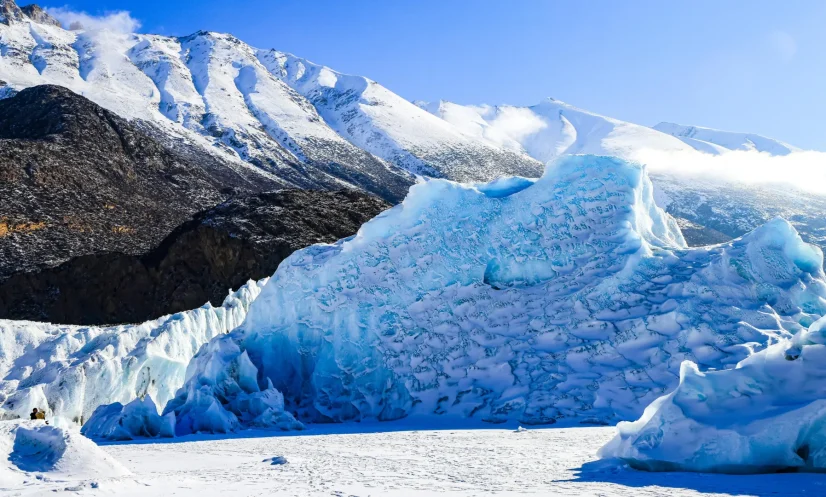
Scientists have discovered evidence that an ice cap on the Guliya Plateau in northwestern Tibet may preserve a climate record dating back more than 128,000 years, offering a rare glimpse into Earth’s ancient environmental history.
The findings extend the known glacial record from the region by more than 100,000 years and suggest that some mountain ice survived major climate changes spanning the last ice age and the period that followed.
An international research team reached the conclusion by examining ice cores collected from the Guliya Plateau in 1992 and 2015. Despite being collected 23 years apart, the samples showed remarkably similar oxygen isotope patterns, which scientists use to reconstruct past climate conditions.
Lead author Lonnie Thompson, a professor of earth sciences and senior research scientist at Ohio State University’s Byrd Polar Research Center, said the reproducibility of the records indicated that the ice cap could preserve a reliable history of climate change.
To establish the ice’s age, researchers used radioactive isotopes of beryllium and chlorine, which decay at predictable rates and help scientists identify events in Earth’s past.
The team looked for chemical evidence associated with the Laschamp geomagnetic excursion, a major disturbance in Earth’s magnetic field that occurred more than 41,000 years ago. The findings were then compared with oxygen isotope records preserved in nearby Tibetan cave deposits.
Together, the evidence suggests that the Guliya ice record may extend beyond 128,000 years, although the precise age and interpretation of the oldest ice remain important areas of scientific investigation.
Thompson said the discovery was particularly significant because few mountain ice cores outside the polar regions preserve records extending so far into the past. Ice cores from Huascarán in the Andes, for comparison, reach back only slightly more than 30,000 years.
The findings were published in the journal Science Advances.
Ice cores provide valuable evidence of ancient climate conditions because layers of accumulated snow gradually compress into ice, trapping chemical signals that reflect the environment in which they formed. Scientists analyse these layers to reconstruct temperature changes and other environmental conditions over thousands of years.
Earlier research had suggested that the Guliya ice record extended only to the middle of the Holocene, the geological epoch that began about 12,000 years ago after the last ice age.
The new findings indicate that at least some of the ice is considerably older, strengthening evidence that substantial ice masses in Tibet persisted through periods of major climatic change.
The discovery could help researchers better understand the history of mountain glaciers and how they responded to past warming and cooling, providing important context for assessing their vulnerability to ongoing climate change.