


 Play store

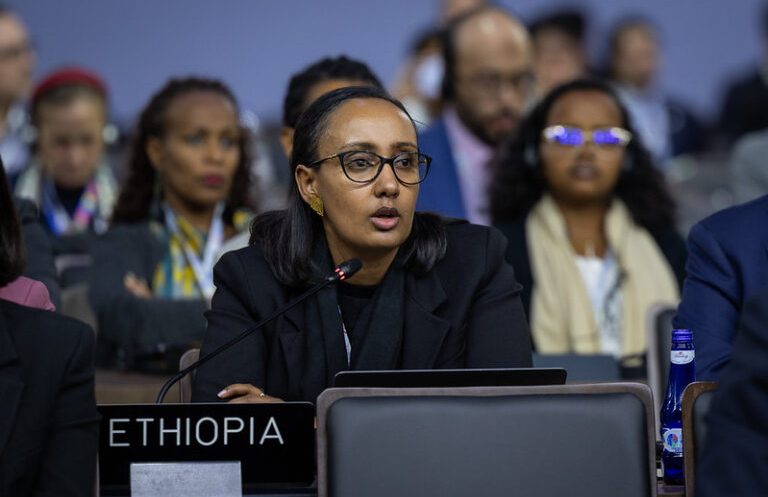
ANTALYA, Türkiye: The UN climate conference COP31 has ended in a deadlock, with participating countries failing to agree on a final cover decision, particularly over an explicit reference to transitioning away from fossil fuels.
The impasse came after a record 44 hours of overtime negotiations, leaving several critical issues, including climate science, energy policy and climate finance for developing countries, unresolved.
The failure to reach consensus has placed considerable responsibility on Ethiopia, which will host COP32 in Addis Ababa next year, to revive negotiations and address the deep divisions that emerged during the Antalya summit.
The outcome represents a major setback for international climate diplomacy, particularly for Africa, which had pushed for stronger commitments on climate finance, adaptation and a just transition to a low-carbon economy. However, the continent has made some progress and could use its role as next year’s host to build momentum for more ambitious climate action.
One of the most contentious issues at the two-week conference was the transition away from coal, oil and gas. African negotiators and climate campaigners sought an explicit commitment to moving away from fossil fuels in the summit’s final political declaration.
However, fossil fuel-dependent countries, including Saudi Arabia, opposed the proposal, arguing that individual nations should retain flexibility in deciding how to reduce emissions.
A cover decision, negotiated under the leadership of COP31 President and Turkish Environment Minister Murat Kurum, is a political declaration summarising the summit’s key commitments and providing direction for future climate action.
The closing plenary exposed sharp divisions over the negotiation process itself. Kurum clashed with UN Climate Change Executive Secretary Simon Stiell when the latter attempted to intervene during the proceedings, with the COP31 president asking him to return to his seat.
Kurum also faced criticism from Nana Dr Antwi-Boasiako Amoah, chair of the African Group of Negotiators (AGN), after he interrupted Ghana’s Environment Minister Zanetor Agyeman-Rawlings while she was speaking on behalf of the African Group.
Agyeman-Rawlings reiterated the need for an inclusive, transparent and respectful process in international climate negotiations. The European Union also rejected the proposed cover decision.
Adaptation finance was another major priority for African countries at COP31.
At COP30 in Belém, Brazil, parties agreed to triple adaptation finance by 2035. However, African negotiators wanted the Antalya summit to establish a clear baseline against which the increase would be measured. No agreement was reached on the matter.
If developed countries triple the annual adaptation finance commitment of $40 billion agreed at COP26 in Glasgow, the amount would reach $120 billion by 2035.
The issue is particularly critical for Africa, where countries lose an estimated 2 to 5 per cent of their gross domestic product (GDP) annually due to climate extremes. Governments across the continent also spend up to 9 per cent of their annual budgets on unplanned disaster relief and climate responses.
Sierra Leone’s Minister of Environment and Climate Jiwoh Abdulai expressed disappointment over the lack of meaningful progress on issues affecting the world’s most vulnerable communities.
“Farmers are losing their harvests, children unable to learn in extreme heat, and communities losing lives and livelihoods to devastating floods and droughts,” he said.
“We came to COP to make progress, in particular on adaptation finance. This is an urgent need. We remain committed to the multilateral process. Global cooperation is critical and urgent.”
African countries also sought the establishment of an institution to coordinate and support a just transition for workers and vulnerable communities as the global economy moves towards lower-carbon energy systems.
However, wealthy nations preferred assigning the responsibility to the already overstretched UN climate secretariat and external institutions, including development banks.
African negotiators argued that the continent needed a dedicated mechanism rather than another bureaucratic process.
The failure to reach an agreement on the proposed mechanism also undermined hopes of building on the progress made at COP30 in Brazil, where the Belém Action Mechanism (BAM) was agreed.
Mohamed Adow, director of Nairobi-based think tank Power Shift Africa, said it was disappointing that wealthy countries had blocked the establishment of a just transition mechanism.
“Agreeing to do so was one of the most promising outcomes from last year’s meeting in Brazil. And yet countries could not even achieve that modest goal in Antalya,” he said.
“We need decisive action to accelerate the much-needed just transition, not more evasion.”
Disagreements also emerged over the timetable for the next assessments by the Intergovernmental Panel on Climate Change (IPCC), the UN-backed global authority on climate science.
Fossil fuel-dependent countries, including Saudi Arabia and India, pushed for the next reports to be delayed until 2029. Kenya also supported a delay, citing capacity constraints.
In contrast, dozens of European, African and Pacific countries wanted the reports published ahead of the 2028 global stocktake.
The IPCC assessments are expected to evaluate global progress in reducing greenhouse gas emissions and provide scientific guidance for countries as they prepare their future climate commitments.
Meanwhile, the COP31 presidency pushed for an increase in renewable electricity generation from the current 20 per cent to 35 per cent by 2035 under a voluntary initiative known as “35 by 35”.
Although several African countries raised concerns about the financing required to achieve the proposed expansion, Ethiopia, Kenya, Togo, Uganda and Zambia publicly announced their support for the initiative in Antalya.
With several major issues left unresolved, Ethiopia now faces the challenge of rebuilding trust among negotiating blocs and securing stronger commitments when it hosts COP32 in Addis Ababa next year. For Africa, the next summit will be an important opportunity to push for more predictable climate finance, greater adaptation support and a fair transition that reflects the needs of developing countries. Source: IPS News