


 Play store

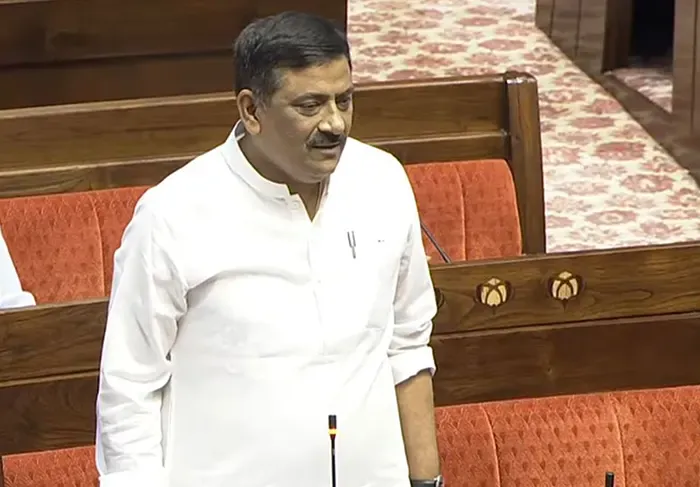
Amid strained diplomatic relations between India and Bangladesh over the issue of Bangladesh’s former prime minister, Janata Dal (United) (JD(U)) Working National President and Rajya Sabha MP Sanjay Kumar Jha has urged the Indian central government not to renew the 1996 Farakka Water-Sharing Treaty with Bangladesh.
According to India’s news agency ANI, Jha raised the issue in the Rajya Sabha on Thursday, noting that the 30-year Farakka Treaty is set to expire on December 12, 2026. He strongly appealed to the central government not to extend the agreement. Instead, he proposed developing a new water management framework based on a scientific assessment of the water requirements of all states in the Ganges basin—particularly Bihar—through 2050.
Speaking to reporters outside Parliament, Jha said that JD(U) and its national president, former Bihar Chief Minister Nitish Kumar, have opposed the Farakka Treaty from the outset. He argued that the agreement has overlooked Bihar’s broader interests. Jha added that during his tenure as Bihar’s Water Resources Minister, he repeatedly urged the central government to review the treaty.
Earlier, while making a Special Mention in the Rajya Sabha, Jha said the Farakka Barrage was originally constructed to maintain adequate water flow in the Hooghly River and sustain the Kolkata Port. He claimed that the 1996 treaty signed with Bangladesh had adversely affected Bihar’s water security.
According to Jha, the experience of the past three decades has shown that Bihar faces severe water shortages during the dry season. He said groundwater levels, particularly in southern Bihar, have been declining rapidly, leading to shortages of drinking water.
He emphasized that adequate Ganges water is essential for agriculture, drinking water, industrial development, and environmental protection across Bihar’s Ganges basin. The ongoing water scarcity, he said, has intensified groundwater depletion in southern districts, creating serious challenges for both irrigation and potable water supply.
Citing figures provided by the Bihar government, Jha told the Rajya Sabha that the state would require an additional 2,000 cusecs of water by 2050 to meet future demand. However, he argued that the existing Farakka Treaty allocates significantly less water than Bihar’s projected needs.
He called on the central government to conduct a fresh scientific assessment of the water requirements of all Ganges basin states, especially Bihar, and to formulate a new water-sharing and management framework based on that assessment.
Jha warned that renewing the Farakka Treaty without first ensuring sufficient water for Bihar’s agriculture, drinking water needs, and development projects could have serious consequences. He said such a move would undermine the state’s long-term development and adversely affect the livelihoods of millions of people.