


 Play store

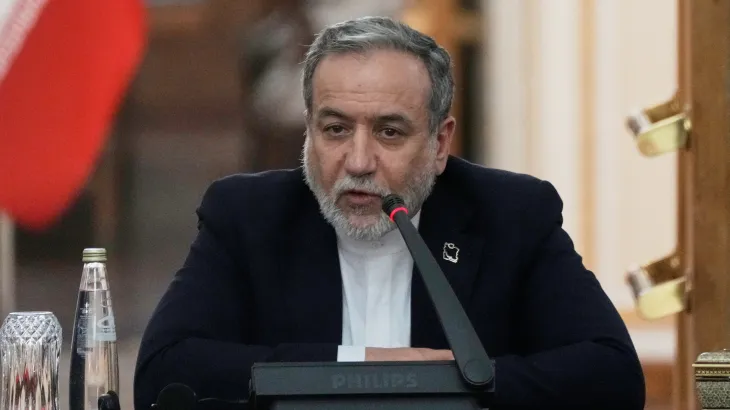
Tehran: Iran has reiterated its commitment to a peaceful resolution of the escalating regional conflict while maintaining full military readiness to defend its sovereignty amid mounting military and economic pressure from the United States and its regional allies.
Iranian Foreign Minister Abbas Araghchi said Tehran remained committed to reaching a dignified and peaceful settlement but was prepared to defend itself against any threat. He expressed little optimism about diplomatic progress, arguing that Washington had shown no genuine willingness to reach a mutual understanding.
President Masoud Pezeshkian also questioned the prospects for constructive dialogue, saying the United States could not reasonably expect meaningful negotiations while maintaining a blockade and issuing threats against Iran.
Pezeshkian added that several foreign countries continued to maintain economic ties with Tehran despite extensive US sanctions.
The diplomatic statements came amid rising military tensions, fresh economic restrictions and developments across the Middle East that have heightened concerns about a wider regional confrontation.
In a related development, Iranian Parliament Speaker Mohammad Bagher Ghalibaf met Supreme Leader Ayatollah Mojtaba Khamenei to discuss military, economic and information-warfare challenges facing the country.
According to reports carried by Iranian media, the meeting focused on strengthening national capabilities, maintaining social cohesion and improving coordination between the government and parliament amid the conflict with the United States and Israel.
Khamenei succeeded his father, Ayatollah Ali Khamenei, who was killed in US-Israeli strikes on 28 February, according to reports. The younger Khamenei has largely remained out of public view since assuming the leadership in March.
Military tensions have also intensified as Iran signals plans to expand its offensive capabilities.
The Islamic Revolutionary Guard Corps (IRGC) announced on Wednesday that Iran was preparing to unveil a new weapon it described as the “father of all bombs”. IRGC spokesman Hossein Mohebi provided no technical details about the weapon but said Iran’s missile stockpile had increased significantly since its 12-day war with Israel in June 2025.
The announcement came amid reports that Washington had prepared contingency plans targeting Iranian energy infrastructure, raising concerns about further escalation and potential disruptions to regional energy supplies.
Meanwhile, unexplained explosions were reported in the southern coastal town of Sirik. Iranian authorities had yet to provide a detailed explanation of the incidents in the information available.
Iranian military officials also confirmed the identities of four Iranian soldiers held in Kuwait and called for their formal registration as prisoners of war under the Geneva Convention, according to the supplied account.
On the economic front, the US Treasury Department announced fresh sanctions targeting five individuals, four companies and nine vessels allegedly linked to Iran. The measures add to the economic pressure Washington has maintained against Tehran.
Regional tensions have also prompted concerns about the safety of diplomatic personnel. Reports indicated that the US State Department was considering the departure of non-essential embassy personnel and their families from Gulf countries as security risks increased. The reported plans had not been independently confirmed in the sources reviewed.
Yemen has emerged as another major flashpoint. The Houthi movement claimed attacks on Aden International Airport and military facilities at Al-Rayyan Airport in Mukalla, while reports from Yemeni media described missile and drone strikes in the two locations on Wednesday.
Saudi-led forces, meanwhile, reported intercepting Houthi drones, although the movement denied carrying out operations against Saudi Arabia on Wednesday. The conflicting accounts underscored the difficulty of establishing responsibility for attacks amid the widening confrontation.
In Yemen, government forces also faced renewed Houthi offensives around Taiz, where the prolonged conflict and restrictions on access have worsened an already critical humanitarian situation. Aid workers have warned of severe shortages of food, clean water, fuel and medicines in the besieged city.
Amnesty International has called for the reopening of the main road linking Taiz with Aden to ease civilian movement and allow essential supplies to reach people affected by the conflict.
In the occupied West Bank, settler attacks and Israeli military restrictions have disrupted the annual Palestinian olive harvest, an important source of income for thousands of families. The restrictions have added to the economic difficulties facing Palestinian communities.
Israeli Prime Minister Benjamin Netanyahu has also continued to issue warnings against Iran’s leadership, including Supreme Leader Mojtaba Khamenei, amid concerns that military confrontation could resume on a larger scale.
Despite the growing military pressure, diplomatic initiatives have continued. Chinese and Iranian representatives reportedly discussed President Xi Jinping’s four-point proposal for Middle East security on the sidelines of a Shanghai Cooperation Organisation meeting, with a focus on regional stability and political solutions.
Separately, reports referred to a proposed “Badr defence pact” involving Turkey, Qatar, Pakistan and Indonesia to strengthen cooperation in defence industries and regional security. The details and formal status of the reported arrangement require independent confirmation.
In Iraq, officials closed the Sheeb border crossing with Iran, citing technical problems. Iraqi authorities also rejected media reports alleging that Houthi forces maintained an operational presence inside Iraqi territory.
The developments highlight the growing complexity of the regional crisis, with military operations, economic sanctions and competing security alliances adding to the risks of a wider confrontation.
While Tehran continues to publicly advocate diplomacy, its insistence on maintaining full defensive readiness reflects deep mistrust of Washington and uncertainty over whether negotiations can produce a lasting settlement.
For the wider region, the immediate challenge remains preventing further escalation while protecting civilian populations, maintaining vital trade and energy routes, and restoring space for diplomatic engagement.