


 Play store

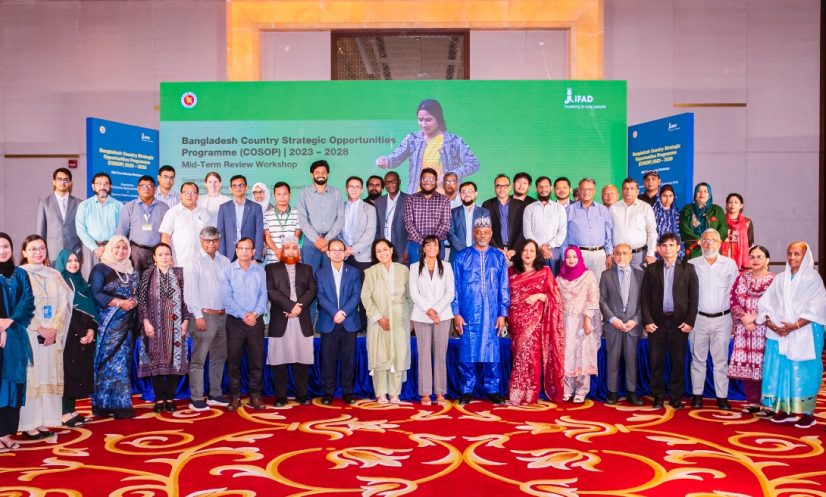
Bangladesh’s rural transformation must increasingly link climate resilience with employment, finance, technology and market access, government and United Nations representatives said at a workshop reviewing the International Fund for Agricultural Development’s (IFAD) country strategy for Bangladesh.
The workshop, jointly convened by the Economic Relations Division (ERD) and IFAD, reviewed the mid-term progress of IFAD’s Country Strategic Opportunities Programme (COSOP) for 2023-2028.
Government representatives, development partners, UN agencies, implementing institutions and rural stakeholders took part in the discussion, which assessed progress made since 2023, examined the programme’s continued relevance and identified possible adjustments for the remaining period, including a potential extension.
Moslema Nazneen, Joint Secretary of the ERD, highlighted IFAD’s longstanding contribution to rural development and called for greater investment in food security, employment, balanced regional development and the restoration of rivers and canals.
“The lessons of the past years are clear: keep project design simple, invest in strong implementing partners, pair infrastructure with production support, and never neglect institutional capacity,” she said.
The mid-term review found that the programme had made steady progress, although results varied across sectors and regions and stronger monitoring was needed to better measure its overall impact.
Since its launch, the programme has reached around 3.58 million rural people, with women accounting for 46 per cent of participants and young people making up about 27 per cent.
The review found visible progress in several areas of rural development.
Improved water systems now serve 86 per cent of the programme’s targeted farmland, while the number of community groups involved in managing natural resources has exceeded initial expectations.
Around 749,000 rural households are producing increased quantities of crops and other agricultural products, while more than 258,000 households have gained access to financial services, including loans and savings facilities.
“The task is not to redefine the COSOP’s core objectives, but to sharpen implementation and strengthen the thematic emphasis, particularly around youth opportunities, productive employment and inclusive agricultural services,” said Reehana Raza, IFAD Regional Director for Asia and the Pacific.
She emphasised the need to use IFAD financing to mobilise additional public resources, climate finance and responsible private-sector investment.
Carol Flore-Smereczniak, the United Nations Resident Coordinator in Bangladesh, highlighted IFAD’s distinctive role as both a UN specialised agency and an international financial institution.
“IFAD brings not only a mandate and technical expertise, but long-term investment financing, sovereign lending instruments, and the discipline of an institution that invests alongside government over many years,” she said.
Valantine Achancho, IFAD Country Director for Bangladesh, said the review confirmed that the COSOP’s overall strategic direction remained relevant but stressed the need for stronger implementation and measurable outcomes.
“The results review confirms that the COSOP’s strategic direction remains highly relevant, but relevance must translate into sharper priorities, stronger execution and measurable transformation,” he said.
“We must strengthen the link between what we deliver and what changes because of it.”
The review concluded that the COSOP’s core strategic direction remained relevant and recommended greater emphasis on sustainable incomes, youth skills and entrepreneurship, women’s economic empowerment, value addition and private-sector partnerships.
It also called for more consistent measurement of development outcomes and recommended incorporating new investments into the programme’s results framework.
These include the Growth for Climate Resilient and Environmental Entrepreneurship and Nutrition Project (GREEN) and the Climate Resilience and Livelihood Enhancement Project (CRALEP).
The review is expected to help shape IFAD’s priorities in Bangladesh for the remainder of the 2023-2028 strategy period, with climate resilience, employment generation and inclusive rural economic development emerging as key areas of focus.